
Mere Legal or Commercial Connection Not Sufficient for Non-Signatory to Claim Arbitration: Supreme Court
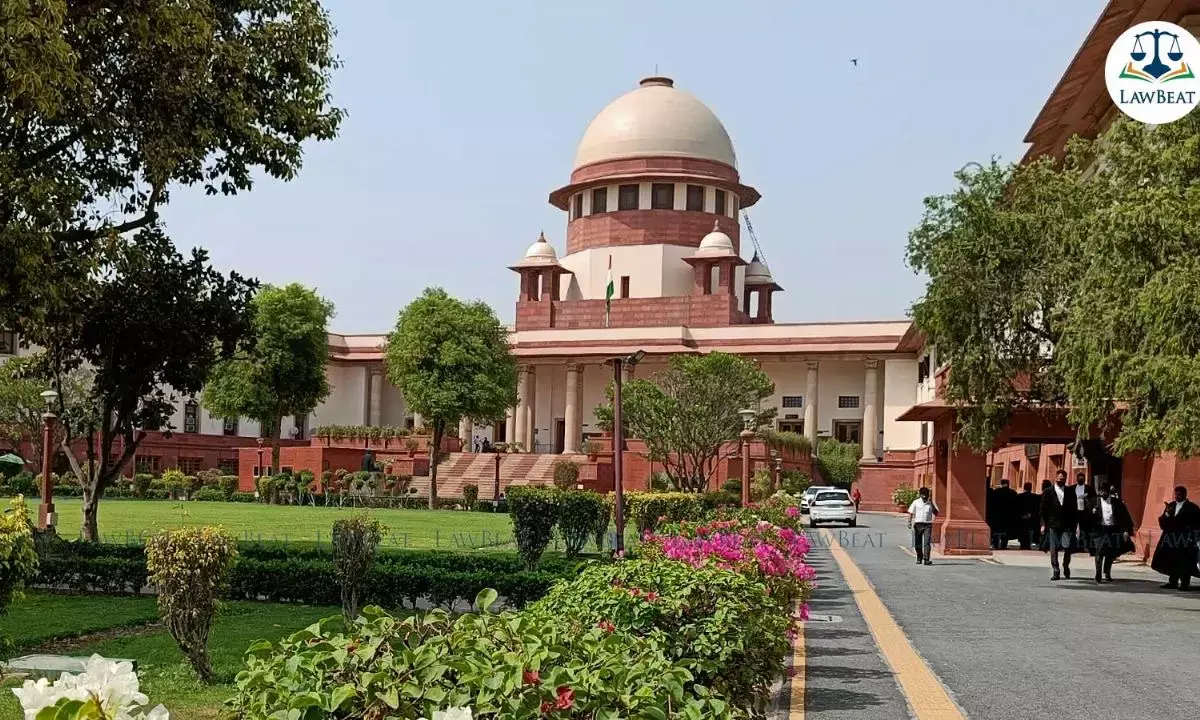
Supreme Court clarifies limits on non-signatory invoking arbitration under Section 11
The Supreme Court of India has reaffirmed a core principle of arbitration law by holding that a mere legal or commercial connection with a contracting party is not sufficient for a non-signatory to invoke an arbitration clause. The Court clarified that under Section 11 of the Arbitration and Conciliation Act, 1996, the referral court must be satisfied, at least prima facie, that the non-signatory was a veritable party to the arbitration agreement.
Allowing an appeal filed by Hindustan Petroleum Corporation Limited, the Supreme Court set aside an order of the Bombay High Court which had referred the dispute to arbitration at the instance of a non-signatory entity. The ruling provides important clarity on the limits of the “claiming through or under” doctrine and the jurisdiction of courts at the pre-arbitral stage.
Background of the dispute
Hindustan Petroleum Corporation Limited issued a tender for the design, supply, installation, integration, testing, commissioning and post-commissioning warranty support of a Tank Truck Locking System. The tender conditions specifically prohibited subletting, transfer or assignment of the work without prior written consent of HPCL.
In 2013, HPCL issued a purchase order to the successful bidder, M/s AGC Networks Ltd. Subsequently, AGC engaged BCL Secure Premises Pvt Ltd as a sub-vendor for supply and technical services relating to the project. HPCL was not a party to any agreement between AGC and BCL.
In 2016 and 2017, HPCL issued notices to AGC citing non-functioning systems and unsatisfactory performance. In June 2018, HPCL informed AGC that no payments were due as the project had not been successfully completed.
Around the same period, BCL informed HPCL that it was a sub-vendor of AGC and claimed entitlement to a substantial portion of the project payments. HPCL categorically stated that it had no contractual relationship with BCL and owed no payment to it.
BCL thereafter pursued remedies against AGC before the Micro, Small and Medium Enterprises Facilitation Council, Haryana. In October 2023, AGC and BCL entered into a settlement-cum-assignment agreement under which AGC purported to assign its receivables from HPCL to BCL.
In 2024, BCL issued a notice invoking arbitration against HPCL under Section 21 of the Arbitration and Conciliation Act, relying on the arbitration clause in HPCL’s tender conditions applicable to Indian bidders. This was followed by a petition under Section 11 before the Bombay High Court, which allowed the application on April 7, 2025.
HPCL challenged this order before the Supreme Court.
Supreme Court on the role of the referral court
The Supreme Court examined the scope of judicial scrutiny under Section 11 of the Arbitration and Conciliation Act. The bench held that the referral court is not stripped of its jurisdiction to examine whether a non-signatory seeking reference to arbitration is, in reality, a party to the arbitration agreement.
The Court observed that whether a non-signatory is a veritable party depends on the facts and circumstances of each case and must be assessed by examining the relevant contractual documents and surrounding conduct.
The bench clarified that if there is nothing even prima facie to show an intention to create a legal relationship between the non-signatory and the original contracting party, such a non-signatory cannot be treated as a veritable party to the arbitration agreement. The Court categorically held that a mere legal or commercial connection is insufficient for a non-signatory to claim rights through or under a signatory.
No privity of contract with HPCL
On the facts of the case, the Supreme Court found that HPCL had no privity of contract with BCL. The contractual relationship existed solely between HPCL and AGC. The documentation between AGC and BCL did not involve HPCL in any capacity.
The Court noted that after obtaining the contract from HPCL, AGC independently engaged BCL to supply and provide technical services. Such an arrangement did not create any contractual or arbitral relationship between HPCL and BCL.
The tender conditions expressly barred subletting or assignment without HPCL’s consent. There was no material to show that HPCL had consented to any assignment in favour of BCL or had intended to bind itself contractually with BCL.
Assignment agreement cannot create arbitration rights
The Supreme Court also rejected the argument that BCL could invoke arbitration on the basis of the settlement-cum-assignment agreement executed between AGC and BCL. The Court held that an assignment of receivables between two private parties cannot, by itself, bind a third party who was not a signatory to the assignment or the underlying contract.
The bench observed that BCL could not step into the shoes of AGC for the purpose of invoking arbitration against HPCL when HPCL had neither consented to the assignment nor acknowledged BCL as a contractual counterparty.
Referral court cannot act as a mechanical conduit
Significantly, the Supreme Court rejected the contention that even if the referral court finds that a party is not a veritable party at the prima facie stage, the issue must still be left to the arbitral tribunal.
The Court held that accepting such an argument would reduce the referral court to a mechanical or automated role and would lead to untenable consequences, allowing complete strangers to force parties into arbitration. The Court made it clear that Section 11 requires meaningful judicial scrutiny at the threshold.
Final outcome
Allowing HPCL’s appeal, the Supreme Court set aside the Bombay High Court’s order referring the dispute to arbitration. The arbitration application filed by BCL was dismissed.
The Court clarified that if BCL has any other remedy available in law, it is free to pursue the same, and any such proceedings would be decided independently on their own merits.
Case Title: Hindustan Petroleum Corporation Ltd v BCL Secure Premises Pvt Ltd
Court: Supreme Court of India
Bench: Justice J.B. Pardiwala and Justice K.V. Vishwanathan
Date of Judgment: December 9, 2025