
Missing Railway Ticket Cannot Defeat Compensation Claim: Supreme Court
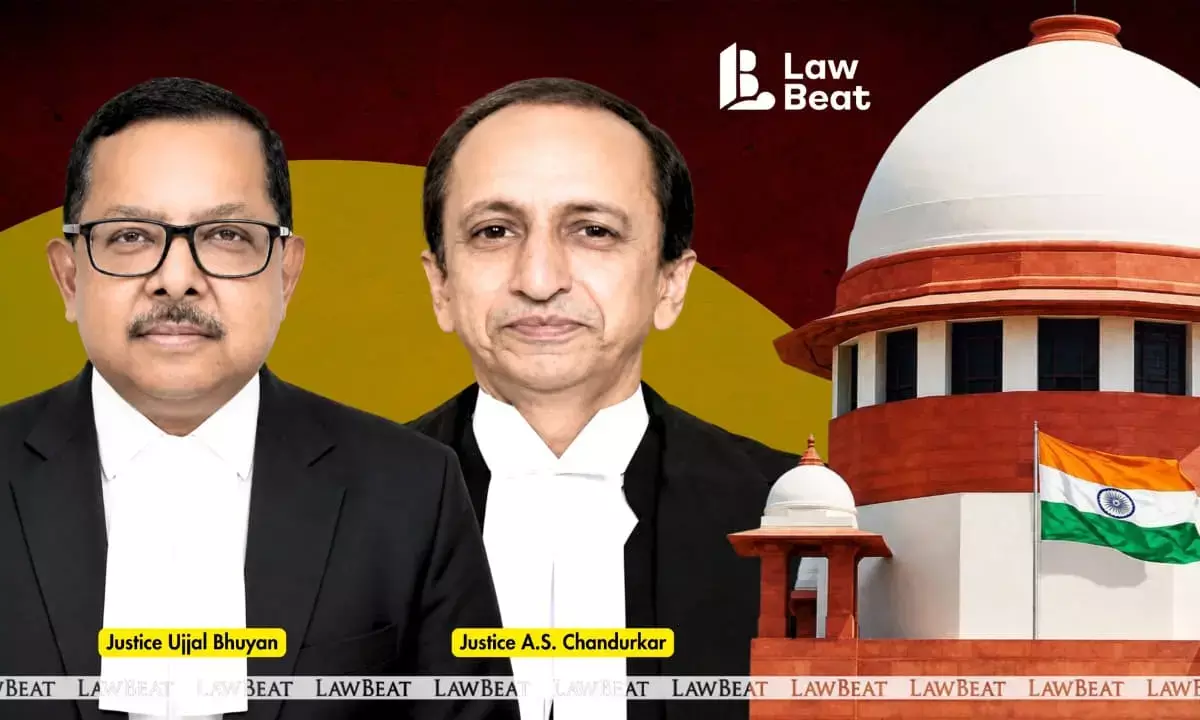
Supreme Court held that missing ticket cannot defeat genuine railway compensation claim
The Supreme Court has held that the Railways cannot reject a compensation claim merely because a passenger who was injured or died in a train accident was not found carrying a railway ticket. Court said that once the claimant states on affidavit that the passenger was travelling with a valid ticket which was subsequently lost, the burden shifts to the Railways to prove that the passenger was unauthorised.
A Bench of Justices Ujjal Bhuyan and Atul S Chandurkar said that the absence of a ticket with an injured or deceased person does not, by itself, negate the claim that he was a bona fide passenger.
Court made the observations while allowing an appeal filed by Sukhabhai Nanjibhai Makwana and another. It also emphasised that an investigation report under the Railway Passengers (Manner of Investigation of Untoward Incidents) Rules, 2003 must be conducted immediately and submitted expeditiously.
"A report prepared after a significant, unexplained delay cannot be relied upon by the Railways to defeat a claim for compensation," the Bench said.
Court disregarded the investigation report in the case as it was prepared seven months after the incident, failing the requirement of an immediate and expeditious inquiry.
Why did Supreme Court restore the compensation awarded to the victim’s parents?
The appellants were the parents of Maheshbhai, who, while travelling to Surat via Ahmedabad on September 27, 2017, was the victim of an ‘untoward incident’.
While travelling in the general compartment of the train, Maheshbhai fell down due to a sudden jerk and jolt when the train was between Sabarmati and Ahmedabad Railway Stations. He sustained multiple grievous injuries and was admitted to hospital. He, however, succumbed to his injuries on October 31, 2017.
The claim application filed by his parents under Section 16 of the Railway Claims Tribunal Act, 1987 was allowed by the Railway Claims Tribunal on June 17, 2022.
The tribunal held that Maheshbhai was the victim of an ‘untoward incident’ and had suffered an accidental fall. The claimants were held entitled to compensation of Rs. 8 lakh, along with interest at the rate of 9% per annum from the date of the incident till the date of the order.
The Union of India, aggrieved by the order, preferred an appeal under Section 23 of the Act of 1987.
A single judge of the Gujarat High Court, by an order dated July 15, 2025, allowed the appeal, holding that there was no evidence of the victim having fallen from the train. Therefore, the incident could not be called an ‘untoward incident’ as defined under Section 123(c)(2) of the Railways Act, 1989.
Was the absence of a railway ticket enough to reject the compensation claim?
Assailing the judgment, the claimants' counsel submitted that the victim was travelling with a valid ticket which was subsequently lost. Therefore, the burden to prove that the victim was an unauthorised passenger was on the Railways.
He contended that no material had been brought on record by the Railways to disbelieve the claim of the claimants.
The counsel also pointed out that the report submitted under Rule 6 of the Railway Passengers (Manner of Investigation of Untoward Incidents) Rules, 2003, as amended in 2007, was prepared more than seven months after the incident. Under Rule 7 of the Rules, such an investigation was required to be completed immediately and the report was to be submitted expeditiously.
The Union government's counsel, on the other hand, submitted that the claim was rightly disbelieved by the high court since no details of the train travel were disclosed in the claim application.
He contended that no eyewitness was examined and no railway ticket was found on the person of the victim. Referring to the evidence of the Station Superintendent, who had stated that there was no movement of any train at the relevant point of time, it was submitted that the Railways had rebutted the evidence led by the claimants.
It was further submitted that the high court had rightly held that the injury sustained by the victim was a ‘self-inflicted injury’ and, therefore, no compensation was payable under Section 124-A of the Act of 1989.
What did Supreme Court say about the missing railway ticket?
Having perused the relevant documentary material and considered the rival submissions, the Bench said:
"We are of the view that the high court committed an error in setting aside the award passed by the tribunal. The claimants were rightly held entitled to receive compensation under Section 124-A of the Act of 1989 and the award of the tribunal deserves to be restored."
Court noted that the Station Superintendent was also examined by the Railways. He stated that the incident was reported to him at 07.30 hrs and that he attended to the injured person and sent him to the hospital by ambulance.
The victim was not in a position to speak and the Station Superintendent had not checked his pocket for any ticket. Though he had given a memorandum on the same day, no investigation was conducted by him subsequently.
Court also pointed out that the Railways had examined two witnesses, namely the Assistant Sub-Inspector with the Railway Protection Force and the Station Superintendent. During their cross-examination, both admitted that they had not searched the victim's pockets for his ticket.
Referring to its judgment in Union of India v. Rina Devi (2018), the Bench said that the mere absence of a ticket with the victim would not negate the claim that the victim was a bona fide passenger.
The initial burden can be discharged by the claimant by filing an affidavit of the relevant facts, after which the burden shifts to the Railways, Court said.
In the present case, the untoward incident took place on September 27, 2017, leaving the victim with grievous injuries. He was thereafter hospitalised for more than a month and eventually succumbed to his injuries on October 31, 2017.
"In normal course, when the victim was undergoing medical treatment, it is quite unlikely that the railway ticket would have been preserved by the claimants. In any event, the Railways failed to discharge the burden that had shifted on them in view of the claimant’s statement on oath," the Bench said.
The witnesses examined by the Railways had failed to check the pockets of the victim.
"In these circumstances, we are of the view that the tribunal was justified in concluding that the victim was a bona fide passenger. The high court gave undue importance to the absence of the railway ticket without taking into consideration the statement made on oath by the victim’s father and the fact that the victim had been hospitalised for a period of more than one month," the Bench said.
On a preponderance of probabilities, Court held that it could be concluded that the victim was a bona fide passenger and that the absence of recovery of his ticket could not defeat the claim for compensation.
Why did Supreme Court disregard the delayed investigation report?
Court also considered the investigation report prepared under the Railway Passengers (Manner of Investigation of Untoward Incidents) Rules, 2003.
In the present case, the investigation report was prepared on May 17, 2018, about seven months after the untoward incident.
"Delay in conducting the inquiry could not be attributed to the claimants and the Railways cannot seek to take advantage of the delay on their part in preparing the investigation report," the Bench said.
Court also noted that there was no explanation on record from the Railways for the delayed preparation of the investigation report.
"We are, therefore, inclined to ignore the said investigation report. The same, therefore, cannot come in the way of the claimants in receiving compensation," the Bench said.
Court held that the tribunal had rightly granted compensation to the claimants under Section 124-A of the Act of 1989 and that the high court was not justified in reversing the award on the ground that the claimants could not produce the ticket on which the victim was travelling.
Setting aside the high court's order, the Bench restored the tribunal's order and directed that the award be satisfied within 30 days.
Case Title: Sukhabhai Nanjibhai Makwana And Another Vs Union of India
Bench: Justices Ujjal Bhuyan and Atul S Chandurkar
Date of Judgment: September 25, 2026