
No Income Proof in Accident Cases? Supreme Court Explains How Tribunals Must Assess Earnings
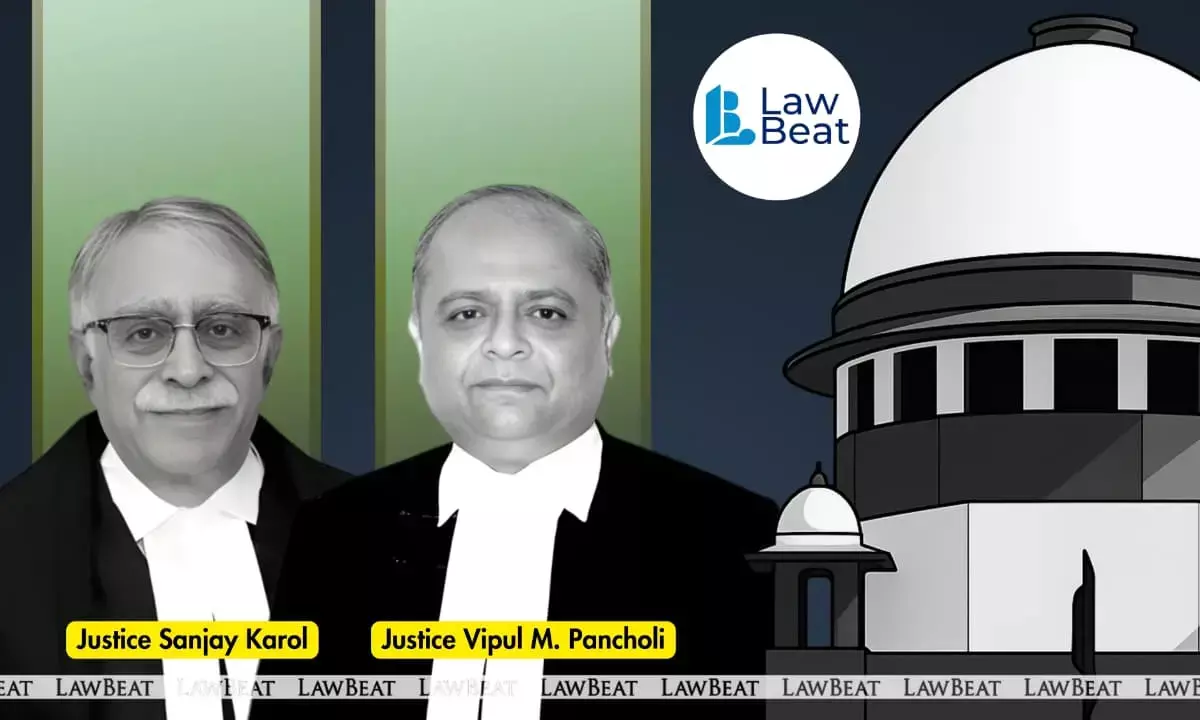
Supreme Court directs tribunals to use reasonable guesswork when assessing motor accident compensation
The Supreme Court has held that in motor accident compensation cases, some degree of reasonable guesswork while assessing a victim’s income is not only permissible but often unavoidable, especially when documentary proof is not available. Court clarified that such cases are not governed by the strict rules of proof applicable to criminal trials.
A bench of Justices Sanjay Karol and Vipul M Pancholi said that tribunals must assess income on the basis of the preponderance of probabilities, credible oral evidence, and surrounding circumstances, instead of mechanically applying low notional income figures.
At the same time, court cautioned that guesswork cannot be arbitrary or detached from the evidence on record. It observed that where there is uncontroverted oral testimony regarding income, courts are duty-bound to give it due weight and cannot disregard it without cogent reasons.
Applying these principles, court allowed an appeal filed by Sebani Nath and others and enhanced the compensation from Rs 18,29,400 to Rs 36,80,300.
The appeal arose from a judgment dated October 3, 2024, passed by the High Court of Orissa at Cuttack, which had modified an award dated October 30, 2021, passed by the Additional District Judge-cum-3rd Motor Accident Claims Tribunal, Jagatsinghpur.
The case relates to an accident that took place on September 3, 2014. The deceased, Ajay Kumar Nath, aged 24 years, was travelling on a motorcycle with his business partner, Suryakanta Baral, when a truck, allegedly driven at a high speed and in a negligent manner, rammed into their vehicle. Ajay Kumar Nath sustained grievous injuries and later succumbed to them while undergoing treatment.
A claim petition was filed seeking compensation of Rs 20 lakh, stating that the deceased was earning Rs 15,000 per month as a wholesale fish trader and was the sole breadwinner of the family.
By its order dated October 30, 2021, the tribunal assessed the deceased’s income at Rs 7,000 per month and awarded compensation of Rs 17,29,400. On appeal, the High Court modified the award and granted an additional consolidated compensation of Rs 1,00,000.
Dissatisfied with this assessment, the claimants approached the Supreme Court, contending that the income of the deceased ought to have been fixed at Rs 15,000 per month, considering his occupation as a wholesale fish trader.
After hearing the parties, the bench found merit in the submissions and held that the courts below had not correctly assessed the income of the deceased. It noted that the income had been fixed at Rs 7,000 per month without proper appreciation of the evidence on record.
The bench relied on its earlier decision in Chandra v Mukesh Kumar Yadav (2022), which held that in the absence of documentary evidence, some amount of guesswork is required. It also referred to Prabhavathi v Bangalore Metropolitan Transport Corporation (2025), where the court had reiterated that the standard of proof in motor accident claims is that of preponderance of probability and not proof beyond reasonable doubt.
Court further observed that the tribunals and the High Court had failed to give due weight to the uncontroverted oral evidence of Kishore Kumar Behera (PW-3), the manager of the fish firm owned by the deceased. He had deposed that the deceased was earning Rs 15,000 per month from his wholesale fish business.
“In these circumstances, and in light of the law laid down by this court, we proceed to reassess the income of the deceased at the rate of Rs 15,000 per month,” the bench said.
Relying on National Insurance Company v Pranay Sethi (2017), court recalculated the compensation and fixed the total amount at Rs 36,80,300, thereby modifying the High Court’s judgment.
Court clarified that interest on the enhanced amount shall be paid at the rate of 6 per cent per annum (simple interest) from the date of filing of the original claim petition, excluding the 135-day delay in filing the special leave petition.
Case Title: Sebati Nath & Ors Vs Shriram General Insurance Company Ltd
Bench: Justices Sanjay Karol and Vipul M Pancholi