
No Record, No Crime? Supreme Court Says Missing Documents Don’t Mean Forgery
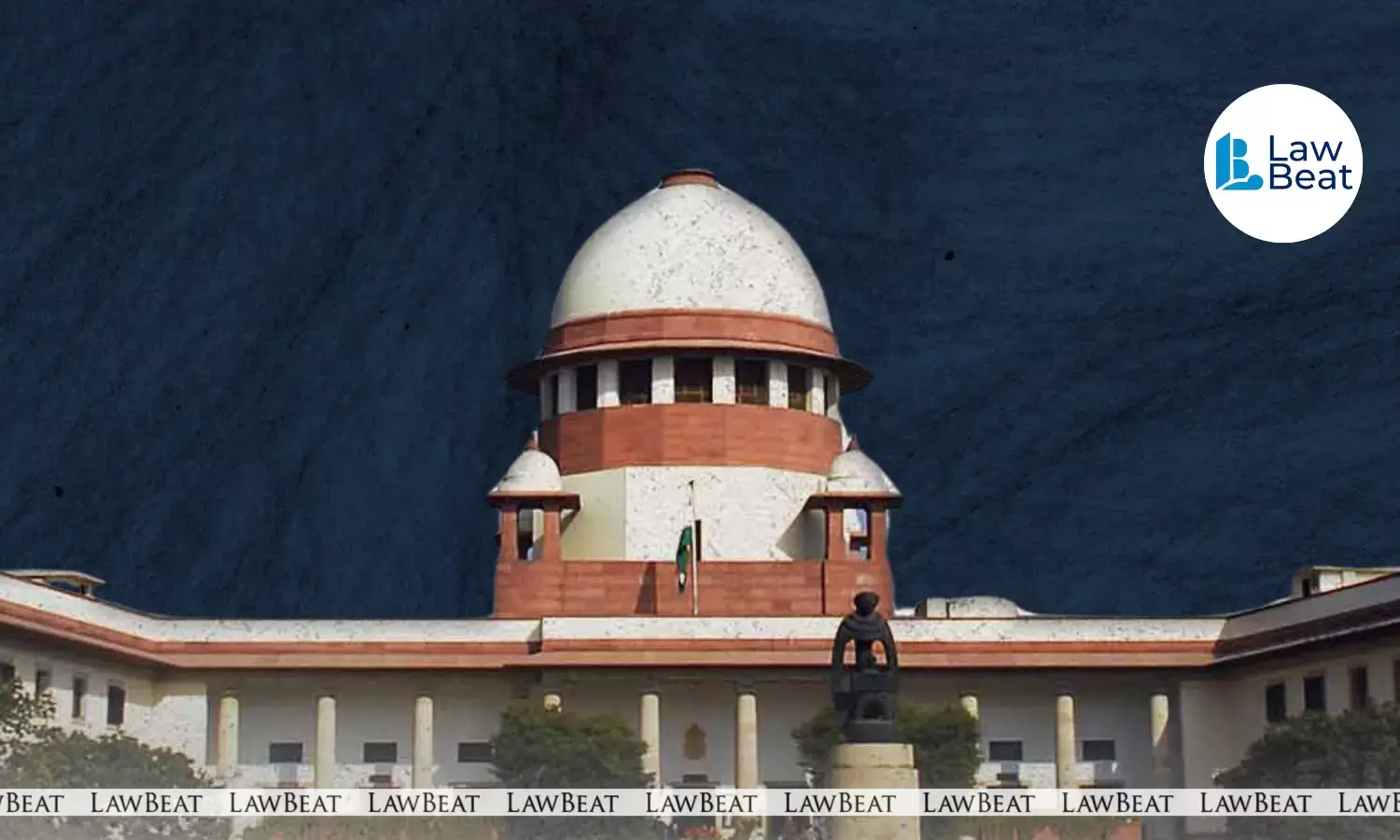
Supreme Court today refused to entertain 25 PILs filed by Advocate Sachin Gupta.
The Supreme Court has said that merely because a document is not traceable in official records after several years, it cannot automatically be treated as forged. It clarified that a document can be called forged only if there are specific allegations showing it is a “false document” within the meaning of Section 464 of the IPC (corresponding to Section 335, BNS).
A Bench of Justices P S Narasimha and Manoj Misra allowed an appeal filed by Vandana Jain and others and quashed an FIR registered under Sections 406, 420, 467, 468 and 471 IPC (corresponding to Sections 316, 318, 336, 337 and 340 of the BNS, respectively). The FIR arose from a 2010 Joint Venture Agreement (JVA) for development of a property. Court held that the case disclosed a civil dispute and not a criminal offence.
The Bench noted that, while deciding whether to quash an FIR, allegations are generally taken at face value to see if a cognizable offence is made out. However, if the dispute appears essentially civil in nature, the court must examine the surrounding circumstances to see whether it has been wrongly given a criminal colour. It also said that the court can look not only at the FIR but also at admitted documents and facts.
In this case, the parties had entered into a JVA in 2010 for development of a 1500 square yard plot in Kanpur valued at about Rs 2.5 crore. The agreement did not materialise, leading to disputes. In 2021, after about 11 years, the complainant lodged the FIR alleging that despite receiving Rs 1 crore as security, the accused did not hand over possession and had suppressed pending litigation over the land.
The accused argued that they had made no false representation about the property. They also pointed out that the agreement contained an arbitration clause, and any dispute should have been resolved through arbitration. They further said the FIR was filed after an unexplained delay of 11 years.
After hearing both sides,court found that the main allegations were about non-performance of the contract, non-refund of money, and alleged suppression of litigation. It examined the JVA and noted that there was no specific statement by the accused that no litigation was pending. Therefore, the claim that they falsely represented this fact was not supported by the agreement.
Court also observed that the security amount was not refundable under the terms of the agreement and was to be adjusted against future proceeds. Therefore, non-refund of the money could at best give rise to a civil claim, not a criminal offence.
On the allegation of a forged document, the complainant relied on a letter issued by the Tehsildar which was later found to be untraceable in official records. The court rejected this argument, stating that such documents are not preserved forever and their absence after many years does not make them forged.
It further noted that there were no allegations that the title documents themselves were forged. As a result, the claim that false documents were used was found to be baseless.
On the issue of cheating, court said there was nothing to show that the accused had any dishonest intention from the beginning of the agreement. It pointed out that if there had been clear dishonest intent, the complaint would not have been delayed by 10–11 years.
Court held that the FIR disclosed only a civil dispute arising out of contractual obligations. It also said that initiating criminal proceedings in such circumstances amounted to an abuse of the process of law.
The bench noted that the high court had dismissed the petition without properly examining whether the FIR actually disclosed any criminal offence. It therefore set aside the FIR and all proceedings arising from it.
Case Title: Vandana Jain & Ors Vs The State of Uttar Pradesh & Ors
Bench: Justices P S Narasimha and Manoj Misra
Date of Judgment: February 25, 2026