
Order VII Rule 11 CPC: Balance Sheet Entries Can Extend Limitation Period for Recovery Suits, Says Supreme Court
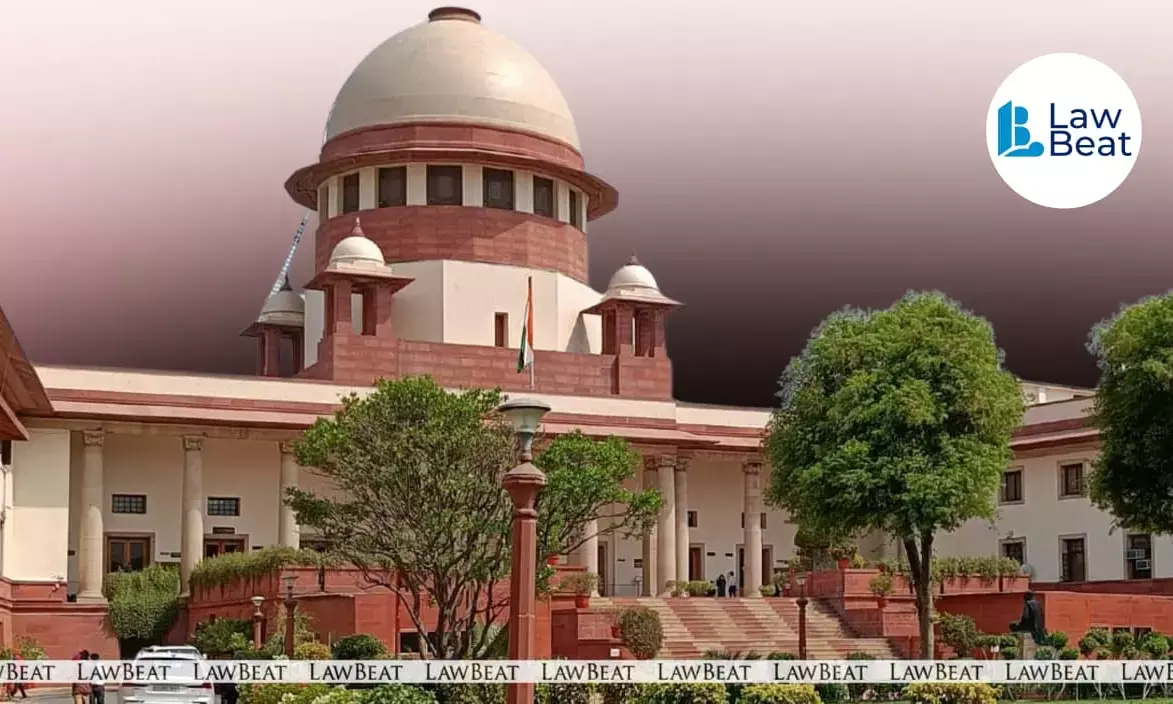
Balance sheet entries may extend the limitation period, says Supreme Court.
The Supreme Court has held that courts, while considering an application for rejection of a plaint under Order VII Rule 11 of the Code of Civil Procedure (CPC), should not conduct a detailed examination of evidence or conclusively determine whether a liability exists.
A Bench of Justices Vikram Nath, Augustine George Masih and Sandeep Mehta clarified that the court is only required to examine whether the plaint discloses a prima facie case on the basis of the material available.
Court further held that entries in balance sheets, when read with other relevant documents, may constitute an acknowledgment of liability under Section 18 of the Limitation Act, 1963, thereby triggering a fresh period of limitation.
Section 18 of the Limitation Act, 1963 provides that where a party acknowledges a subsisting liability in writing and signs the acknowledgment before the expiry of the prescribed limitation period, a fresh period of limitation begins from the date the acknowledgment is signed. Such acknowledgment may be made even if it does not specify the exact amount due, provided it indicates the existence of a subsisting liability.
Court explained that an acknowledgment of liability in writing, signed by the party against whom the right is claimed, gives rise to a fresh period of limitation from the date of its signing.
It pointed out that books of account, including balance sheets, may constitute an acknowledgment of liability under Section 18 of the Limitation Act. However, such entries must be assessed in the context of the balance sheet as a whole, including any qualifications or explanations contained in the accompanying notes or auditor's report.
The Bench emphasised that the provision does not require an acknowledgment to be made specifically in the name of the creditor or in any prescribed format, as long as it acknowledges a subsisting liability.
The only requirement is that the acknowledgment, when read along with the surrounding circumstances of the transaction, must indicate the existence of a subsisting jural relationship, it said.
In the present case, Court found that entries in the defendant society's balance sheets, read with bank reconciliation statements, constituted an acknowledgment of liability, thereby renewing the period of limitation under Section 18.
Background
The original plaintiff, Wazir Hussain, instituted a suit under Order XXXVII of the CPC in 2014 seeking recovery of money due under a civil works contract executed in 2000. The contract was entered into by the defendant society for the construction of a multi-storey building in Mayur Vihar, Delhi.
He relied on running bills raised between 2000 and 2003 to claim Rs 11,16,000, along with interest of Rs 11,04,840 calculated at 9% per annum, and pendente lite and future interest at the same rate until realisation.
The defendant filed an application under Order VII Rule 11 CPC seeking rejection of the plaint. It contended, among other things, that the suit was barred by limitation, did not disclose a cause of action and was not maintainable in view of alleged embezzlement.
In 2020, the trial court rejected the application. It observed that the outstanding amounts were reflected in the defendant society's balance sheets from 2004-05 until 2013, which amounted to an acknowledgment of debt and consequently gave rise to a fresh period of limitation.
The trial court further noted that the other issues concerning maintainability and the genuineness of the bills required evidence.
However, in 2024, the high court allowed the revision petition and rejected the plaint as barred by limitation. It observed that the bank statements relied upon by the plaintiff did not establish an acknowledgment of liability extending beyond 2005. It also noted that the plaintiff had not produced any balance sheet or other document showing such an acknowledgment.
The Supreme Court examined whether, in view of entries in the defendant society's balance sheets up to 2013, the suit could have been rejected at the threshold as barred by limitation.
It referred to its decision in Asset Reconstruction Company (India) Ltd v. Bishal Jaiswal (2021), wherein a three-judge Bench held that entries in books of account, including balance sheets, may constitute an acknowledgment of liability under Section 18 of the Limitation Act.
However, the Court had also clarified that such entries must be examined in the context of the balance sheet as a whole, including any qualifications or explanations contained in the accompanying notes or auditor's report.
The same principle was reiterated in Axis Bank Ltd v. Naren Sheth (2023), wherein the Court recognised that Section 18 of the Limitation Act would apply to balance sheets acknowledging a debt.
In the present case, the plaintiff relied on the defendant society's balance sheets for subsequent financial years, wherein an amount of Rs 21,79,134 continued to be carried forward under the head 'Balances pertaining to 2004-05'.
According to the plaintiff, the amount claimed in the suit formed part of the amount reflected in these balance sheets, when read cumulatively with the cheques and bank reconciliation statements. Therefore, the entries constituted an acknowledgment of liability from 2005 onwards.
"In the present set of facts, the surrounding circumstances amply support the claim of the original plaintiff that a liability existed, that it was reflected in defendant's own balance sheets and that the same continued to be carried forward to the year 2013, renewing the limitation period every year," the Bench said.
Court, however, clarified that this did not mean that the entries conclusively established that the entire amount claimed in the suit was owed to the original plaintiff.
"The precise relationship between the cheques issued, amounts carried forward and the sum claimed, inter alia, would require examination of evidence. These are matters for trial. At the stage of considering an application under Order VII Rule 11 CPC, the court ought not to have gone into the depths of evidence and conclusively determined the non-existence of liability. It was required only to assess whether the plaint disclosed a prima facie case on the basis of the material available," the Bench said.
Court also rejected the defendant's contention that a time-barred debt could not be revived indefinitely, particularly in the absence of an application seeking condonation of delay.
"Since the entries constituted an acknowledgment under Section 18 of the Limitation Act, a fresh period of limitation would automatically run from each subsequent date of acknowledgment. In that event, there was no requirement for an application seeking condonation of delay," the Bench said.
Court held that the high court had erred in allowing the defendant's revision petition and rejecting the plaint as barred by limitation.
Accordingly, it set aside the impugned order and restored the suit to the file of the trial court, leaving all questions on the merits of the claim open.
Case Title: Yusuf Vs Vigyapan Loke Delhi Advertising CGHS Ltd
Bench: Justices Vikram Nath, Augustine George Masih and Sandeep Mehta
Date of Judgment: November 06, 2026