
Procedural Irregularity In Selection Committee Cannot Invalidate Appointments Of Candidates Not At Fault: Supreme Court
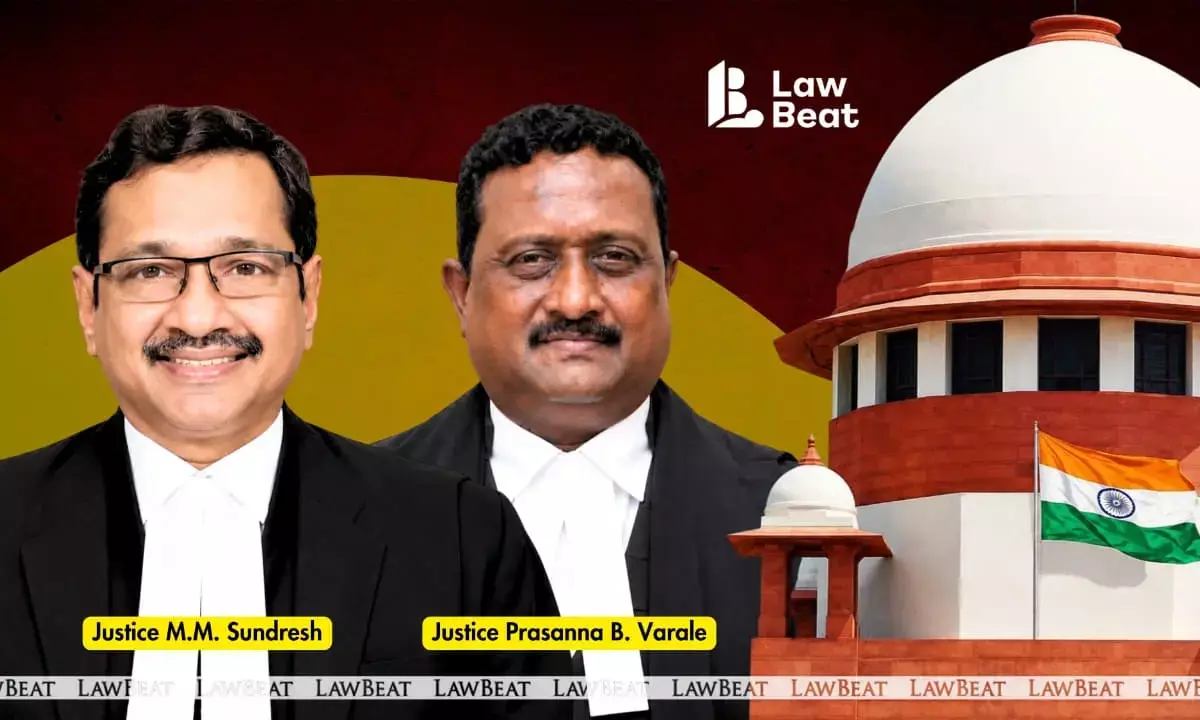
Supreme Court protects appointments of 18-year-serving inspectors.
The Supreme Court has held that procedural irregularities in the constitution of a selection committee do not automatically render the entire selection process void ab initio, particularly when the selected candidates are not responsible for the irregularity and have served for a considerable period.
A Bench of Justices M M Sundresh and Prasanna B Varale emphasised that the principles of natural justice distinguish between procedural violations that render a decision void ab initio and those that merely make it voidable.
The Bench observed that a procedural irregularity in the constitution of a selection committee, for which the selected candidates are not responsible, cannot by itself invalidate the entire selection process.
Dealing with an appeal filed by Girijakanta Rout, Court held that terminating candidates solely on the ground of procedural defects in the constitution of the selection committee is unsustainable in law when they have participated in the selection process and served for a significant period without any fault attributable to them.
Court accordingly set aside the termination of employees who had served as Live Stock Inspectors for 18 years and quashed the direction to conduct a fresh selection, noting that the candidates were not responsible for the procedural irregularity.
The private appellants were appointed as Live Stock Inspectors pursuant to an advertisement issued by the Director, Veterinary and Animal Husbandry, Odisha, on January 16, 2004.
An earlier notification dated January 7, 2000, issued by the Government of Orissa's Fisheries and A R D Department, had constituted the Selection Committee for the post without including the Project Director, DRDA, as a member.
However, through a subsequent notification dated November 28, 2003, the State Government included the Project Director, DRDA, as a member of the Selection Committee.
Pursuant to the advertisement, 45 candidates were called for an interview on June 22, 2004. The selection was made in 2006 by the reconstituted Selection Committee. The selected candidates subsequently underwent training and were appointed in 2008. They continued to serve as Live Stock Inspectors for the next 18 years.
Meanwhile, in 2006, candidates who were not selected challenged the appointments.
The Orissa Administrative Tribunal dismissed these challenges in 2011.
However, following the tribunal's decision, the Additional Secretary to the Government of Orissa, Fisheries and ARD Department, Bhubaneswar, initiated a suo motu proceeding. It was concluded that the prescribed procedure had not been followed in selecting candidates for the post of Live Stock Inspector and that the selection should, therefore, be declared null and void.
This finding was based on the inclusion of the Project Director, DRDA, as a member of the Selection Committee.
Consequently, on June 27, 2012, the private appellants and 11 others were terminated from service with immediate effect.
The private appellants challenged their termination before the tribunal and subsequently before the high court. However, both challenges were dismissed, and the termination order was upheld. A direction was also issued to prepare a fresh selection list.
Before the Supreme Court, not only the private appellants but also the State challenged the high court's decision. The State took a contrary stand, supporting the private appellants, apparently on the ground that they were not at fault and had remained in continuous service for the past 18 years.
Counsel for the private appellants submitted that there was no allegation that they were responsible for the procedural violation concerning the constitution of the Selection Committee. It was further argued that such a violation would not, by itself, render the selection process legally invalid.
It was also submitted that the private respondents would not benefit from the impugned order, as it merely facilitated a fresh selection. Moreover, the private respondents had also participated in the selection process but were unsuccessful.
On the other hand, counsel for the private respondents argued that since the selection was contrary to law, there was no reason for the Supreme Court to interfere with the high court's decision upholding the tribunal's order.
After hearing the parties, the Bench held that both the tribunal and the high court had committed a serious error.
"The principle of natural justice has got two different facets. The first facet would be one which has the effect of making the very decision void ab initio, on the face of it. The other facet is one pertaining to procedural violation which would only make the decision voidable," the Bench observed.
In the present case, Court pointed out that both the private appellants and the private respondents had participated in the selection process. It observed that had the private respondents been selected, they would also have supported the selection process.
The Bench further noted that the private appellants had continued in service for 18 years and were not responsible for the procedural irregularity in the constitution of the Selection Committee.
"It is absolutely not their fault for the so called procedural violation in the Constitution of the Selection Committee. Admittedly, it is the Government, by way of notification, which constituted the Selection Committee," the Bench observed.
In view of these findings, Court set aside the high court's judgment upholding the tribunal's decision and held that the private appellants were entitled to continue in service.
Court also quashed the direction issued to the State authorities to prepare a fresh selection list and set aside the Tribunal's order, thereby allowing the appeals.
Case Title: Girijakanta Rout Vs Orissa Administrative Tribunal & Ors
Bench: Justices M M Sundresh and Prasanna B Varale
Date of Judgment: September 30, 2026