
Prolonged Deprivation of Wages Can Warrant Monetary Compensation as Public-Law Remedy: Supreme Court
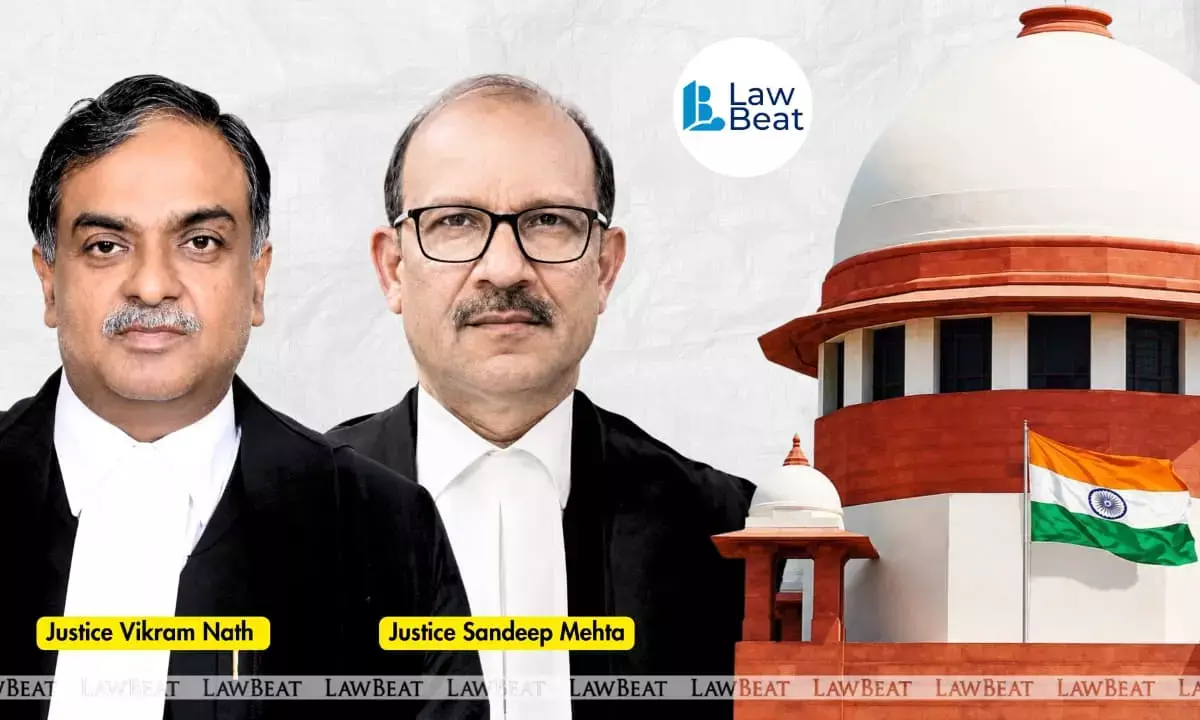
SC orders compensation for long-delayed workers' dues.
The Supreme Court has held that where circumstances disclose a prolonged and unconstitutional deprivation of the fundamental right to dignified wages, the court may, in exercise of its constitutional jurisdiction, award quantified monetary compensation as a public-law remedy.
A Bench of Justices Vikram Nath and Sandeep Mehta made the observation while directing the States of Bihar and Jharkhand to compensate employees and workmen whose salary, wages, provident fund and other monetary dues remained unpaid for prolonged periods.
Why did the Supreme Court award compensation to the daily-wage employees?
Court was dealing with an appeal filed by Bihar State Ardh Sarkari Arajpati Karmchari Maha Sangh and others concerning the long-pending payment of dues following the reorganisation of the State of Bihar under the Bihar Reorganisation Act, 2000.
The reorganisation of Bihar and the creation of Jharkhand gave rise to questions concerning the apportionment and discharge of liabilities, dues and service-related claims of employees and workmen of State-owned inter-State corporations.
Court noted that the controversy, which had its roots in the statutory reorganisation, had traversed a "long and chequered course", necessitating successive rounds of judicial intervention and administrative consideration.
The dispute concerned employees and workmen of five State-owned inter-State corporations which were Bihar State Construction Corporation Ltd; Bihar State Industrial Development Corporation Ltd; Bihar State Electronic Development Corporation Ltd; Bihar State Forest Development Corporation Ltd; and Bihar State Panchayati Raj Financial Corporation Ltd.
Court accepted a report submitted by a Committee headed by Justice Dinesh Maheshwari, former judge of the Supreme Court.
The Bench noted that the daily-wage employees/workmen had been engaged by the concerned corporations and had rendered services in discharge of the functions entrusted to them.
"While their status as daily-wage workmen cannot, by itself, confer upon them the same rights and entitlements as regular employees, but at the same time, such status cannot be treated as a reason for disregarding the services rendered by them or denying the entitlements lawfully accruing from such engagement," the Bench said.
What did the Supreme Court say about delayed provident fund dues?
Considering the Employees' Provident Funds and Miscellaneous Provisions Act, 1952, Court held that entitlement to interest on delayed provident fund dues must be considered having regard to the statutory character of provident fund as a measure of social security.
"The amount standing to the credit of an employee by way of provident fund constitutes a statutory benefit accrued during the course of employment and is intended to provide financial security to the employee upon cessation of service. Such amount, therefore, cannot be treated as an ordinary monetary claim capable of being withheld without the consequences prescribed by law," the Bench said.
Court pointed out that liability to pay interest follows by operation of law upon delayed payment of amounts due under the provident fund scheme. Such liability, it said, cannot be defeated merely because the underlying dues were subsequently discharged.
Court therefore directed payment of 12% interest on delayed provident fund dues as mandated under the Act.
"Interest, in its ordinary legal sense, represents compensation for the deprivation of the use of money to which a person is otherwise lawfully entitled. The concept of interest is not confined to a return upon money borrowed or advanced, but extends to compensation for the unjust deprivation occasioned by the withholding of money beyond the time when it becomes due and payable," the Bench said.
Court further explained that the rationale behind awarding interest lies in compensating a person for being deprived of the use of money lawfully due to them.
"Where a monetary entitlement has crystallized and payment thereof is delayed beyond the time when it became due and payable, the person entitled thereto is, for the intervening period, deprived of the use and benefit of the amount to which he is lawfully entitled. Interest, in such circumstances, serves as recompense for such deprivation and seeks to compensate, to the extent capable of monetary assessment, for the loss occasioned by the delay," the Bench said.
What compensation did the Supreme Court order Bihar and Jharkhand to pay?
Court directed the States of Bihar and Jharkhand to ensure payment of simple interest at 6% per annum on salary/wage arrears and other monetary dues, excluding EPF dues governed by Section 7-Q of the Employees' Provident Funds and Miscellaneous Provisions Act.
The interest is to be calculated from the date on which the respective amounts became due and payable until the date of actual payment, Court ordered.
For delayed EPF dues, Court directed the States to pay simple interest at 12% per annum for the corresponding period.
In addition, Court directed Bihar and Jharkhand to pay a one-time sum of Rs 1 lakh to each of the concerned daily-wage employees/workmen who were engaged during the relevant period.
"The States of Bihar and Jharkhand shall ensure payment of simple interest at the rate of 12% per annum on the delayed EPF dues, and at the rate of 6% per annum on the delayed salary, wages and other monetary entitlements, for the period commencing from the date on which the respective amounts became due and payable until the date of their actual payment," the Bench said.
Case Title: Bihar State Ardh Sarkari Arajpati Karmchari Maha Sangh & Ors Vs State of Bihar And Others
Bench: Justices Vikram Nath and Sandeep Mehta
Date of Judgment: September 28, 2026