
Public Jobs Must Follow Advertisement, Transparent Selection And Equal Opportunity: Supreme Court
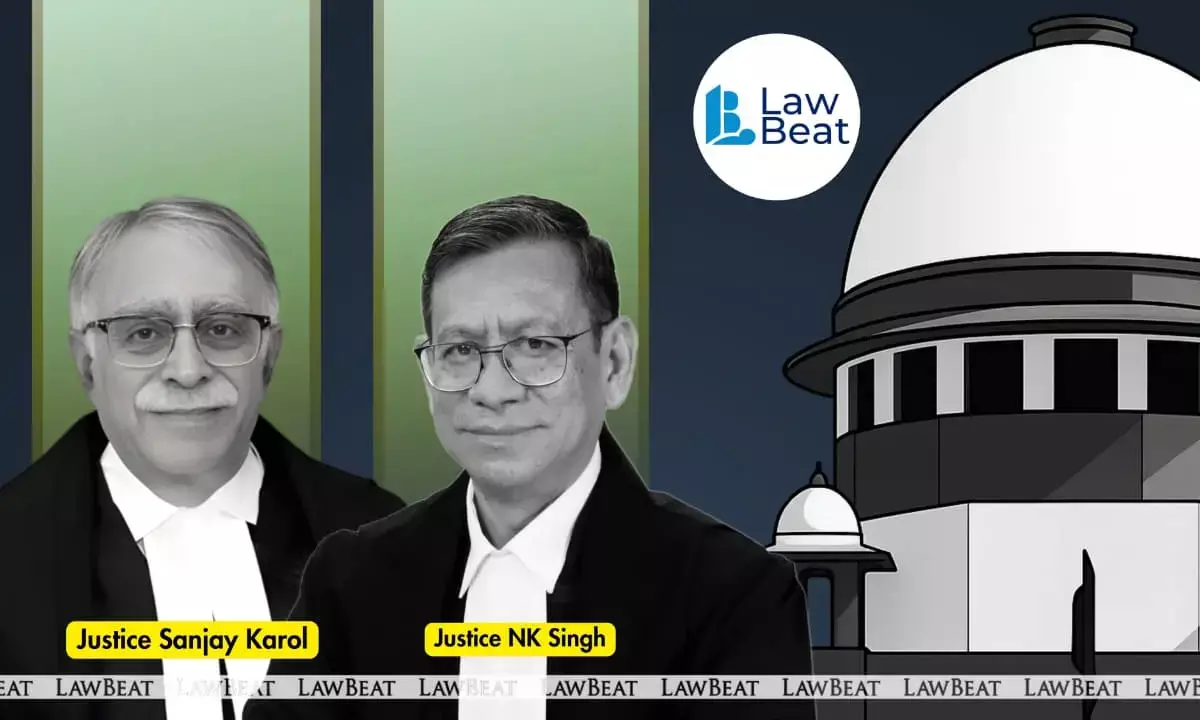
Supreme Court protects fair recruitments despite procedural lapses by authorities.
The Supreme Court has held that public employment must necessarily be preceded by a proper advertisement, a fair and transparent selection process, appointment by the competent authority, and equal opportunity for all eligible candidates to apply.
A Bench of Justices Sanjay Karol and N Kotiswar Singh said these requirements are mandatory and flow from the guarantee of equality under Articles 14 and 15 of the Constitution.
Court was dealing with a case that raised the question of how to balance strict compliance with recruitment rules against fairness to employees who were appointed through a publicly advertised selection process and had served for several years, but later faced removal because of procedural lapses allegedly committed by the recruiting authorities.
The appeal was filed by Gaurav Mehla and others against Punjab and Haryana High Court judgments upholding the cancellation of their appointments made in 2014 as Clerk-cum-Salesman and Peon-cum-Chowkidar in the Thanesar Cooperative Marketing-cum-Processing Society Ltd., Kurukshetra. Their appointments had been made after a public advertisement was issued and approval was granted by the Registrar, Cooperative Societies, Haryana.
The appointments were cancelled on the ground that they allegedly violated amended Rule 3 of the Primary Cooperative Marketing-cum-Processing Societies Limited Staff Service Rules, 2003.
According to the respondents, Rule 3 made it mandatory for the Assistant Registrar, Cooperative Societies, Inspector, Cooperative Societies, and District Manager, HAFED to be present and concur at the stage when appointments were approved. Since this requirement had not been followed, they argued that the appointments were void from the beginning and could not be protected merely because the employees had served for a long period.
The appellants, however, relied on Rule 35 of the Service Rules to argue that the meeting of the Managing Committee held on August 13, 2014 was valid because the presence of three members constituted the required quorum. They contended that the appointments could not be invalidated solely because the three officials were absent. The respondents countered that Rule 35 was a general provision governing meetings, whereas Rule 3 specifically dealt with appointments and therefore would prevail.
When can irregularities invalidate a public recruitment process?
After considering the rival submissions, the Supreme Court observed that the cooperative society could not be treated as a private body. It noted that the society functions under the Haryana Cooperative Societies Act, 1984 and appointments to it are governed by the 2003 Service Rules.
"The Cooperative Society partakes the colour of a public entity and the appointment to the posts in the society are governed by the Service Rules, 2003 which provides the manner for recruitment for appointment to various posts by following the proper norms of recruitment i.e., advertising the posts which are sought to be filled up, following a selection process and specifying the Appointing Authority," the Bench said.
Court found no fault with the recruitment at its most fundamental stage, noting that the vacancies had been publicly advertised.
It also noted that there were no allegations that any ineligible candidate had been appointed, that fraud, manipulation or mala fides had tainted the selection process, or that candidates had been selected without considering their qualifications, experience or merit as required under the rules.
The Bench emphasised that failure to advertise public posts would amount to a fundamental defect because it would deny eligible candidates an equal opportunity to apply, violating Articles 14 and 15 of the Constitution. Likewise, consideration of ineligible candidates or a recruitment process tainted by fraud, mala fides or lack of transparency would also go to the root of the recruitment and justify its cancellation.
Should employees lose their jobs for authorities' procedural mistakes?
Applying these principles, Court held that the absence of the Assistant Registrar, Inspector, Cooperative Societies and District Manager, HAFED at the Board of Directors' meeting was a procedural deficiency but not one that invalidated the entire recruitment process.
"In our opinion, the said deficiency i.e., absence of the Inspector of Cooperative Societies, Assistant Registrar of Cooperative Societies and the Deputed Manager of HAFED whose presence is stated to compulsory as per Rule 3 would not invalidate the entire recruitment process," the Bench said.
Court accepted the appellants' contention that employees should not suffer for procedural lapses committed by officials, particularly when there were no allegations regarding the validity of the advertisement, fairness of the interviews or appointment of ineligible candidates.
"Infraction of Rule 3 in our opinion thus, cannot render the entire recruitment process illegal which does not otherwise suffer from any fundamental error or defect," the Bench held.
Holding that the defect was curable rather than fatal, the Supreme Court directed the respondent cooperative society to reconvene a meeting of its Board of Directors within one month. The meeting must be attended by the Assistant Registrar, Inspector, Cooperative Societies and District Manager, HAFED, who will reconsider the Selection Committee's recommendations for the advertised posts.
Court clarified that the reconvened Board would only examine the final stage of approval and would not reopen the earlier stages of recruitment, including the advertisement and selection process.
Allowing the appeal, the Bench set aside the Punjab and Haryana High Court's July 29, 2025 judgment. It directed that if the appellants are found eligible and not otherwise disqualified, they shall be reappointed. Their past service will be counted for all purposes, although they will not be entitled to arrears of salary or allowances for the period they remained out of service.
Case Title: Gaurav Mehla & Ors Vs State of Haryana
Bench: Justices Sanjay Karol and N Kotiswar Singh
Date of Judgment: June 11, 2026