
Registration Of Will Is Not Mandatory Under Law: Supreme Court
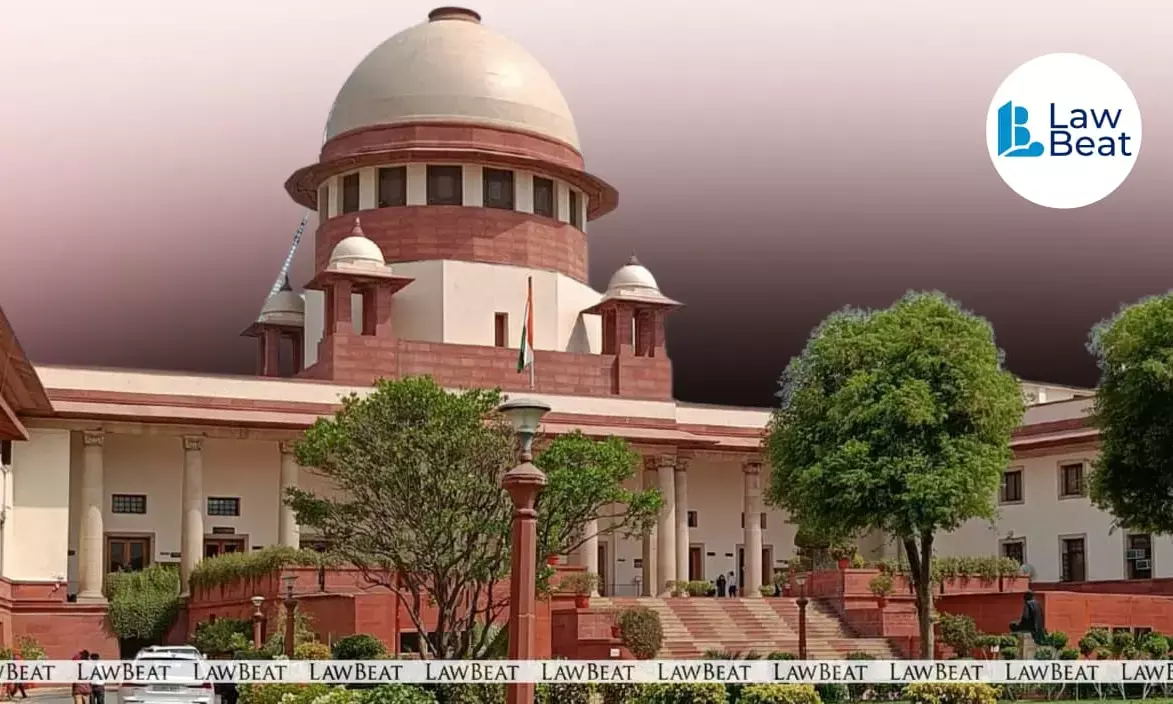
Supreme Court clarifies registration of a Will is not mandatory.
The Supreme Court has held that registration of a Will is not mandatory under law and that the mere non-registration of a Will cannot be treated as a suspicious circumstance casting doubt on its genuineness.
A Bench of Justices Ujjal Bhuyan and Vijay Bishnoi also clarified that the exclusion of natural heirs from a Will does not automatically make it suspicious, as the very purpose of executing a Will is to alter the ordinary line of succession.
The judgment came while upholding the validity of a Will executed in 1983 by B. Sheena Nairi, who bequeathed his agricultural and other properties in Karnataka's Udupi to his sister, Laxmi Nairathy, instead of his wife and children.
According to the facts of the case, Nairi was a permanent resident of Bombay and worked as a Chartered Accountant with five reputed companies. Apart from owning a residential flat in Bombay, he also owned substantial immovable properties in Brahmavar and Chanthar Village in Udupi Taluk, Karnataka, comprising mainly agricultural lands and ancestral properties.
His wife and children challenged the Will, alleging that it was forged and fabricated.
No mandatory registration of a Will
The Supreme Court said there is no legal requirement for a Will to be registered.
"There is nothing in law which requires the registration of a Will and wills are in a majority of cases not registered at all. To draw any inference against the genuineness of the Will on the ground of its non-registration appears to us to be wholly unwarranted," the Bench observed.
Court relied on its earlier decision in Ishwardeo Narain Singh v. Kamta Devi (1953) to reiterate this legal position.
The appellants had primarily questioned the Will on the ground that it was unregistered, apart from alleging forgery. Rejecting the contention, Court held that while suspicious circumstances surrounding a Will require closer scrutiny, non-registration by itself is not one of them.
Does excluding natural heirs make a Will suspicious?
The Supreme Court answered this question in the negative as well.
The Bench emphasised that a testator is legally entitled to dispose of his property according to his own wishes. Unless the exclusion of natural heirs is accompanied by suspicious circumstances affecting the genuineness or due execution of the Will, such exclusion alone cannot render the Will invalid.
Court noted that the Will itself recorded that the testator had not done any injustice to his wife, children or other relatives, and that he had already provided sufficiently for his wife and children residing in Bombay.
Rejecting the appellants' argument that their exclusion itself was a suspicious circumstance, the Bench held the contention to be legally untenable.
"It is well-established that mere deprivation of natural heirs, by itself, may not amount to a suspicious circumstance because the whole idea behind the execution of a Will is to interfere with the normal line of succession," Court said.
What else did the Supreme Court hold?
Court also clarified that mutation entries in revenue records do not confer title, as such entries are made only for fiscal purposes.
It further noted that the Will had been duly proved through the testimony of an attesting witness, who confirmed that the testator executed it voluntarily and while in a sound state of mind.
The Bench found that although the appellants had alleged forgery, they failed to produce any evidence in support of the claim.
Finding no reason to interfere with the concurrent findings of the trial court, the first appellate court and the Karnataka High Court, the Supreme Court upheld the validity of the Will.
Case Title: Parvathi Nairathi (Dead) And Ors Vs Laxmi Nairathi (Dead) Thru LRs And Ors
Bench: Justices Ujjal Bhuyan and Vijay Bishnoi
Date of Judgment: May 21, 2026