
Relief Omitted In First Suit Cannot Be Claimed In Subsequent Suit: Supreme Court
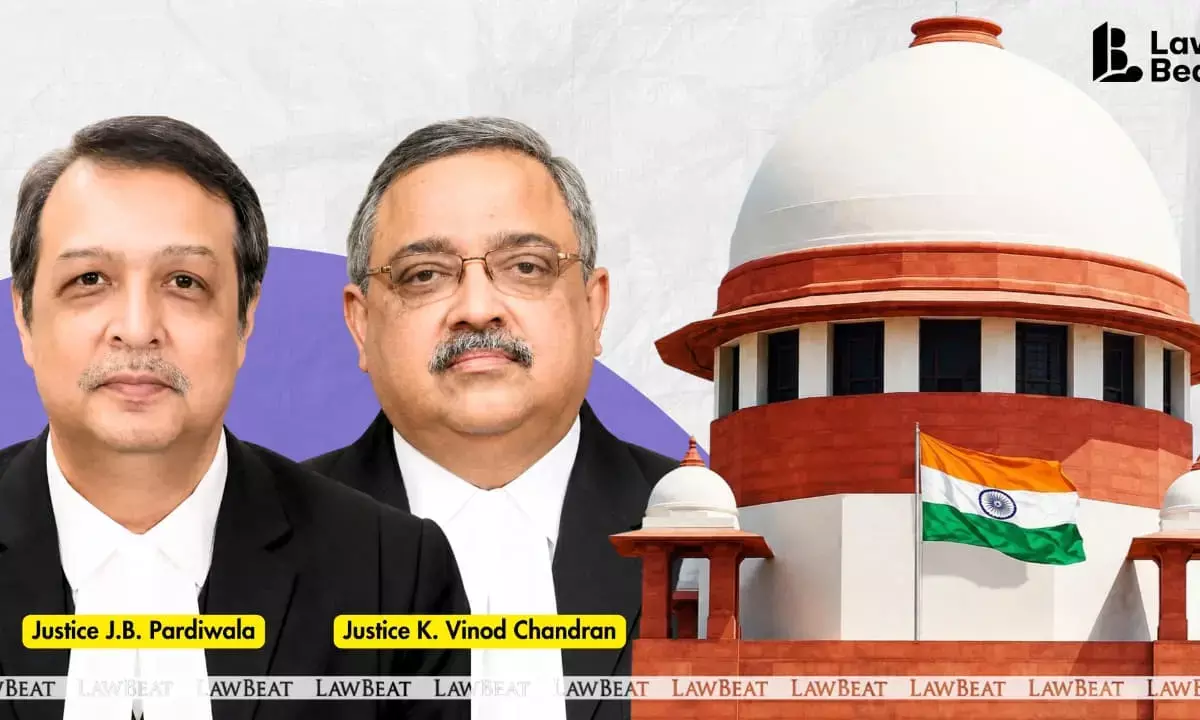
Supreme Court bars splitting claims in different civil suits arising from one cause.
The Supreme Court has held that a plaintiff must seek all the reliefs arising from the same cause of action in the same suit. If a plaintiff leaves out a relief that was available at the time of filing the first suit, and does not obtain the court's permission to seek it later, the plaintiff cannot claim that relief in a subsequent suit.
A Bench of Justices J B Pardiwala and K Vinod Chandran made the observation while allowing an appeal filed by Bombay Garage Ahmedabad Limited and others in a dispute concerning specific performance of an alleged oral agreement for sale of property.
Why was the second suit for specific performance barred?
Court held that since the plaintiff had failed to seek specific performance in an earlier suit for injunction based on the same cause of action, and had not obtained leave of the court, the subsequent suit was barred under Order II Rule 2 of the Code of Civil Procedure (CPC).
Order 2, Rule 2 of the CPC requires a plaintiff to include their entire claim and all available reliefs arising from a single cause of action in one lawsuit, preventing them from splitting claims or filing a second suit for an omitted part.
Court also clarified that withdrawal of a suit with liberty to file a fresh one does not permit a plaintiff to introduce reliefs that were available but omitted from the original suit without obtaining the necessary leave.
"The requirements of Order II Rule 2, regarding inclusion of the whole claim, remain distinct and unaffected by the procedure for withdrawal of a suit," the Bench said.
Court distinguished this from withdrawal under Order XXIII Rule 1 CPC, observing that leave obtained at the time of withdrawal cannot cure the failure to include all available reliefs when the original suit was instituted.
Order 23 Rule 1 of the CPC allows a plaintiff to withdraw a suit or abandon a part of their claim against the defendants.
Oral agreement for sale of property
The Bench further held that while an oral agreement for sale of immovable property is legally valid, the plaintiff carries a heavy burden to prove a concluded contract.
"The court requires strict proof of a concluded contract where all fundamental terms were settled; mere inferences from inconsistent oral testimonies or evasive conduct of defendants are insufficient," Court said.
In the present case, Court found that the plaintiffs failed to establish the existence of a concluded oral contract. It noted discrepancies in the pleadings and lack of corroborating evidence.
Court also found that the sixth defendant had no official capacity in the first defendant company and could, at best, have acted as a go-between in the proposed land deal. His matrimonial relationship with the company's person-in-charge did not give him authority to deal with the company's assets.
"If the plaintiff trusted the 6th defendant and went by his promises, based only on his matrimonial relationship, that is to the peril of the plaintiff," the Bench said.
What happened in the earlier injunction suit?
The appellant submitted that the plaintiff had initially filed a suit seeking only an injunction, which was later withdrawn with liberty to file a fresh suit. The plaintiff subsequently filed the fresh suit seeking specific performance.
The appellant argued that the claim for specific performance had already arisen when the first suit was filed, but the plaintiff neither sought the relief nor obtained leave to reserve it.
It was also argued that the courts below had relied mainly on oral testimony despite inconsistencies in the evidence. The appellant further submitted that the negotiations were allegedly conducted with the son-in-law of the person-in-charge of the first defendant company, who had no authority to enter into an agreement for sale of its assets.
On the other hand, counsel for J P Iscon Private Ltd argued that Rs 5,11,000 had been paid as advance in cash and Rs 5 crore by cheque towards the agreed sale consideration of Rs 20.50 crore. The respondent contended that the oral evidence established a concluded contract and that the defendants' evasive answers warranted an adverse inference.
Discrepancies in plaintiff's case
Court noted that the plaint in the second suit did not specify the date on which the defendants allegedly refused to proceed with the sale, unlike the earlier suit which mentioned May 8, 2007.
The earlier suit had been withdrawn citing an amicable settlement. However, there was no clear pleading about settlement talks after the withdrawal or any fresh refusal that could give rise to a new cause of action.
"We will not resort merely to nit picking to discredit the story set up; but it is these small discrepancies in pleadings that assume massive proportions in a civil suit especially when it is an oral contract that is attempted to be established," the Bench said.
Court was also not convinced that the alleged meetings had taken place. It therefore found no basis to accept that the alleged advance of Rs 5,11,000 had been paid. The alleged Rs 5 crore cheque had also never been presented to the bank.
Supreme Court's decision
Court held that the alleged dishonest or evasive conduct of the defendants could not, by itself, justify an adverse inference when the plaintiff had failed to prove the essential elements of its case.
"We are of the opinion that the plaintiff has failed to establish a concluded contract and the trial court, and the first appellate court have egregiously erred in granting specific relief, which findings borders on perversity," the Bench said.
The Supreme Court accordingly held that the plaintiff had failed to establish a concluded contract, dismissed the suit for specific performance and set aside the judgments of the courts below.
Case Title: Bombay Garage Ahmedabad Limited & Ors Vs J P Iscon Private Ltd & Anr
Bench: Justices J B Pardiwala and K Vinod Chandran
Date of Judgment: September 29, 2026