
Right to Walk Is a Fundamental Right; Safe Footpaths Must Get Priority Over Vehicles: Supreme Court
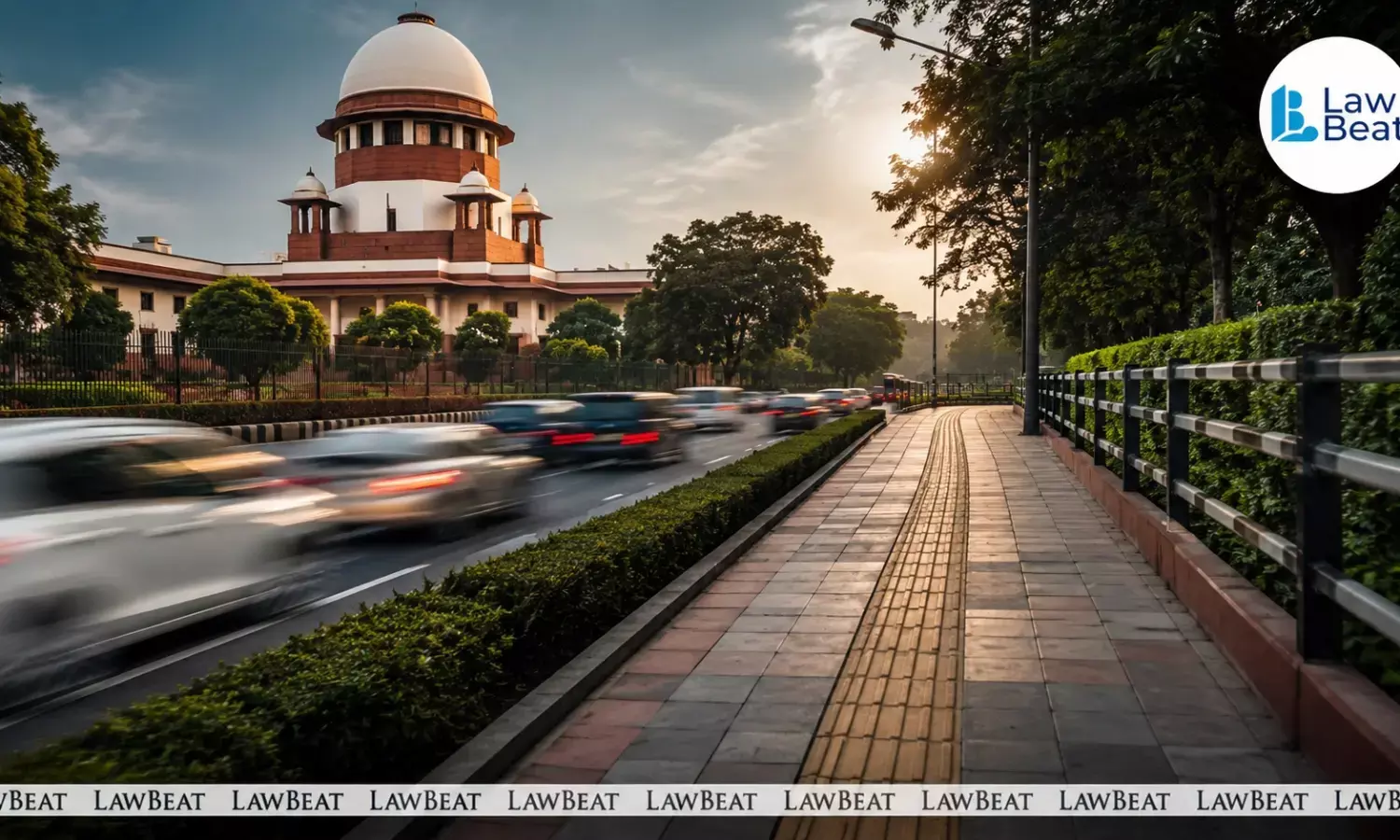
Supreme Court of India has recognised the right to walk on safe, well-maintained footpaths as a fundamental right under the Constitution.
In a significant judgment affecting millions of pedestrians across India, the Supreme Court on Friday held that the right to walk is a fundamental right guaranteed under the Constitution and includes the right to access safe, demarcated, and well-maintained footpaths.
A Bench of Justices P.S. Narasimha and Atul S. Chandurkar said that pedestrians' rights must take precedence over the movement of motor vehicles.
"These rights are primary and shall have priority over movement by motorised vehicles," the Court said.
Why Did the Supreme Court Recognise the Right to Walk?
Court said walking is not merely a mode of travel but an essential part of life and personal liberty. It held that the right to walk flows from the constitutional guarantee of free movement under Article 19(1)(d), as well as the rights to life, expression, assembly and association under Articles 21, 19(1)(a), 19(1)(b) and 19(1)(c).
According to the Court, the Constitution protects not just the freedom to move, but also the ability to do so safely. Therefore, the right to walk necessarily includes access to dedicated footpaths.
Who Is Responsible for Providing Footpaths?
Court said that recognising a fundamental right also creates a corresponding duty on public authorities.
"If the road exists, there is a duty to ensure that there are demarcated and well-maintained footpaths for walkers," the Bench said.
The responsibility lies with urban development authorities, municipal corporations, municipalities and panchayats, which must ensure that footpaths and other pedestrian infrastructure are properly constructed, maintained and protected.
Court further held that citizens can seek constitutional and legal remedies, including compensation, if their right to walk on safe footpaths is violated. Such remedies would be independent of those available under the Motor Vehicles Act, 1988.
Tragedy That Led to the Case
The observations came while deciding an appeal arising from the death of a five-year-old boy who was fatally hit by a tanker while walking to school with his father.
Recalling the incident, Court noted that the father had left home to drop his son at a nearby school, unaware that it would be their last walk together. The tanker struck the child from behind, crushing his lower body. He later succumbed to his injuries.
Court said such tragedies continue to occur because India has failed to adequately recognise and protect pedestrians' rights.
"Accidents like this continue to occur, perhaps they are inevitable till we restructure our rights regime as regards access to roads and recognise their correlative duties," it observed.
Have Indian Cities Prioritised Vehicles Over Pedestrians?
Court answered this in the affirmative, observing that urban planning in India has largely focused on motor vehicles while neglecting pedestrians.
Calling the right to walk a right that "precedes the right to move on wheels", the Bench said it was unfortunate that the country had failed to recognise and secure this basic freedom.
"It may be because wheels eclipsed our imagination, and our municipal administration was busy creating roads that are suitable for motorised vehicles," Court remarked.
The Bench went a step further and criticised the existing legal framework, saying the Motor Vehicles Act was never intended to protect pedestrians' fundamental rights and, in many ways, had contributed to their marginalisation.
"The absence of safe and comfortable footpaths to walk on, and even when they exist, their subjugation to motor transport, has been a civilizational problem," Court said.
Why Is Walking Important Beyond Transportation?
Highlighting the broader significance of walking, Court said it occupies a unique place in India's cultural, social, religious and political history.
Walking, it noted, has been a means of struggle for the disadvantaged, a form of meditation for many, a tool of resistance, and a vehicle for social and political change. It also played a crucial role in India's freedom movement.
For this reason, Court said walking is not merely physical movement but also an exercise of the freedoms of expression, assembly and association guaranteed by the Constitution.
What Directions Has the Supreme Court Issued?
To strengthen protection of pedestrians' rights, Court directed its Registry to send a copy of the judgment to the Ministries of Housing and Urban Affairs, Rural Development, and Road Transport and Highways.
The judgment is also to be forwarded to the Law Commission for examining a statutory framework to protect the right to walk, identify duty-bearers and provide effective remedies.
Court further observed that a dedicated regulatory mechanism may be necessary to effectively enforce the fundamental right to walk on demarcated footpaths.
Compensation Enhanced for the Victim's Family
In the case before it, the child's father had sought compensation of ₹25 lakh. The Motor Accident Claims Tribunal (MACT) awarded ₹7.82 lakh, which was later reduced by the High Court to ₹4.70 lakh.
Finding the reduction unjustified, the Supreme Court restored and enhanced the compensation, directing payment of ₹11.44 lakh within two months.
Recognising the wider constitutional issues involved, Court also ordered that the matter be re-registered as a petition under Article 32 of the Constitution under the title "Re: Fundamental Right to Walk and Footpath" and impleaded the Union Government through the concerned ministries.
Case Title: Maniyar Iliyaz @ Shaik Riyaz & Anr Vs P Ayyappan & Ors
Bench: Justices P S Narasimha and Atul S Chandurkar
Date of Judgment: June 19, 2026