
Rush to Criminal Cases Kills Chance of Couple's Reunion, Says Supreme Court, Stresses Pre-Litigation Mediation
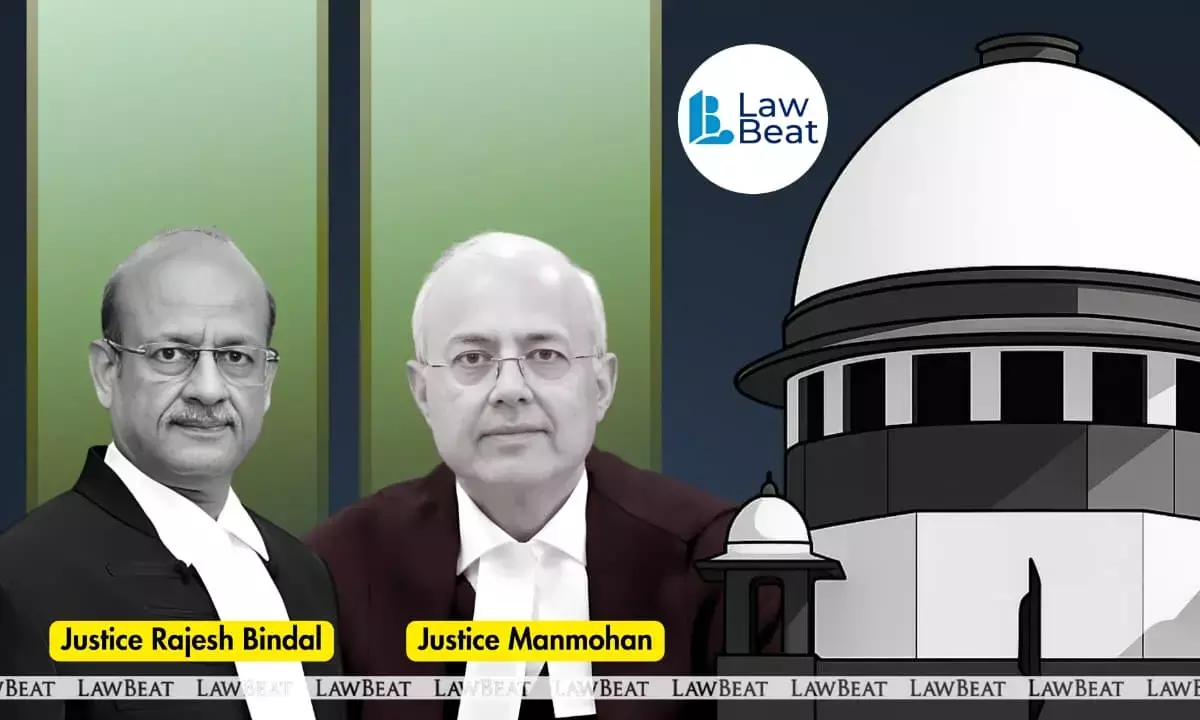
Supreme Court of India judges, Justice Rajesh Bindal and Justice Manmohan
The Supreme Court on January 20, 2026 said that earnest efforts must be made to resolve matrimonial disputes through mediation or counselling, either at the pre-litigation stage or even after litigation has begun, observing that warring couples cannot be allowed to treat courts as a battlefield to settle personal scores and choke the justice system.
A bench of Justices Rajesh Bindal and Manmohan said mediation should be explored before parties rush to court. Court noted that once parties begin litigating, especially on the criminal side, the chances of reunion become remote, though they should not be completely ruled out.
The bench observed that matrimonial disputes have an immediate impact on the fabric of society and, therefore, it is the duty of all concerned to make sincere efforts to resolve such disputes at the earliest stage, before parties take rigid and adversarial positions.
Pointing out that mediation centres are functional in all districts, court said pre-litigation mediation is already being explored in many cases, with encouraging success rates. In several instances, parties have even resumed living together after resolving their disputes through mediation, court highlighted.
The observations were made while dealing with a matrimonial dispute in which the husband and wife had filed more than 40 cases against each other.
Court found the case to be one of irretrievable breakdown of marriage, noting that the couple had stayed together for only 65 days and had been living separately for over a decade, engaging in continuous litigation.
“We find this to be a fit case for exercise of our discretion under Article 142 of the Constitution to dissolve the marriage,” the bench said.
In its judgment on a transfer petition filed by the wife, court underlined the importance of mediation even in cases involving seemingly minor issues, such as maintenance proceedings under Section 144 of the Bharatiya Nagarik Suraksha Sanhita, 2023 (earlier Section 125 of the CrPC) or complaints under the Protection of Women from Domestic Violence Act, 2005. The bench said that courts should first attempt mediation instead of immediately calling for replies, as allegations and counter-allegations often worsen the dispute.
Court further opined that even when a complaint relating to a simple matrimonial dispute is sought to be registered with the police, the first and foremost effort should be reconciliation, preferably through court-annexed mediation centres. Calling parties to police stations, the bench noted, can sometimes become a point of no return, especially if an arrest is made, even for a single day.
Referring to the growing number of matrimonial cases, the bench said such litigation has increased manifold, with even the Supreme Court being flooded with transfer petitions, mostly filed by wives seeking transfer of cases initiated by their husbands, either at the initial stage or as a counterblast. In such situations, court said, it is the responsibility of all concerned, including family members, to attempt resolution before civil or criminal proceedings are launched.
Court also noted a disturbing trend where, once differences arise, parties begin preparing to “teach a lesson” to the other side. Evidence is collected and, in some cases, even created, the bench said, adding that false allegations have become rampant, particularly in the era of artificial intelligence.
As per the wife, aged 38, the marriage was solemnised on January 28, 2012, and she left the matrimonial home after 65 days due to alleged cruelty by the husband and his family members. The parties have been living separately for more than a decade. She sought dissolution of marriage on the ground of irretrievable breakdown.
The husband disputed her version, claiming that the reason for her leaving was not as stated by her. He alleged that she had filed multiple cases only to harass him, most of which were dismissed.
According to the wife’s own record, 33 cases had been filed before trial courts and the high court, while the husband furnished a list of 17 cases. Upon verification, the court found that 17 cases were pending between the parties.
Court opined that, as the couple had been living separately for over a decade, there was no possibility of rehabilitation or cohabitation. Attempts at reconciliation had also failed and there was no child from the marriage, it pointed out.
Moreover, the bench noted that both parties were well-qualified. The wife was stated to be working with her sister’s company and earning well, while the husband, though qualified, claimed to have resigned from his engineering job.
The wife did not seek any alimony and prayed for quashing of all proceedings pending before courts in Delhi, Allahabad, Ghaziabad and Lucknow.
The husband opposed the divorce, alleging that the wife had spoiled his life and had misrepresented facts before courts. He said he had filed applications under Section 340 of the CrPC and Section 379 of the BNSS alleging perjury and did not consent to dissolution of marriage.
The bench, however, held that this was a clear case of irretrievable breakdown of marriage, observing that the parties neither intended nor were capable of living together given the bitterness that had accumulated over time.
Accordingly, court dissolved the marriage and directed the parties not to initiate any further litigation arising out of their matrimonial dispute.
All pending cases were quashed, except applications alleging perjury. The bench clarified that such applications would be decided independently on merits by the concerned courts, stating that no one can be allowed to pollute the stream of justice.
Court also imposed a token cost of Rs 10,000 each on the parties, to be deposited with the Supreme Court Advocates-on-Record Association, noting that despite staying together for only 65 days, they had indulged in prolonged litigation for over a decade.
Case Title: Neha Lal Vs Abhishek Kumar
Judgment Date: January 20, 2026
Bench: Justices Rajesh Bindal and Manmohan