
Supreme Court: Can't Execute Court Order Against People Who Weren't Part Of The Case
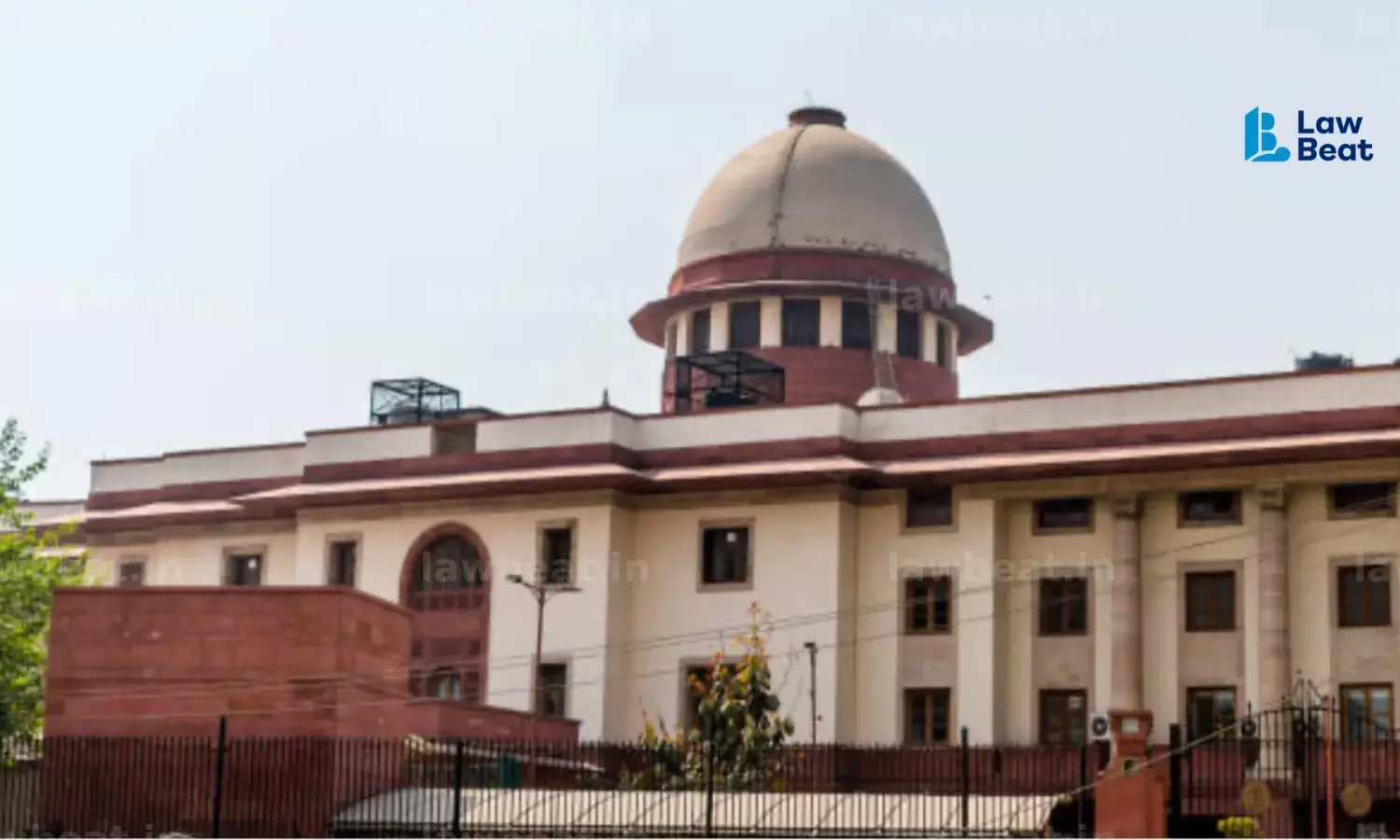
Supreme Court reiterates that courts must conduct a proper inquiry with evidence when a claim of juvenility is raised under the Juvenile Justice Act
The Supreme Court has ruled that execution must strictly conform to the decree as a decree cannot, by process of execution, be employed to shift or enlarge liability so as to bind persons who were neither parties to the decree nor otherwise legally liable thereunder.
The bench emphasised that where the judgment debtor is a company, the liability of its shareholders or joint venture partners remains confined to the extent of their shareholding or to such guarantees or undertakings as may have been expressly furnished by them.
The court pointed out that a company registered under the Companies Act is a distinct legal entity other than the legal entity or entities that hold its shares. A clear distinction must be maintained between a company and its shareholders.
Lifting of the corporate veil is an exceptional measure, to be resorted to only upon a clear finding that the corporate personality was abused for fraudulent or dishonest purposes. Such a finding must be preceded by specific pleadings and a determination on merits.
The court also underscored that once a moratorium has been declared against the judgment debtor company, the modes of execution contemplated including attachment and sale of movable or immovable property, attachment of bank accounts, or withdrawal of decretal amounts from the accounts of the judgment debtor, stand interdicted.
The bench dismissed appeals filed by Ansal Crown Heights Flats Buyers Association against June 20, 2024 decision of the National Consumer Disputes Redressal Commission, dismissing execution application filed by the appellant against the respondents 2 to 9, directors or promoters of M/s Ansal Crown Infrabuild Pvt Ltd.
The court stated it was in complete agreement with the approach adopted by the NCDRC that the Consumer Protection Act envisages a complete adjudicatory process founded on service of notice, pleadings, opportunity to contest, leading of evidence, and recorded findings of fact and law. These are not mere procedural formalities but substantive safeguards that precede the fastening of liability.
The appellants sought execution of the NCDRC order directing the company to either hand over possession of the flat or refund the money with interest. The NCDRC dismissed the execution applications insofar as they sought to proceed against the respondents 2 to 9, holding that the order is executable only against ACIPL, the sole respondent in the original complaints. The company also faced a moratorium due to proceedings under the Insolvency and Bankruptcy Code.
The NCDRC answered in the negative to a question if persons who were arrayed as respondents in the consumer complaints but ultimately against whom no notice was issued and the complaints did not proceed, could be brought within the net of execution on the premise that they were directors or promoters of the judgment debtor company.
The court held that since the judgment and order had not been passed against the respondents 2 to 9, at the stage of execution, the order passed against ACIPL could not be enforced against them.
The bench noted the appellant has neither pleaded nor established that the respondents 2 to 9 had furnished any guarantee or surety in respect of the investment made in the project, nor has any material been placed on record to attract the application of Section 14(3) of the IBC.
The court stated that execution proceedings cannot be permitted to continue indirectly against the respondents 2 to 9, who are neither judgment debtors nor guarantors, and against whom no independent liability under the order allowing the complaints has been established.
The court pointed out that no adjudicatory exercise was undertaken with respect to the respondents 2 to 9. There were no pleadings attributing any personal role to them, no evidence led to establish individual culpability, and no findings returned fixing personal liability.
In the absence of these foundational elements, execution proceedings cannot be utilized as a surrogate forum to impose liability where none has been adjudicated.
The court also declared that the invocation of the doctrine of piercing the corporate veil was wholly unwarranted in the present factual matrix as in the absence of a prior and reasoned determination justifying disregard of the corporate personality, the directors or promoters cannot be exposed to personal liability through execution.
The bench finally held that the NCDRC committed no error of law or jurisdiction in declining to execute the order against persons who were admittedly not parties to the complaints.
The order binds only ACIPL. Appellant did not challenge the order dated January 25, 2018 of the NCDRC declining to issue notice to the respondents 2 to 9 and directing it to file amended memo of party with ACIPL as the sole respondent, and cannot now enlarge the order through execution. Hence, the appeals must fail.
The court, however, clarified that this dismissal will not preclude the appellant from pursuing any remedy available in law against the promoters or directors, including proceedings under the Companies Act, IBC, or civil law, should the statutory requirements therefor be satisfied.
The judgment establishes clear boundaries for execution proceedings and reinforces that liability cannot be imposed on individuals merely because they are directors or shareholders of a company unless they were specifically made parties to the original proceedings and their personal liability was established through proper adjudication.
Case details: Ansal Crown Heights Flats Buyers Association vs M/s Ansal Crown Infrabuild Pvt Ltd & Ors, decided by a bench of Justices Dipankar Datta and Augustine George Masih on January 12, 2026.