
SC Deprecates MCD's Apathy Over 20-Year Delay In Regularising JEs
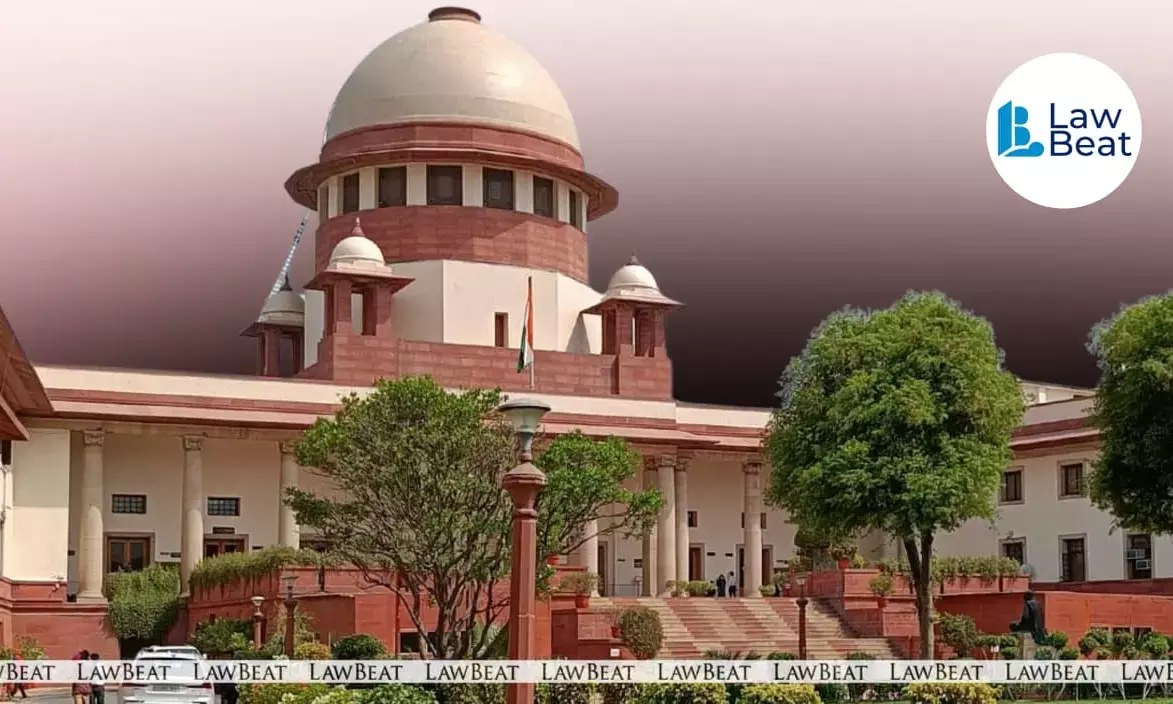
Supreme Court pulls up MCD over delayed regularization.
The Supreme Court has strongly disapproved the conduct of the Municipal Corporation of Delhi (MCD) for showing apathy and delaying the regularization of ad-hoc promotions of junior engineers for nearly two decades.
A Bench of Justices J B Pardiwala and K Vinod Chandran resolved the prolonged dispute concerning junior engineers who were promoted on an ad-hoc basis in 2006, holding that their services should be regularized from the date of their original ad-hoc promotion.
Dealing with an appeal filed by Narinder Singh Negi and another, the Bench said, “Official apathy is writ large in the case, wherein the appellants have been agitating their cause for regularization for the last two decades".
Why did the MCD junior engineers have to wait nearly two decades for regularization?
The appellants were promoted to the posts of Junior Engineer (Civil/Electrical/Mechanical) on an ad-hoc basis in 2006.
The MCD had decided to relax the provision requiring a competitive examination under the recruitment regulations for the posts of JE (Civil) and JE (Electrical). This facilitated the promotion of 12 candidates to the post of JE (Civil) and two candidates to the post of JE (Electrical). Appointment orders were issued to the promotees accordingly.
The appointment of the JE (Civil) was made on an ad-hoc basis for six months. The relaxation of the recruitment rules was then referred to the Government of NCT of Delhi for consultation and necessary approval.
However, the appellants continued uninterruptedly for six years. On June 29, 2012, they were reverted to their substantive posts as no decision had been taken by the Government on the relaxation.
What happened after the junior engineers were reverted?
The appellants approached the Central Administrative Tribunal (CAT), which directed that the number of vacancies available under the departmental quota be reckoned and that selection and promotion be carried out after conducting a limited departmental competitive examination.
The ad-hoc promotees challenged the CAT order before the Delhi High Court. On October 18, 2013, the high court disposed of the matter and directed the Lieutenant Governor (LG)/Government of Delhi to take a decision on the issue.
The high court also directed that status quo be maintained as on that date and gave the petitioners liberty to challenge the LG's decision if it prejudiced them.
But again, no decision was forthcoming. The ad-hoc promotees then filed an application in the disposed of writ petition, which was subsequently converted, suo motu, into a contempt petition.
Though the LG eventually granted the relaxation, there was no further progress in giving effect to the order by the MCD. The Corporation was accused of deliberately and wilfully dragging its feet.
MCD regularized the promotions, but only from 2022
The MCD eventually passed an order on October 6, 2023, regularizing the promotions, but only from the date on which the LG's approval was communicated to it. The approval had been conveyed through an order dated March 31, 2022.
Thus, the regularization was granted only from March 31, 2022, nearly 16 years after the original ad-hoc promotions in 2006.
The employees again pressed their contempt petition, but it was rejected on the ground that there was no case for holding the respondents guilty of contempt.
Against this background, the Supreme Court examined the long sequence of events and strongly criticized the MCD's conduct.
The Bench noted that although the relaxation had been granted in 2006 and employees in the lower cadre were promoted on an ad-hoc basis for six months, they were continued for six years because the relaxation was pending before the LG.
After six years, they were abruptly reverted to their substantive posts, following which they approached the CAT. The tribunal directed consideration of their case through a departmental competitive examination.
The challenge to the CAT order before the high court resulted in a direction in 2013 to the Government of NCT of Delhi to consider the relaxation. Yet, for another nine years, nothing happened.
It was only when the application seeking directions was converted into a contempt case that the Government permitted the relaxation. Even then, more than a year passed before the MCD implemented the decision, while granting regularization only from the date on which the LG had granted the relaxation, Court noted.
“We cannot but deprecate the conduct of the MCD; especially the apathy shown to the employees,” the Bench said.
Approval of relaxation relates back to 2006
Court pointed out that the relaxation sought in 2006 was for promotion without holding a departmental examination, as required under the rules.
The ad-hoc promotions were made from among regular employees of the Corporation who satisfied the eligibility conditions. The relaxation, as decided by the Corporation through its resolution, was forwarded to the Governor in 2006 itself.
The Supreme Court held that once the relaxation was approved by the Governor, even if the approval came after a decade and a half, the MCD could not contend that regularization would take effect only from the date on which the Government permitted the relaxation.
The Bench said the relaxation of the rules had been made by the MCD itself in 2006, and what remained pending was approval of that relaxation.
“When the approval is issued by the LG, it relates back to the date on which the relaxation had been granted,” the Bench declared.
“We have no doubt in our minds that the appellants are entitled to regularization in the posts of JE from the date on which they were promoted on ad-hoc basis,” Court said.
The Supreme Court directed that the appellants be granted regularization along with all pecuniary benefits flowing from it. It also directed that they be considered for further promotions based on their eligibility alone, when their turn for promotion comes and a vacancy is available in the higher cadre, including retrospectively from the date on which they became eligible.
Court further clarified that if any examination is prescribed for further promotion, the appellants cannot be asked to appear for such an examination at this distance of time.
“Hence our direction that their eligibility and suitability alone shall be considered,” the Bench said, adding that this would be based on their period of eligible service and Annual Confidential Reports (ACRs).
Their seniority in the higher post would be reckoned as junior to the immediate senior in the feeder category, taking their regularization as having taken place in 2006.
Benefits extended to all 14 ad-hoc promotees
The Supreme Court made it clear that the benefit would not be limited to the two appellants.
It directed that all such persons who were parties to the writ petition i.e. the 14 ad-hoc promotees would be given the same benefits, even if they had retired or had ceased to be in service, except where their service had ended due to resignation or dismissal pursuant to a domestic enquiry.
Allowing the appeal, Court said it expected the MCD to confer the benefits and disburse the pecuniary dues to the appellants and those among the 14 petitioners in the earlier writ petition.
The MCD was also directed to revise their retirement benefits, including pension, wherever applicable.
Case Title: Narinder Singh Negi & Anr Vs Dr Renu Sharma & Anr
Bench: Justices J B Pardiwala and K Vinod Chandran
Date of Judgment: September 08, 2026