
Supreme Court: No Prior Approval Needed To Probe Public Servants Demanding Bribes
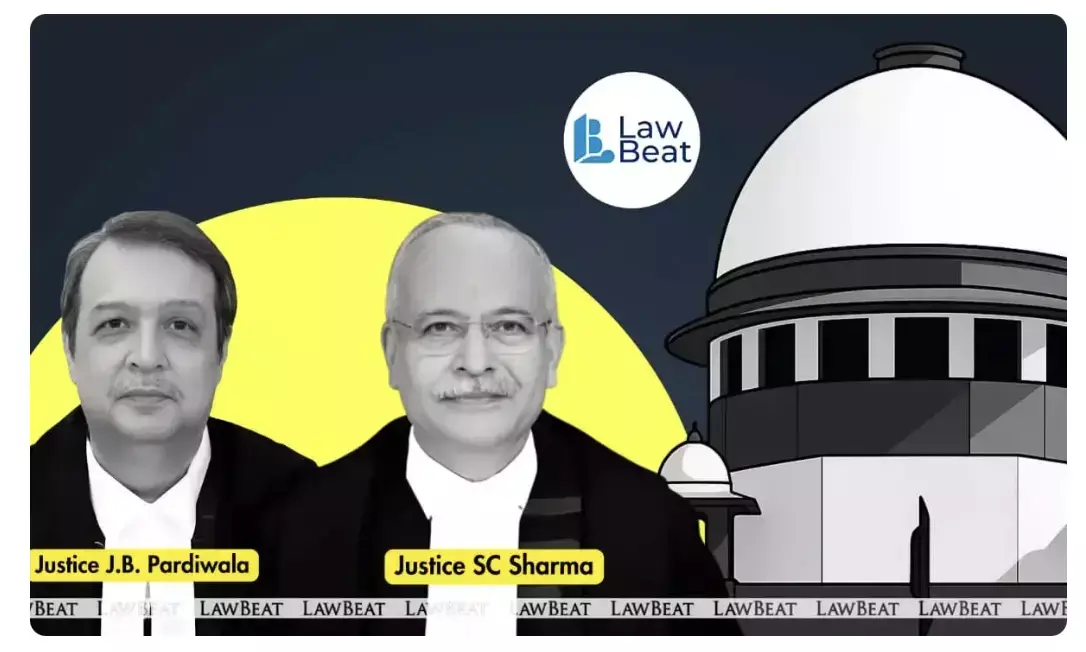
Supreme Court of India Judges, Justices JB Pardiwala & Satish Chandra Sharma
The Supreme Court has ruled that Section 17A of the Prevention of Corruption Act, mandating prior approval from the government before initiating any enquiry or investigation against a public servant, cannot be applied to cases of demand of illegal gratification.
The bench emphasized that Section 17A deals with enquiry or investigation of offences relatable to recommendations made or decisions taken by public servants in discharge of official functions or duties.
The court was dealing with a special leave petition filed by Anil Daima and others against the Rajasthan High Court's judgment of October 3, 2025.
On the petitioners' writ petition, the High Court examined two questions of law. First, if any offence under the Prevention of Corruption Act is committed by a person serving under the central government within the territorial jurisdiction of Rajasthan, whether the state Anti-Corruption Bureau is authorized and has jurisdiction to register a criminal case against such person and proceed for investigation and filing of charge sheet, or whether jurisdiction lies exclusively with the Central Bureau of Investigation.
Second, if a charge sheet of an offence under the Prevention of Corruption Act is filed by the Anti-Corruption Bureau against a person serving under the central government before the court of competent jurisdiction but without obtaining approval or consent of CBI, whether such charge sheet can be considered valid in law and within jurisdiction to commence and culminate the criminal trial.
Both questions were answered by the High Court against the petitioners.
The High Court after due consideration of the position of law and review of various decisions of the Supreme Court and provisions of law, recorded a categorical finding that the ACB of Rajasthan has jurisdiction to register criminal case under provisions of the Prevention of Corruption Act despite the fact that the accused is an employee of central government.
Examining the matter, the bench said the High Court took the correct view while saying that it is incorrect to say that only CBI could have instituted the prosecution.
Counsel for the petitioners urged the court to grant benefit of Section 17A of the Prevention of Corruption Act.
On this, the bench clarified that the petitioners are being prosecuted for offences punishable under Sections 7 and 7A of the Act, 1988. This is a case of demand of illegal gratification.
The court held that the entire submission of counsel was thoroughly misconceived.
Section 17A came to be enacted with a particular object. Section 17A deals with enquiry or investigation of offences relatable to recommendations made or decisions taken by public servants in discharge of official functions or duties. Section 17A by any stretch of imagination cannot be applied to cases of demand of illegal gratification.
By rejecting the submission at the threshold, the court dismissed the special leave petition.
Case details: Anil Daima Etc vs State of Rajasthan & Ors, decided by a bench of Justices J B Pardiwala and Satish Chandra Sharma decided on January 19, 2026