
Supreme Court: State Police Have Jurisdiction To Investigate Central Govt Staff Under PC Act
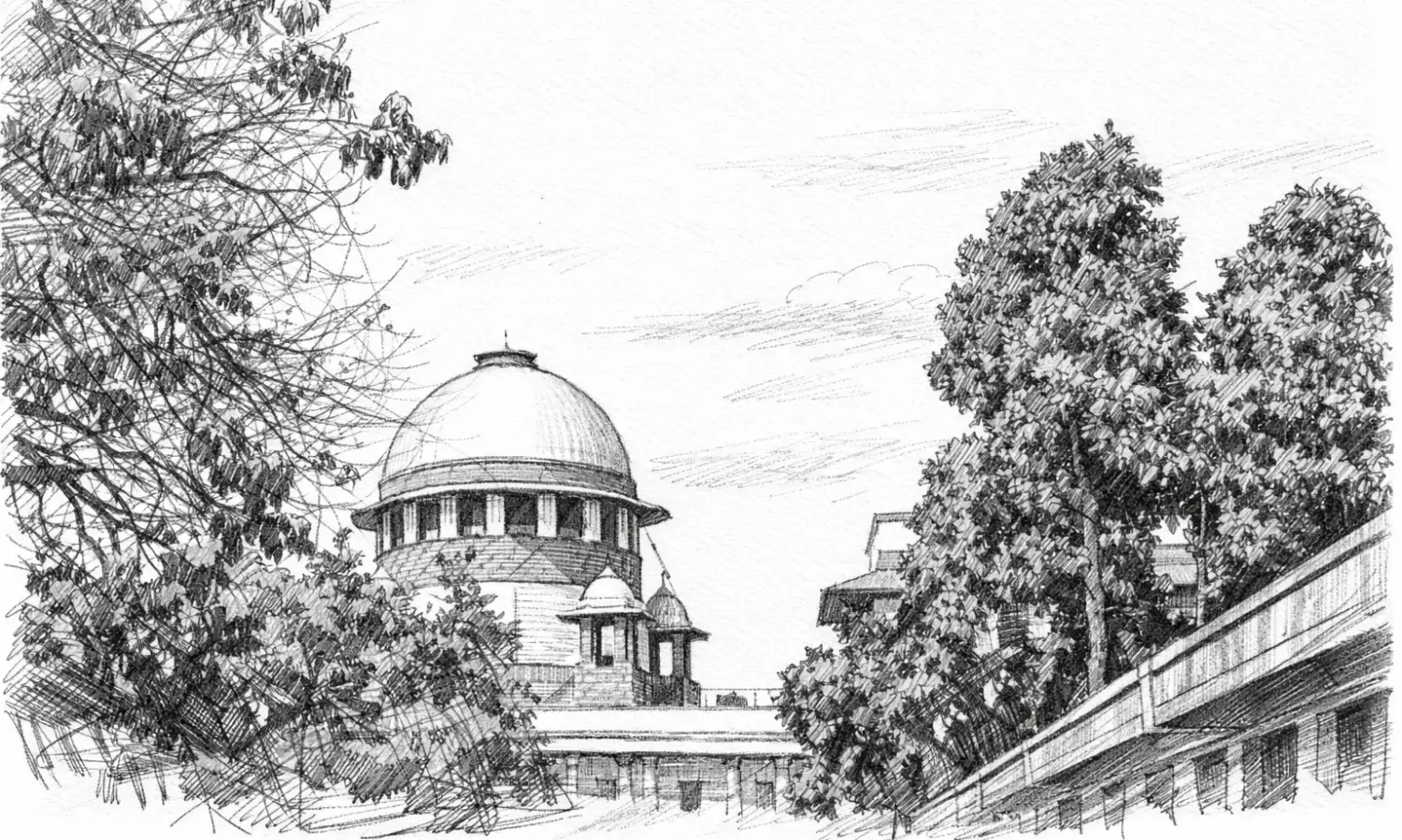
Supreme Court of India (Ai Generated) Representative Image
The Supreme Court has held that state police have jurisdiction to investigate offences of bribery and corruption under the Prevention of Corruption Act (PC Act) against central government employees without approval from the Central Bureau of Investigation.
The bench pointed out the Prevention of Corruption Act does not specifically envisage a separate procedure for conducting investigation. Offences under the PC Act can be investigated by state agency or central agency or any police agency as seen from Section 17 of the Act, with the qualification that the police officer shall be of a particular rank.
Section 17 does not exclude or prevent state police or a special agency of the state from registering a crime or investigating cases relating to bribery, corruption and misconduct against central government employees.
The court opined that it is for convenience and to avoid duplication of work that the Central Bureau of Investigation, a specialized investigating agency under the Special Police Establishment, is entrusted with investigating cases of corruption and bribery against employees of central government and its undertakings. Similarly, the Anti-Corruption Bureau, a specialized investigating agency of the state, is entrusted with investigating cases of corruption and bribery against employees of state government and its undertakings.
The court highlighted that Section 156 of the Criminal Procedure Code authorizes any police officer in charge of a police station to investigate a cognizable offence without the order of a magistrate. The word "police station" has been defined in Clause (s) of Section 2 of the Code to mean any post or place declared generally or specially by the state government to be a police station, and includes any local area specified by the state government in this behalf.
The Vigilance and Anti-Corruption Bureau is also a wing of state police. Offences under the PC Act are also cognizable and can therefore be investigated by state police or VACB. The only rider is that investigation can be done only by a police officer of the rank specified in Section 17 of the PC Act. As per Section 22, the provisions of CrPC shall apply save and except specific areas envisaged by the Act.
The court upheld the Rajasthan High Court's judgment of October 3, 2025, which recorded a categorical finding that the ACB of Rajasthan has jurisdiction to register criminal case under provisions of the PC Act despite the fact that the accused is an employee of central government.
The High Court took the correct view while saying it is incorrect to say that only the CBI could have instituted the prosecution.
On an appeal filed by Nawal Kishore Meena alias N K Meena, the court examined whether if any offence under the PC Act is committed by a person serving under the central government within the territorial jurisdiction of Rajasthan, whether the state Anti-Corruption Bureau is authorized and has jurisdiction to register a criminal case against such person and proceed for investigation and filing of charge sheet, or whether jurisdiction lies exclusively with CBI.
The court also framed a question whether if a charge sheet of an offence under the PC Act is filed by the Anti-Corruption Bureau against a person serving under the central government before the court of competent jurisdiction but without obtaining approval or consent of CBI, whether such charge sheet can be considered valid in law and within jurisdiction to commence and culminate criminal trial.
The bench stated that although law and order including investigation of different criminal cases is a state subject and generally such matters are investigated by the state, the relation between CBI and state police is supplementary to each other. As per the CBI constitution and inter se arrangement between CBI and state police, there are several areas where CBI and police require inter se cooperation and support.
As per the arrangement, cases of corruption by central government are investigated by CBI and cases of bribery and corruption by state government employees are investigated by state police. CBI also has power under the CBI Constitution to investigate any case of the nature which includes offences against central government employees or concerning affairs of central government and employees of central public sector undertakings and public sector banks, cases involving financial interests of central government.
The Criminal Procedure Code is the parent statute which provides for investigation, inquiry into and trial of cases. Unless there is specific provision in another statute to indicate a different procedure to be followed, provisions of CrPC cannot be displaced. In other words, existence of a special law by itself cannot be taken to exclude operation of CrPC. Unless the special law expressly or impliedly provides separate provision for investigation, the general provision under Section 156 of CrPC shall prevail.
The court pointed out the question whether state police has jurisdiction to investigate offences of bribery and corruption under the PC Act against central government employees came up for consideration before High Courts of Madhya Pradesh and Andhra Pradesh.
A division bench of the Madhya Pradesh High Court in Ashok Kumar Kirtiwar vs State of Madhya Pradesh (2001) held that state police, be it regular police force or Special Police Establishment, can investigate offences of bribery and corruption against central government employees posted in Madhya Pradesh. The Full Bench of Madhya Pradesh High Court in Arvind Jain vs State of Madhya Pradesh (2017) also took the same view.
A single bench of Andhra Pradesh High Court in G.S.R. Somayaji vs State through CBI (2001) held that trap laid down against central government employees and investigation done by state agency cannot be questioned on the premises that it is illegal for want of jurisdiction.
The Supreme Court agreed with the dictum laid down in those decisions and found no error in the impugned judgment and order passed by the High Court, dismissing the special leave petition.
Case details: Nawal Kishore Meena @ N K Meena vs State of Rajasthan, decided by a bench of Justices J B Pardiwala and Satish Chandra Sharma on January 19, 2025.