
SC Suspends Life Term in 1999 Custodial Death Case, Flags Conflicting Evidence
Supreme Court of India backs exam authorities and validates SSC CGL 2023 answer key
The Supreme Court on November 27, 2025 said that plea to suspend a life sentence must be assessed with stricter scrutiny, as they involve a substantive punishment. In contrast, when an appeal concerns a fixed-term sentence, appellate courts may consider suspension more liberally, unless there are exceptional reasons to refuse it, court held.
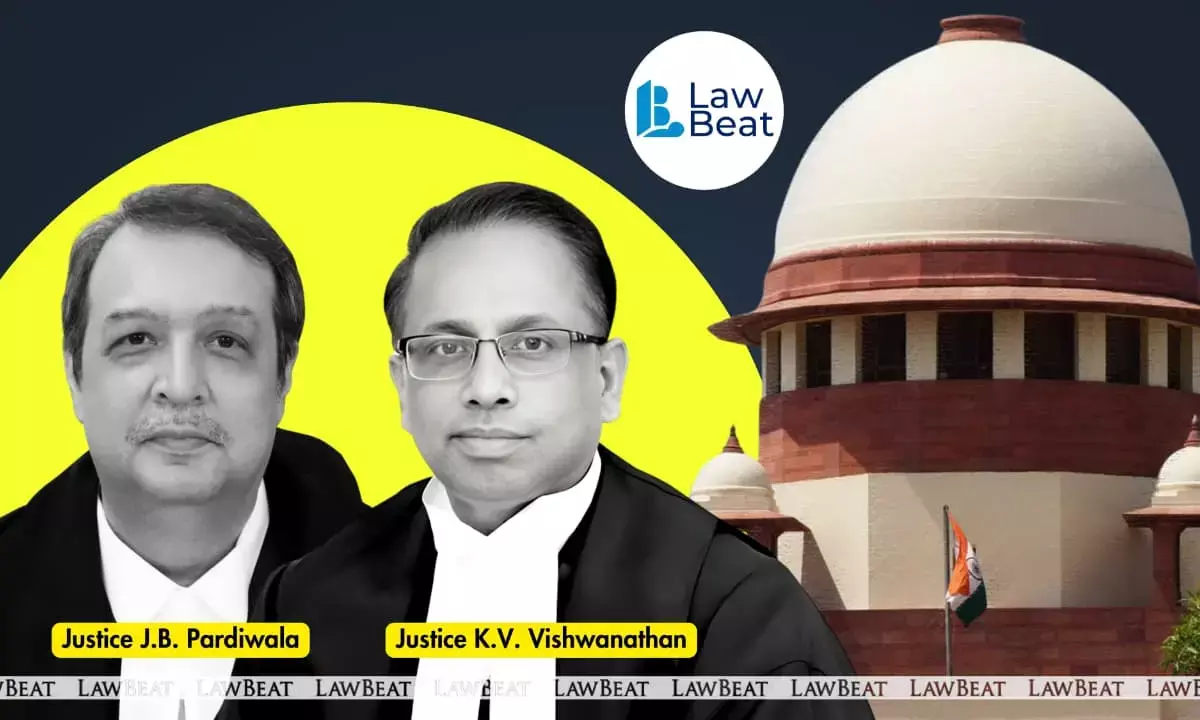
"When it comes to life imprisonment, the appellate court should consider whether there is anything palpable or anything on the face of the record on the basis of which it could be said that the appellant has fair chances of succeeding in his appeal and getting acquitted,'' a bench of Justices J B Pardiwala and K V Vishwanathan said.
Court was hearing an appeal filed by S. Ramakrishnan challenging a July 21, 2025 order of the Madurai bench of the Madras High Court. The High Court had dismissed his plea under Section 436(2) of the Bharatiya Nagarik Suraksha Sanhita, 2023 (earlier Section 389 of the Code of Criminal Procedure, 1973), seeking suspension of the life sentence imposed on him by the trial court.
Ramakrishnan, a police officer at the relevant time, was among those tried for the custodial torture and death of a man named Vincent. According to the prosecution, Vincent was arrested by Thoothukudi police on September 18, 1999 and brutally assaulted inside the police station. He sustained around 38 injuries and later died from those injuries.
A private complaint led the court to take cognizance and issue process against ten accused for offences under Section 302 of the Indian Penal Code, and the case was committed to the sessions court. Ramakrishnan was not named in the original complaint, prompting the deceased’s wife to move an application under Section 193 of the CrPC to add him as an accused. The trial court dismissed the plea, but the High Court allowed it in revision on March 18, 2008. His challenge to that order was later dismissed by the Supreme Court.
The only material linking Ramakrishnan to the crime consisted of five affidavits filed by purported eyewitnesses. The trial went ahead against 11 accused, and the trial court ultimately convicted nine of them, including Ramakrishnan, while acquitting two.
Ramakrishnan’s appeal against his conviction is pending before the High Court. His application seeking suspension of the life sentence during the pendency of the appeal was declined, prompting the present challenge.
The Supreme Court observed that while considering suspension of a life sentence, courts should not reappreciate the evidence, as doing so would amount to examining the broader probabilities of the case. However, if something “gross or palpable” emerges even on a cursory look at the oral evidence, it cannot be ignored.
In this case, the bench noted a prima facie conflict between the testimony of PW-4 and PW-5 on material aspects and that of PW-2. It also recorded that Ramakrishnan’s conviction rested substantially on the evidence of PW-2, the deceased’s wife. The bench reiterated that while a conviction can be based on the testimony of a single eyewitness if it is wholly reliable, equally, if such testimony appears wholly unreliable, it may be discarded.
Accepting Ramakrishnan’s plea, the Supreme Court set aside the High Court’s order refusing suspension of sentence. It directed that the life sentence imposed on him be suspended pending final disposal of his appeal before the High Court.
Court ordered his release on bail, subject to conditions that the trial court may impose, clarifying that its order applies only to Ramakrishnan.
Case Title: S Ramakrishnan Vs Revenue Divisional Officer, Thoothukudi District, Tamil Nadu
Judgment Date: November 27, 2025
Bench: Justices J B Pardiwala and K V Vishwanathan