
Section 103 of Multi-State Cooperative Societies Act Not Automatic After State Reorganisation: Supreme Court
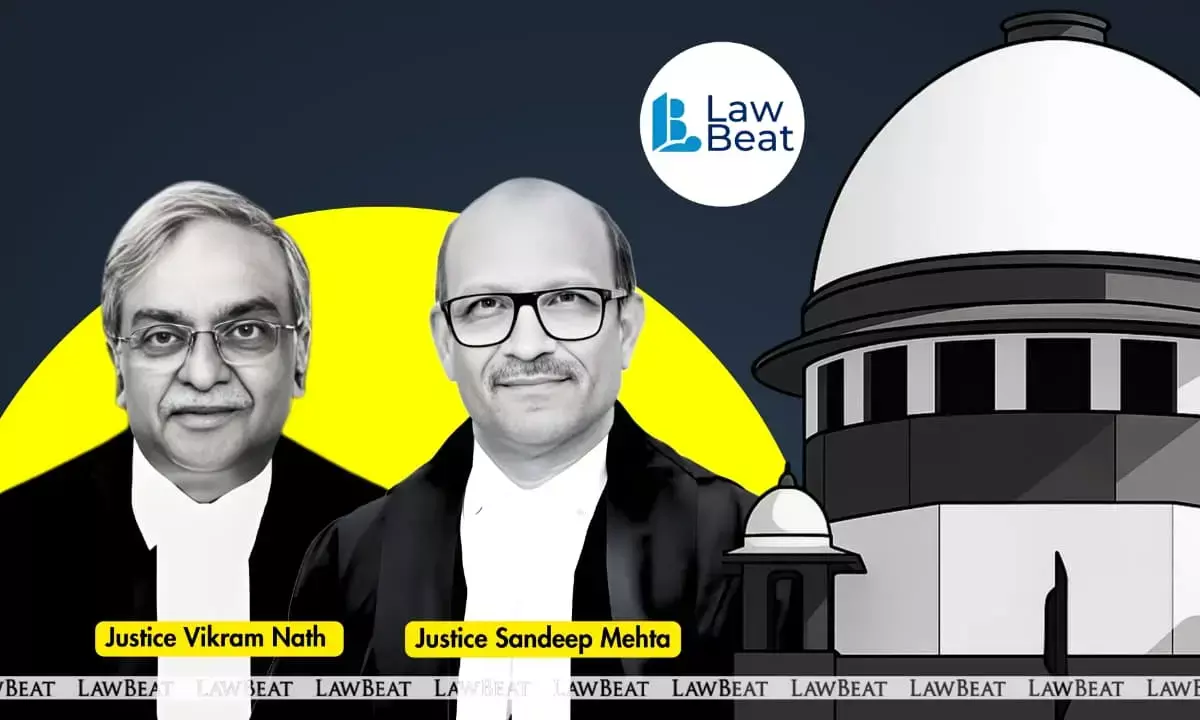
Supreme Court decides cooperative societies remain state-bound unless objects span multiple states
upreme Court has held that Section 103 of the Multi-State Cooperative Societies Act, 2002 does not automatically confer the status of a multi-State cooperative society on every society registered under a State Cooperative Societies Act merely because the parent State has undergone reorganisation.
A bench of Justices Vikram Nath and Sandeep Mehta clarified that the application of Section 103 depends on a factual enquiry in each case, specifically on whether the objects of the society extend to more than one State.
“If the objects are found to span more than one State, the deeming fiction under Section 103 will operate and the society would be treated as a multi-State cooperative society. If the objects remain confined to only one State, the status of the society will remain unchanged,” the bench said.
The court noted that it would be erroneous to examine the area of operation of a society for the purposes of Section 103, when the provision itself requires an examination only of the objects of the society. Read along with Section 5 of the Act, the court said it becomes clear that Section 103 is attracted only when the objects of the society extend beyond one State. Only in such cases would the society, by operation of law, be treated as a multi-State cooperative society.
The bench further explained that the residence or domicile of the members of a cooperative society has no relevance in determining whether it is a multi-State cooperative society. Section 5 of the 2002 Act mandates that a society can be registered as a multi-State cooperative society only when its principal objects, as reflected in its bye-laws, serve the interests of members in more than one State. This, the court said, is a mandatory pre-condition.
Court was hearing a civil appeal filed by the State of Uttar Pradesh challenging a September 26, 2008 judgment of a division bench of the Allahabad High Court. The High Court had allowed writ petitions filed by shareholders of certain cooperative societies and held that the societies could not be treated as State cooperative societies after the reorganisation of Uttar Pradesh. It had further held that, as a consequence of reorganisation, they had acquired the character of multi-State cooperative societies.
One of the societies involved was Kisan Cooperative Sugar Factory Limited, having its registered office at Majhola in Pilibhit district of Uttar Pradesh. The society was originally registered under the Cooperative Societies Act, 1912. The private respondents before the Supreme Court were shareholders of this cooperative society.
In 1965, Uttar Pradesh enacted the Uttar Pradesh Cooperative Societies Act, repealing and replacing the 1912 Act. Subsequently, in 2000, the Uttar Pradesh Reorganisation Act came into force, bifurcating the erstwhile State into present-day Uttar Pradesh and the newly created State of Uttarakhand.
At the time of reorganisation, cooperative societies were governed by the Multi-State Cooperative Societies Act, 1984. This was later repealed and replaced by the Multi-State Cooperative Societies Act, 2002, which consolidated the law relating to cooperative societies whose operations extended beyond a single State. The 2002 Act introduced Section 103, a deeming provision under which certain societies, upon State reorganisation, could be treated as multi-State cooperative societies and brought within the ambit of the Central Act.
On August 7, 2007, the State of Uttar Pradesh issued the UP Cooperative Societies (Amendment) Ordinance, 2007, empowering the State Government to transfer cooperative sugar mills to entities in which the State held a majority stake, where such mills were found to be financially unviable.
This move was challenged by shareholders of the cooperative society through writ petitions before the High Court, contending that after the reorganisation of the State, Uttar Pradesh had lost authority under the State Act and lacked competence to proceed with privatisation. One such writ petition was filed by a member of the society, followed by another in 2008 by Mumtaz Ali, a shareholder of a second cooperative society, raising identical grounds.
Accepting these submissions, the High Court held that Section 103 of the Central Act was fully attracted and that the cooperative society had acquired the character of a multi-State cooperative society. It concluded that only the Union Government had jurisdiction over such societies and declared all steps taken by the State Government to be without authority of law.
The Supreme Court, however, disagreed with this interpretation. The bench said it was not persuaded by the construction of Section 103 as advanced by the private respondents and accepted by the High Court, observing that a statutory provision cannot be interpreted in isolation to suit a particular factual situation.
Reiterating that Section 103 applies only where the objects of the society extend to more than one State, court rejected the argument that merely because the area of operation of a society spans across two States, it would automatically become a multi-State cooperative society.
The bench also noted that the counter-affidavit filed by the respondents was silent on the crucial issue of the society’s objects and did not dispute the State’s assertion that the objects were confined to a single State. Since the High Court had also not examined this aspect, the Supreme Court proceeded on the basis that the State’s position stood admitted.
Case Title: The State of Uttar Pradesh Through Principal Secretary & Ors Vs Milkiyat Singh & Ors Etc
Bench: Justices Vikram Nath and Sandeep Mehta