
Section 156(3) CrPC: Rejection of Application Does Not Prevent Fresh FIR, Says Supreme Court
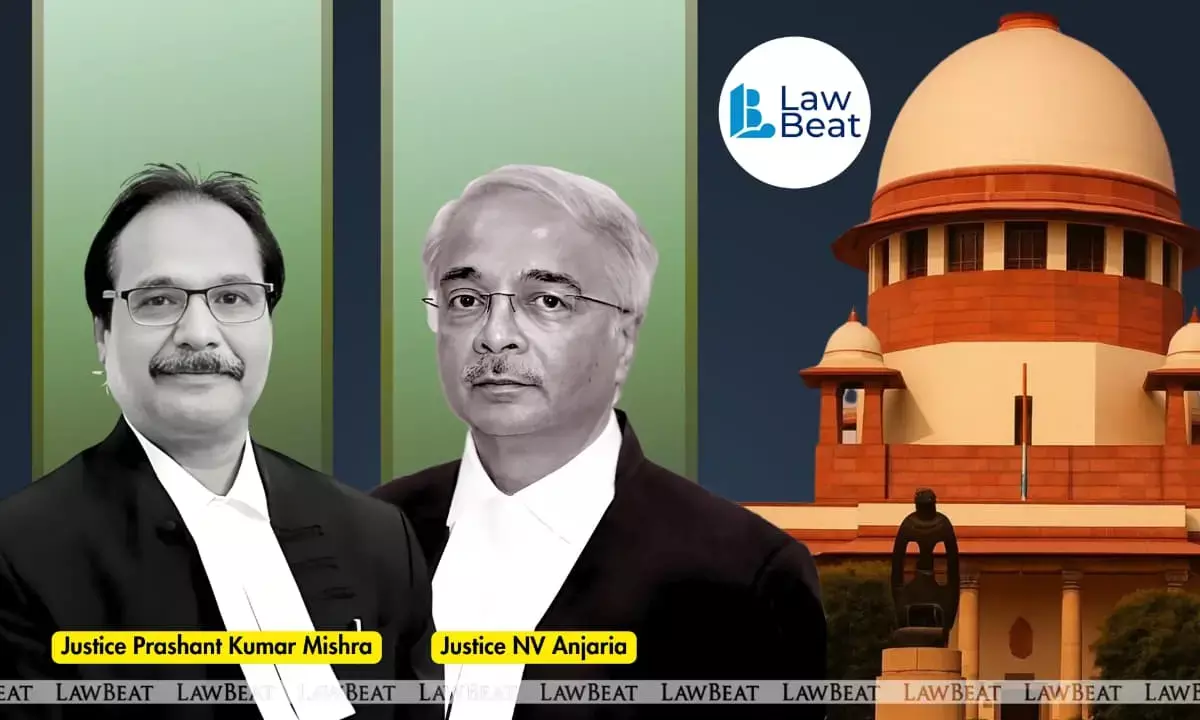
Supreme Court says rejected 156(3) plea cannot block fresh FIR.
The Supreme Court has held that rejection of an application under Section 156(3) of the Code of Criminal Procedure, 1973 [corresponding to Section 175(3) of the Bharatiya Nagarik Suraksha Sanhita (BNSS), 2023] does not operate as res judicata and does not bar registration of a subsequent FIR if fresh information discloses a cognizable offence.
A Bench of Justices Prashant Kumar Mishra and N V Anjaria said an order rejecting a Section 156(3) application is passed at the threshold and does not involve adjudication on the merits of the allegations. The police's independent statutory duty under Section 154 of the CrPC therefore continues.
Section 156(3) of the CrPC empowers a judicial magistrate to order the police to register an FIR and conduct an investigation when a local police station refuses to act on a complaint regarding a cognizable offence.
Why can an FIR be registered after rejection of a Section 156(3) application?
Court said Section 156(3) is intended to ensure that the police exercise their statutory power of investigation when they fail or refuse to discharge their duty.
An order under Section 156(3) merely directs the police to exercise their powers under Section 156(1). The Magistrate does not take cognizance of the offence while exercising this jurisdiction.
"The order merely sets the investigative machinery under Chapter XII in motion, leaving the investigation to be conducted by the Police in accordance with law and to culminate in a report under Section 173 of the CrPC. The jurisdiction under Section 156(3), therefore, is confined to directing investigation," the Bench said.
It held that an order under Section 156(3) is not passed after adjudicating the merits of the allegations. It only regulates the commencement of investigation.
Court was hearing an appeal filed by Pramod Kumar Shukla against the Allahabad High Court's June 5, 2025 order refusing to quash an FIR registered against him in 2024.
What was the allegation against the appellant?
It was alleged that Shukla induced the complainant to pay Rs 20 lakh by promising to secure the appointment of his son and grandson as clerks in the Directorate of Education.
When the complainant allegedly demanded his money back, Shukla allegedly threatened to kill him, following which the FIR was registered.
Before this, the complainant had filed an application under Section 156(3). The application was rejected on the basis of a police report which described the dispute as relating to a land transaction, while the application alleged that money had been paid to secure public employment. A revision petition was subsequently dismissed by the sessions court.
After the FIR was registered, Shukla approached the high court. It held that rejection of the earlier Section 156(3) application could not, by itself, bar registration of an FIR if the information disclosed a cognizable offence.
Supreme Court rejects res judicata argument
Before the Supreme Court, Shukla's counsel argued that he and the complainant were property dealers with a longstanding commercial relationship involving several land and monetary transactions. The FIR, it was submitted, amounted to a second round of proceedings based on substantially the same allegations.
The State opposed the plea, submitting that the FIR was based on fresh material, including an audio recording in a pen drive, details of monetary transactions and allegedly forged admit cards and examination results, which had not been placed before the Magistrate earlier.
The State also submitted that five other FIRs involving substantially similar allegations were registered against Shukla.
The Supreme Court held that rejection of the Section 156(3) application did not amount to a final adjudication on the merits.
Referring to S C Garg v State of Uttar Pradesh and Another (2025), the Bench said res judicata may apply where an earlier proceeding has culminated in a final adjudication determining the issue. However, where there has been no adjudication on the merits, the question of applying the doctrine does not arise.
"To the question whether an order rejecting an application under Section 156(3) possesses the character of a final adjudication on the merits so as to attract the doctrine of res judicata, the answer must be in the negative," the Bench said.
Police duty to register FIR remains independent
Court further held that the police's duty under Section 154 of the CrPC remains independent of the outcome of a Section 156(3) application.
The obligation to register and investigate a cognizable offence flows directly from Sections 154 and 156 of the CrPC and does not depend on a direction from the Magistrate under Section 156(3), the bench said, relying on the Constitution Bench judgment in Lalita Kumari v Government of Uttar Pradesh (2014).
The police officer's inquiry at the stage of registration is confined to whether the information ex facie discloses a cognizable offence. The truthfulness or credibility of the allegations is a matter for investigation.
"The rejection of an application under Section 156(3) of the CrPC cannot curtail or extinguish the independent statutory obligation cast upon the Police under Section 154 of the CrPC," the Bench said.
Supreme Court refuses to quash FIR
Court noted that the FIR, on a plain reading, disclosed cognizable offences and that Shukla's defence concerning the nature of the monetary transactions required investigation.
It said that while exercising jurisdiction under Section 482 of the CrPC (corresponding to Section 528 of the BNSS), the court has to see whether the allegations in the FIR, taken at face value, disclose a cognizable offence. It cannot examine the correctness, reliability or evidentiary value of the material at that stage.
Court noted that the FIR alleged that Shukla took money by promising public employment, received the amounts in his bank account, furnished forged admit cards and examination results and threatened the complainant when repayment was demanded.
"We are also conscious of the fact that the record indicates that the appellant is arraigned in five FIRs with substantially similar allegations. These allegations, if accepted at their face value, unquestionably disclose the commission of cognizable offences warranting investigation," the Bench said.
The Supreme Court held that the disputes regarding the monetary transactions, earlier police report and evidentiary value of the audio recording and documents were matters for investigation and trial.
"At this stage, court cannot undertake an examination of such material or determine which of the rival versions is more probable," the Bench said, dismissing the appeal.
Case Title: Pramod Kumar Shukla Vs State of Uttar Pradesh And Others
Bench: Justices Prashant Kumar Mishra and N V Anjaria
Date of Judgment: August 19, 2026