
Section 264 Income Tax Act: Supreme Court Says Fresh Claims Cannot Be Raised Without Revised Return
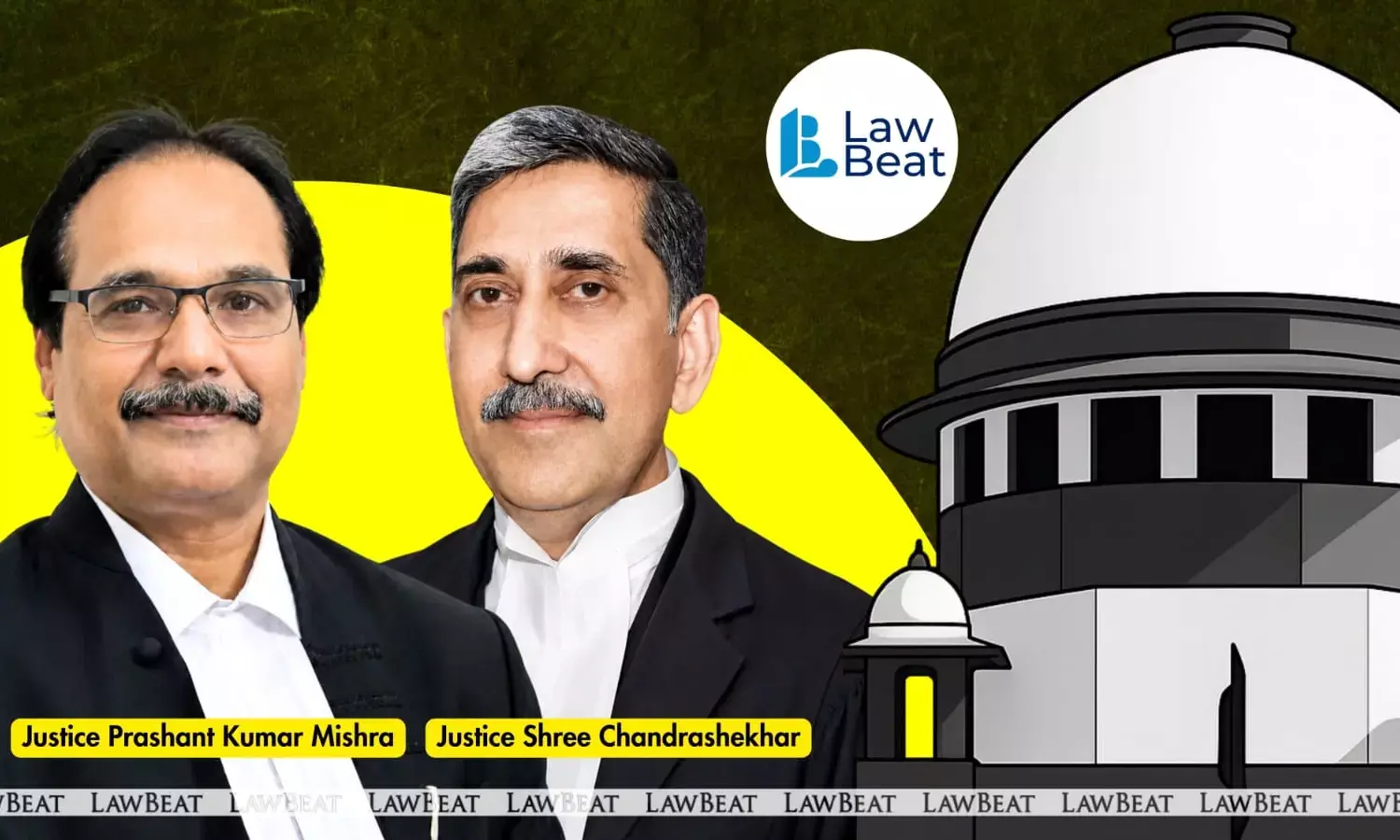
Supreme Court bars fresh claims under Section 264 of the Income Tax Act.
The Supreme Court has held that an assessee cannot raise a fresh claim before the revisional authority under Section 264 of the Income Tax Act without first filing a revised return within the statutory time limit.
Section 264 of the Income Tax Act empowers the Commissioner of Income Tax to revise orders passed by subordinate tax authorities to provide relief to assessees, subject to statutory conditions and limitations.
A Bench of Justices Prashant Kumar Mishra and Shree Chandrashekhar said that revisional jurisdiction cannot be used to circumvent the statutory procedure for revising income tax returns and introducing new claims.
Court made the observation while dismissing an appeal filed by Orissa Rural Housing Development Corporation Ltd, upholding the rejection of its revision petition on the ground that the assessee had failed to file a revised return within the prescribed period.
Why can't a fresh claim be raised before the revisional authority?
Court held that the power of the revisional authority is available to consider a new question of law or point of law, but not a claim that goes beyond the facts already available before the Assessing Officer.
It also distinguished the power of the Income Tax Appellate Tribunal under Section 254 of the Act from that of the Assessing Officer.
Court noted that the tribunal can entertain a point of law for the first time where the foundational facts necessary to decide that issue were already before the lower authorities. However, this plenary power does not mean that the Assessing Officer can entertain a fresh claim that was not made in the return and for which no revised return was filed within the limitation period.
"If the power of the revisional authority is read in the manner sought to be agitated before this court, then there would be no end to raising any fresh claim basing a new fact which was not before the Assessing Officer," the Bench said.
"Allowing this, would make the assessment procedure and the assessment order endless, and any party can raise fresh claim before the revisional authority even though there are no foundational facts available before the Assessing Authority to consider such claim," it added.
What was the dispute in the case?
The appellant had challenged a high court order dismissing its writ petition against an assessment order passed in 2008, an order passed by the Commissioner of Income Tax, Bhubaneswar under Section 264 in 2010, and an order passed by the Commissioner of Income Tax (Appeals)-I, Bhubaneswar in 2010.
The appellant had also sought a refund of tax, claiming that the collection was without authority of law.
For the assessment year 2006-07, the appellant filed its return within time, declaring a total loss of Rs 1,94,48,311.
The Assessing Officer subsequently issued a notice under Section 143(2) of the Income Tax Act in 2007. In 2008, another notice under Section 142(1) was issued, requiring the appellant to produce the accounts and other documents.
The appellant then filed a petition before the Assistant Commissioner of Income Tax, Circle-1, Bhubaneswar, seeking to revise its return. However, the request was not taken into account when the Assessing Officer passed the assessment order in 2008.
The Assessing Officer raised a demand of Rs 7,58,33,470 towards tax, surcharge and education cess and also charged interest of Rs 2,50,25,022 under Section 234B, taking the total demand to Rs 10,08,58,492.
What did the revisional authorities hold?
The appellant challenged the assessment by filing a revision before the Commissioner of Income Tax and also sought a stay of the demand. The stay application was rejected in 2009.
The appellant thereafter approached the Commissioner of Income Tax, but the revision petition was dismissed on the ground that an assessee who has already filed an original return cannot make a fresh claim except by filing a revised return within the prescribed period.
The appellant subsequently filed a first appeal before the Commissioner of Income Tax. The appeal was dismissed as not maintainable since the appellant had already exercised its right to seek revision under Section 264.
Before the Supreme Court, the appellant relied on its earlier judgments in Wipro Finance Ltd. v. Commissioner of Income Tax (2022), Dwarka Nath v. Income Tax Officer (1965) and Sirpur Paper Mills Ltd. v. Commissioner of Wealth Tax (1970) to argue that a fresh claim could be raised before the revisional authority.
The revenue, however, relied on the Supreme Court's 2026 decision in Deputy Commissioner of Income Tax v. M/s Om Siddhakala Associates, arguing that an assessee cannot raise a fresh claim before the revisional authority when a revised return was not filed within the prescribed time.
The Supreme Court held that the issue was no longer res integra in view of its decision in M/s Om Siddhakala Associates.
In that case, Court had categorically held that where a revised return was not filed within the prescribed time and the assessee had not claimed the deductions through a revised return, such deductions could not subsequently be claimed by invoking revisional jurisdiction.
Court reiterated that the revisional authority can entertain a new question of law or point of law for the first time, but such power does not extend to matters requiring consideration of facts that were not before the Assessing Officer.
"We do not find any substance in these appeals, which fails and are hereby dismissed," the Bench said.
The appeals were accordingly dismissed.
Case Title: Orissa Rural Housing Development Corporation Ltd Vs The Asst Commissioner of Income Tax & Ors
Bench: Justices Prashant Kumar Mishra and Shree Chandrashekhar
Date of Judgment: October 08, 2026