
Section 498A IPC | Naming In-Laws Without Specific Role Not Enough for Criminal Trial: Supreme Court
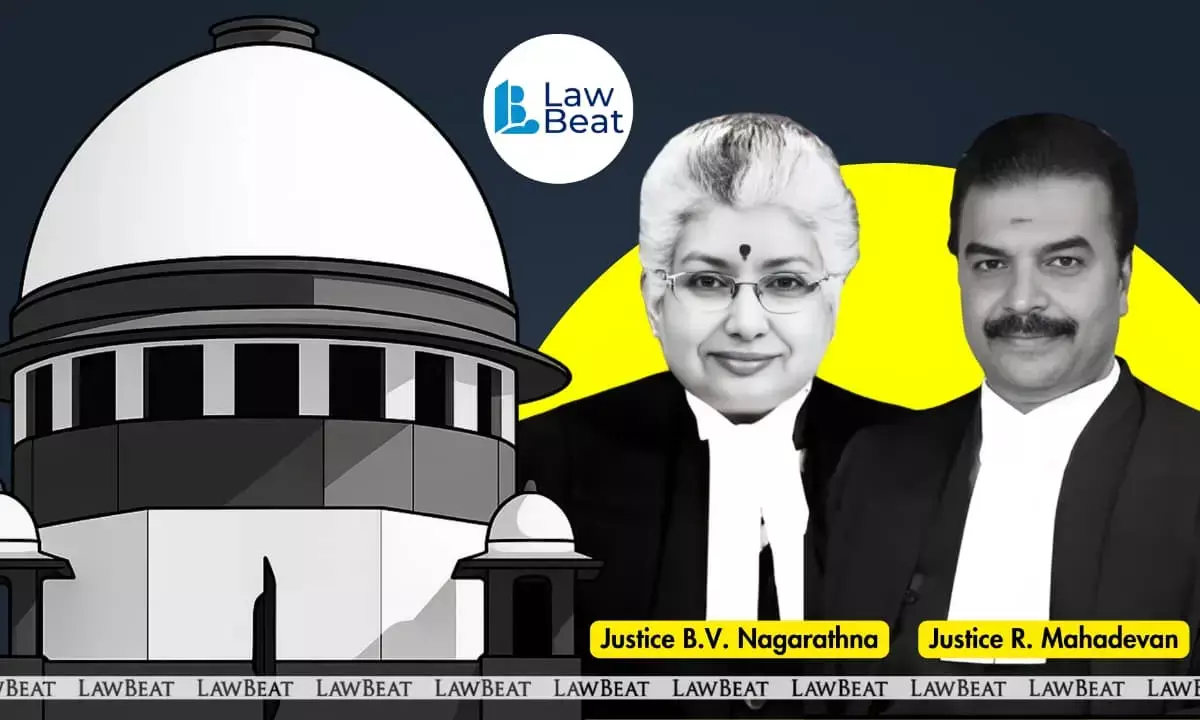
Supreme Court quashes dowry case against in-laws after finding no specific evidence of cruelty
The Supreme Court of India recently set aside a dowry harassment case initiated against the parents-in-law of a woman, holding that the allegations made against them, even if accepted at face value, did not prima facie disclose the commission of any offence so as to justify criminal proceedings.
A bench of Justices B V Nagarathna and R Mahadevan quashed the proceedings pending against Maram Nirmala and another before the Judicial First Class Magistrate (Prohibition and Excise Offence), Nalgonda. The bench held that the law laid down by the court in Dara Lakshmi Narayana v. State of Telangana (2025) squarely applied to the case.
In Dara Lakshmi Narayana, the court had observed that merely naming family members in a criminal case arising from a matrimonial dispute, without specific allegations showing their active involvement, must be discouraged at the threshold. The court had noted that judicial experience shows a frequent tendency to implicate all members of the husband’s family in such disputes, and that vague and sweeping accusations, unsupported by concrete material or specific instances, cannot form the basis of criminal prosecution.
The court had further explained that Section 498-A of the IPC was introduced to curb cruelty inflicted upon a woman by her husband or his family, and to ensure prompt State intervention. However, it cautioned that in recent years, with a rise in matrimonial disputes and growing stress within marriages, there has been an increasing tendency to misuse Section 498-A as a tool for personal vendetta against the husband and his family. The bench had warned that vague and general allegations, if left unscrutinised, could lead to misuse of the legal process and encourage arm-twisting tactics by the wife or her family.
In the present case, the appellants were the complainant’s mother-in-law and father-in-law. They had approached the court under Section 482 of the CrPC seeking quashing of the criminal proceedings pending before the Nalgonda magistrate, where offences under Sections 498-A, 323, 504 read with Section 34 of the IPC, along with Sections 3 and 4 of the Dowry Prohibition Act, had been alleged.
Earlier, by an order dated February 20, 2025, the high court declined to interfere with the proceedings and disposed of the quashing petition, while granting liberty to the appellants to seek discharge before the trial court.
While considering the appeal, the Supreme Court noted that a bare reading of the FIR showed that the allegations against the appellants were vague and omnibus. Court found that there was no specific instance or occasion mentioned, with necessary particulars, to show that the appellants had demanded dowry or subjected the complainant to mental or physical cruelty upon refusal.
The bench noted that the only allegations against the parents-in-law were that after the birth of the complainant’s daughter, the behaviour of her husband changed, allegedly due to the influence of his parents and other relatives, who were said to have instigated him to demand additional dowry. It was further alleged that despite assurances given during counselling at the Women Police Station, Nalgonda, the complainant continued to face mental and physical cruelty.
Court held that these allegations, even if taken at face value, did not disclose the commission of the alleged offences so as to warrant the initiation of criminal proceedings against the appellants.
As per the facts, the complainant’s marriage was solemnised on August 12, 2012, in Hyderabad, and a daughter was born out of the wedlock on November 1, 2013. On March 4, 2023, the woman filed a complaint alleging that at the time of marriage, her family had given Rs 4.5 lakh in cash, 9 tolas of gold ornaments and household articles on the demand of her husband and his family. She stated that the couple lived happily for about eight years, but after the birth of their daughter, her husband allegedly began abusing and assaulting her, demanding an additional dowry of Rs 4 lakh, allegedly at the instigation of his parents and other relatives.
Following the filing of the charge sheet, the trial court, on May 2, 2023, took cognizance of offences under Sections 498-A, 323, 504 read with Section 34 of the IPC and Sections 3 and 4 of the Dowry Prohibition Act against the husband and the appellants.
After the high court refused to quash the proceedings, the parents-in-law approached the Supreme Court, which ultimately allowed their appeal and set aside the criminal case against them.
Case Title: Maram Nirmala & Anr Vs The State of Telangana & Anr
Bench: Justices B V Nagarathna and R Mahadevan