
Specific Performance Of Contract: Supreme Court Says Relief Is Not A Right, Plaintiff Must Show Continuous Readiness
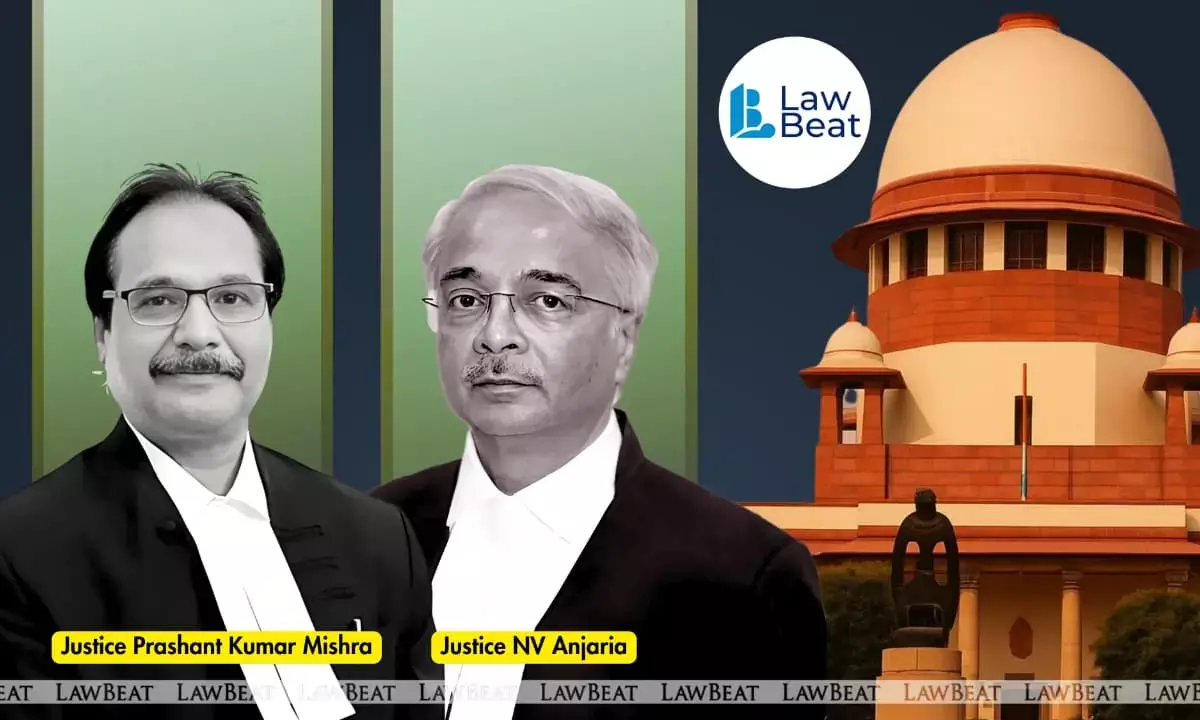
Supreme Court stresses readiness for specific performance relief.
The Supreme Court has held that a plaintiff seeking specific performance of a contract must continuously plead and prove their readiness and willingness to perform their part of the agreement, from the date of the contract until the decree.
A Bench of Justices Prashant Kumar Mishra and N V Anjaria said a plaintiff who fails to establish the availability of funds or demonstrate diligent performance of contractual obligations cannot claim the equitable relief of specific performance.
Court made the observations while allowing an appeal filed by V N A S Chandran against a Madras High Court judgment which had decreed a suit for specific performance in favour of S Venilla.
Why did the Supreme Court refuse specific performance?
Court found that Venilla had failed to establish her continuous readiness and willingness to perform the contract. Among other things, her bank account did not have sufficient funds, resulting in the dishonour of cheques. Court also noted that she did not enter the witness box to support her case.
The Bench said specific performance is a discretionary and equitable relief and cannot be granted as a matter of right, particularly where the plaintiff's conduct lacks bona fides.
"Courts must consider the totality of circumstances, including the conduct of parties and potential hardship to the defendant, before exercising such jurisdiction," it said.
In the present case, Court found Venilla's conduct to be inconsistent and noted that the filing of retributive criminal complaints showed that she had approached the court with unclean hands. This, the Court held, disentitled her from seeking discretionary equitable relief.
The long delay in the matter also weighed against her. The Bench noted that nearly two decades had passed since the agreement to sell and said such a significant lapse of time was a relevant consideration, particularly when granting the relief could cause undue hardship to an ageing defendant.
Can a buyer sue for specific performance after unilateral termination?
The Supreme Court also clarified the legal position where a vendor terminates an agreement for sale without having a contractual right to do so.
It held that such termination amounts to repudiation of the contract. The aggrieved buyer can treat the agreement as continuing and sue for specific performance without separately seeking a declaration that the termination was invalid, provided the issue of maintainability has been tried.
The Bench also clarified that a respondent can support a decree by challenging an adverse finding without filing cross-objections, so long as they do not seek any additional relief beyond what was granted by the trial court.
Supreme Court restores trial court's decision
The civil appeals arose from the Madras High Court's judgment dated October 11, 2011. The high court had overturned the November 22, 2007 judgment of the District Judge, Nilgiris, Udhagamandalam, who had refused to grant specific performance.
The high court had consequently decreed Venilla's suit for specific performance.
The Supreme Court, however, found that the plaintiff had failed to satisfy the requirements for the grant of the equitable relief and restored the trial court's judgment and decree.
Case Title: V N A S Chandran Vs S Venilla And Others
Bench: Justices Prashant Kumar Mishra and N V Anjaria
Date of Judgment: July 31, 2026