
State Cannot Act Against Its Own Policy Without Lawful Change, Says Supreme Court
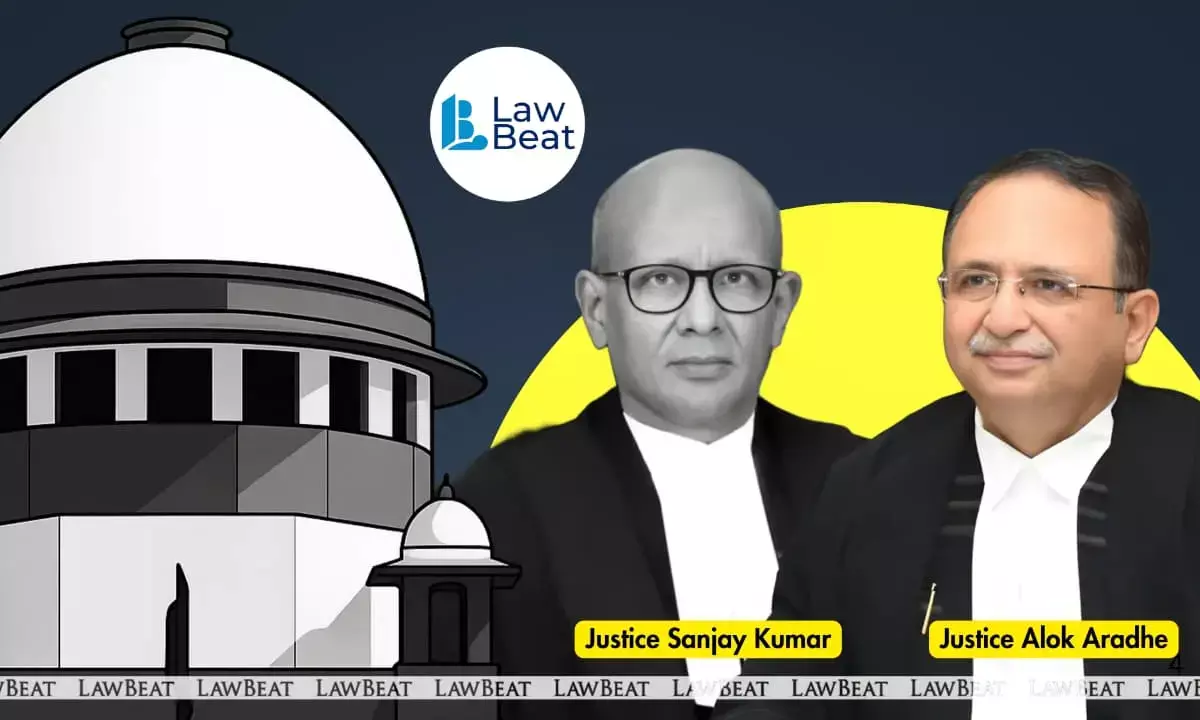
Supreme Court Bench says that government policy decisions bind the state
The Supreme Court has held that a policy decision, even though executive in nature, binds the government and cannot be acted against unless it is lawfully amended or withdrawn.
A bench of Justices Sanjay Kumar and Alok Aradhe said that any action taken in violation of such a policy, without proper amendment or valid justification, would be arbitrary and violative of Article 14 of the Constitution.
“The State Government cannot be permitted to act in contravention of the policy framed by it, which binds it,” the bench observed.
The court was hearing an appeal filed by Bhika Ram and another, challenging an August 5, 2025 judgment of a division bench of the Rajasthan High Court. The division bench had set aside a July 11, 2025 order passed by a single judge.
The appellants and respondent Nos. 6 to 9 are residents of village Sohda in Barmer district of Rajasthan.
The dispute arose from a proposal submitted by the Gram Panchayat Sohda for the creation of new revenue villages. Acting on this proposal, the Tehsildar (Land Records), Gida, Barmer district, issued certificates on December 24, 2020, stating that he had personally verified all relevant aspects concerning the formation of four new revenue villages: Nainoni Darziyon Ki Dhani, Sagatsar, Amargarh and Hemnagar. These villages were proposed to be carved out of Meghwalon Ki Dhani, Revenue Village Sohda, Patwar Mandal Sohda.
The certificate specified that the headquarters of the proposed revenue villages Sagatsar and Amargarh would be located at Khasra Nos. 118 and 73 respectively. It also recorded that the proposed villages were not associated with any individual, religion, caste or community, and that there was no dispute regarding their creation.
On December 24 and 29, 2020, one Amarram and Badli Kunwar, wife of Sagat Singh, executed affidavits agreeing to donate land for the proposed revenue villages Amargarh and Sagatsar. Subsequently, a notification dated December 31, 2020 was issued, creating several new revenue villages.
Later, on January 10, 2025, the Rural Development and Panchayati Raj Department of the Rajasthan government issued directions for reorganisation, re-demarcation and creation of new gram panchayats and panchayat samitis. District collectors were authorised to act under Sections 9, 10 and 101 of the Rajasthan Panchayati Raj Act, 1994. A public notice dated April 7, 2025 invited objections.
On April 21, 2025, villagers of Meghwalo ki Dhani filed objections, claiming that the names of the new revenue villages Amargarh and Sagatsar were derived from the names of individuals.
The appellants then approached the high court by filing a writ petition challenging the validity of the 2020 notification insofar as it related to the creation of the revenue villages Amargarh and Sagatsar. The single judge allowed the petition and quashed the notification with respect to these two villages, holding that their names were derived from the names of individuals, namely Amarram and Sagat Singh, who had also donated land.
Though they were not parties before the single judge, respondent Nos. 6 to 9 filed an appeal before the division bench, which set aside the single judge’s order.
Before the Supreme Court, the appellants argued that the division bench failed to consider that the names of the revenue villages were clearly based on the names of individuals, in direct violation of a government circular dated August 20, 2009.
The State contended that the statutory procedure for creation of revenue villages had been followed and that the 2009 circular was only directory in nature. It was also argued that settled matters should not be reopened retrospectively.
Respondent Nos. 6 to 9 submitted that the appellants had no locus standi and that the notification dated December 31, 2020 caused no legal injury to them.
After hearing all sides, court noted that Section 16 of the Rajasthan Land Revenue Act, 1956 empowers the State Government to create, abolish or alter revenue divisions. It further noted that the revenue department had issued a comprehensive circular in 2009 laying down criteria for declaring a new revenue village.
Referring to Clause 4 of the circular, the bench pointed out that it specifically mandates that the name of a revenue village shall not be based on any person, religion, caste or sub-caste, and must be proposed with general consensus.
“The circular is in the nature of a policy decision. Clause 4 of the circular has been incorporated with an object to maintain communal harmony,” the bench said.
Court noted that it was undisputed that the names Amargarh and Sagatsar were derived from the names of individuals Amarram and Sagat Singh.
“The notification dated 31.12.2020 is, therefore, in contravention of Clause 4 of the Circular dated 20.08.2009. The State Government cannot be permitted to act in contravention of the policy framed by it, which binds it. No legal sanctity can be attached to the impugned notification insofar as it pertains to the revenue villages Amargarh and Sagatsar,” the bench held.
Accordingly, the Supreme Court allowed the appeal, set aside the division bench judgment, and restored the order passed by the single judge.
Case Title: Bhika Ram & Anr Vs State of Rajasthan & Ors
Judgment Date: December 19, 2025
Bench: Justices Sanjay Kumar and Alok Aradhe