
Supreme Court Acquits Man Accused Of Setting Wife On Fire
Court noted that the accused had undergone 13 years and 9 months of incarceration.
The Supreme Court has set a man free of the charges of killing his wife allegedly by setting her ablaze, after he has undergone 13 years and 9 months of incarceration.
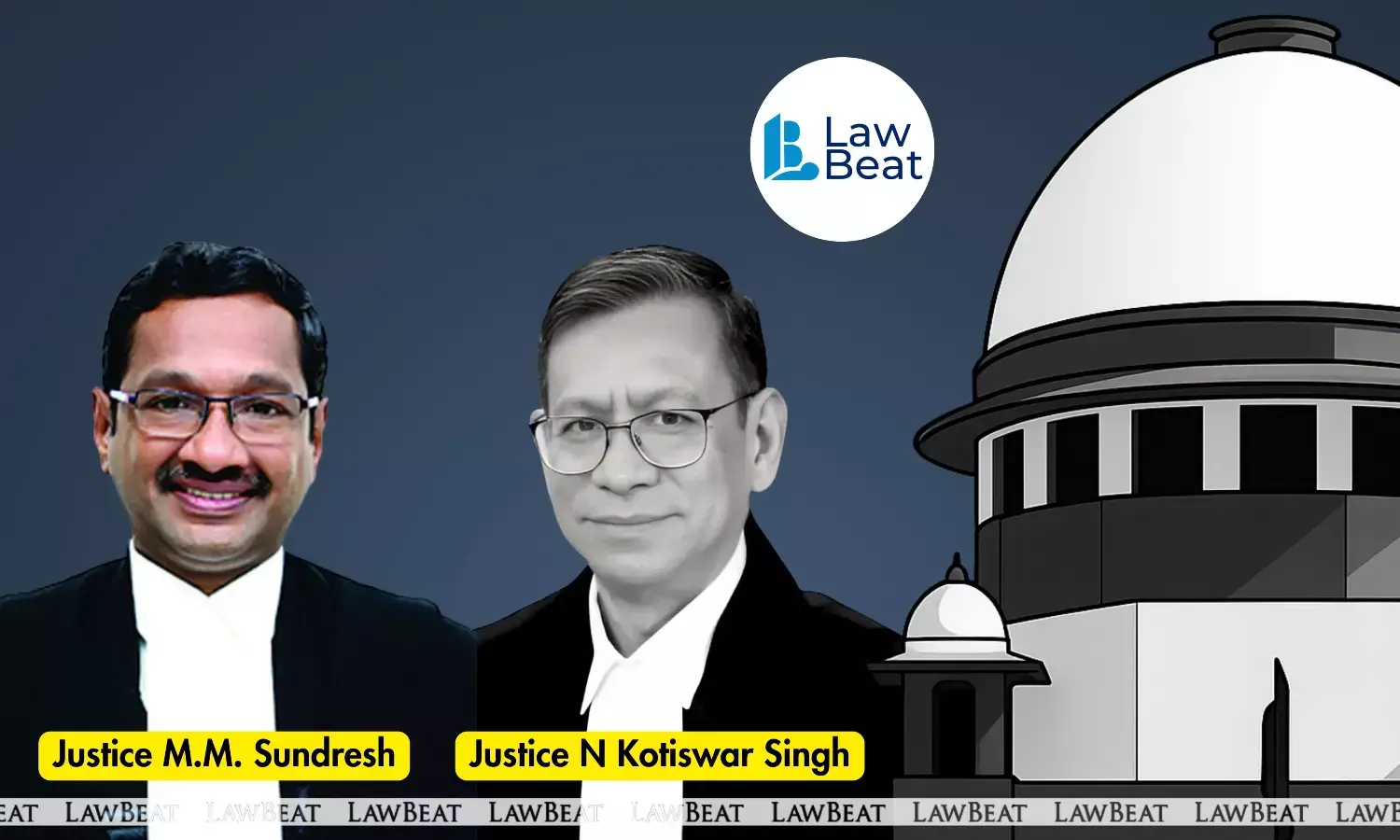
A bench of Justices MM Sundresh and N Kotiswar Singh gave the benefit of doubt to appellant Pawan Kumar by allowing his appeal and setting aside the concurrent judgments of the Delhi High Court and the trial court.
The court discarded the version of the daughter of the appellant and the deceased, for not inspiring confidence. "The materials are clearly lacking to sustain the conviction of the appellant and prove his guilt beyond reasonable doubt,'' the bench said.
It was alleged that on April 14, 2010, the appellant, along with the two co-accused, committed the alleged offence with a specific overt act against him to the effect that he poured kerosene oil over the deceased. The co-accused, who is the sister of the appellant, was alleged to have caught hold of the deceased, and the other accused is alleged to have lit the fire.
It was further stated the deceased ran towards the bathroom. The appellant had then followed her there and took her to the hospital, and he is the only one who was injured as a result of the occurrence, apart from the deceased herself.
The bench found that there was no recovery of any material indicating storage of Kerosene. The post-mortem certificate and the FSL report also did not indicate, with any specific reference, regarding the usage of kerosene in committing the offence. However, the post-mortem report merely states that the smell of Kerosene was found.
"We take note of the fact that even the prosecution did not believe the evidence of PW-15 qua a fourth person,'' the bench said. As per her statement under Section 164 of the CrPC and during her cross examination, she had also stated that she tried to talk to the deceased so as to ascertain who committed the offence, but the deceased did not speak up.
The High Court, however, acquitted all the other co-accused. It held that the deceased had suffered 95 per cent burn injuries and the appellant, having suffered a burn injury on his hands, could not contend that he did not commit the offence, as his presence at the place of occurrence at the time of the offence was not in dispute.
The apex court pointed out, it is a settled position of law that a mere suspicion, however strong it may be, cannot be the basis of conviction. It is also well settled that the principle governing ‘falsus in uno, falsus in omnibus’ cannot have an application to the courts in India. However, while removing the chaff from the grain, the courts must be rather circumspect and slow in satisfying themselves before deciding to rely upon the evidence adduced under those circumstances.
Referring to the daughter's version, the bench noted, she had stated that four persons had committed the offence, however, none of the other co-accused have been convicted, other than the appellant, despite she having stated about the specific overt acts attributable to them.
"It is also her statement in Chief Examination before the Trial Court and under Section 164 of the CrPC that the deceased did not speak to her. Hence, the question which PW-15 had put to the deceased with respect to asking her who was responsible for committing the offence lends credence to the defence of the appellant that PW-15 was not, in fact, present at the place of occurrence,'' the bench said.
The court also found no recovery of any utensil with kerosene or diesel. "We are inclined to give more importance to the statement made by the deceased herself,'' the bench said, rejecting the state counsel's contention that she was unfit for giving any statement for having 95 per cent burn injuries.
The court pointed out, the fact remains that she did, in fact, give a statement to the doctor which is admissible in law under Section 32 of the Indian Evidence Act, as it then was, to the effect that when she was doing kitchen work she suffered the burns.
"We are conscious of the fact that the appellant taking the deceased to the hospital cannot, by itself, be a factor for giving an acquittal, but it remains a relevant fact to be considered. He was indeed injured during the course of the incident which makes us believe the probability of him actually trying to save her,'' the bench said.
The court also highlighted the High Court itself held that Section 498A of IPC was not made out against the appellant. In fact, a finding has been given on the cordial relations between the appellant - husband and the deceased, it pointed out.
Case Title: Pawan Kumar Vs State NCT of Delhi
Bench: Justices MM Sundresh and N Kotiswar Singh
Date of Judgment: January 22, 2026