
Supreme Court Holds Air Force Insurance Society Is ‘State’ Under Article 12
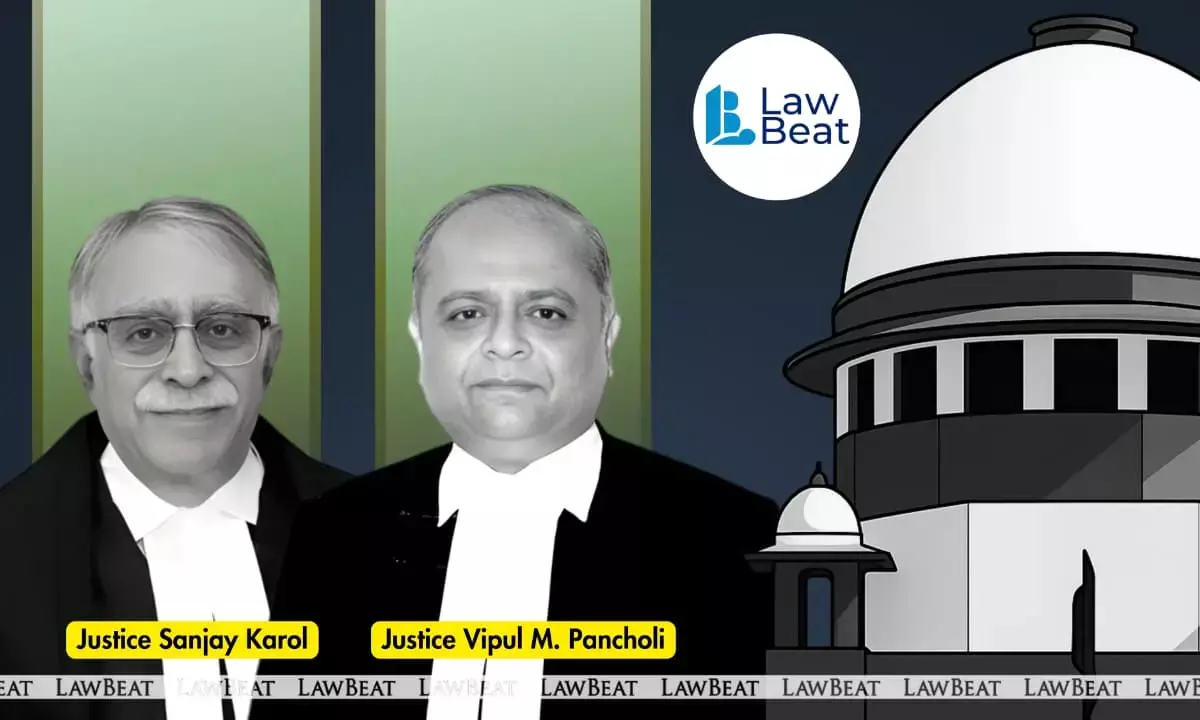
Supreme Court holds Air Force Group Insurance Society amenable to writ jurisdiction under Article 12.
Can an organisation run entirely by serving Air Force officers, created with Presidential sanction and funded through compulsory salary deductions from military personnel claim to be private when employees seek constitutional remedies?
The Supreme Court has answered that question in the negative, holding that the Air Force Group Insurance Society (AFGIS) falls within the definition of “State” under Article 12 of the Constitution, thereby opening the door for its employees to challenge service conditions and pay-related decisions through writ petitions.
A Bench of Justice Sanjay Karol and Justice Vipul M Pancholi restored petitions filed by employees of AFGIS who had challenged the organisation’s decision to delink their salaries from Central Pay Commission recommendations.
The dispute traces back to 2016 when AFGIS initially resolved to revise employee salaries in accordance with the Sixth Pay Commission. Months later, the body reversed course and decided that future pay structures would no longer maintain parity with Central Government employees. Workers were subsequently asked to accept revised service conditions.
The Delhi High Court had dismissed their petitions in 2023, holding that AFGIS was merely a society registered under the Societies Registration Act and not amenable to writ jurisdiction.
The Supreme Court, however, adopted a broader constitutional approach.
The Bench examined the structure and functioning of AFGIS and found several indicators of governmental control. It noted that membership in the insurance scheme is compulsory for all Air Force officers and airmen, with premiums automatically deducted from salaries. The organisation’s Board of Trustees comprises serving senior Air Force officers and its administration is run by officials deputed from the Indian Air Force.
Importantly, Court also referred to official correspondence in which AFGIS itself described the organisation as functioning under the authority of the Ministry of Defence and claimed it was “Government” for the purpose of tax exemptions.
The judgment raises a larger constitutional question: can bodies performing welfare functions for armed forces personnel avoid public law accountability merely because they are structured as societies?
The Bench answered this by emphasising that insurance and welfare protection for armed forces personnel is not an ordinary commercial activity but part of the State’s obligation toward those serving the nation. Court observed that military personnel operate under exceptional conditions and require institutional assurance for financial and social security in cases of death, disability or retirement.
At the same time, Court stopped short of holding that every organisation associated with the Government automatically becomes “State”. Instead, it reiterated that courts must examine whether there exists deep and pervasive governmental control, functional integration with the State, and discharge of public duties.
Having concluded that these tests were satisfied in the case of AFGIS, the Supreme Court restored the writ petitions before the Delhi High Court and requested expeditious adjudication of the employees’ grievances, pending since 2017.
Case Title: Ravi Khokhar & Ors Vs Union of India & Ors
Bench: Justices Sanjay Karol and Vipul M Pancholi
Date of Judgment: March 12, 2026