
Supreme Court Orders Regularisation Of IT Dept Casual Workers from 2006
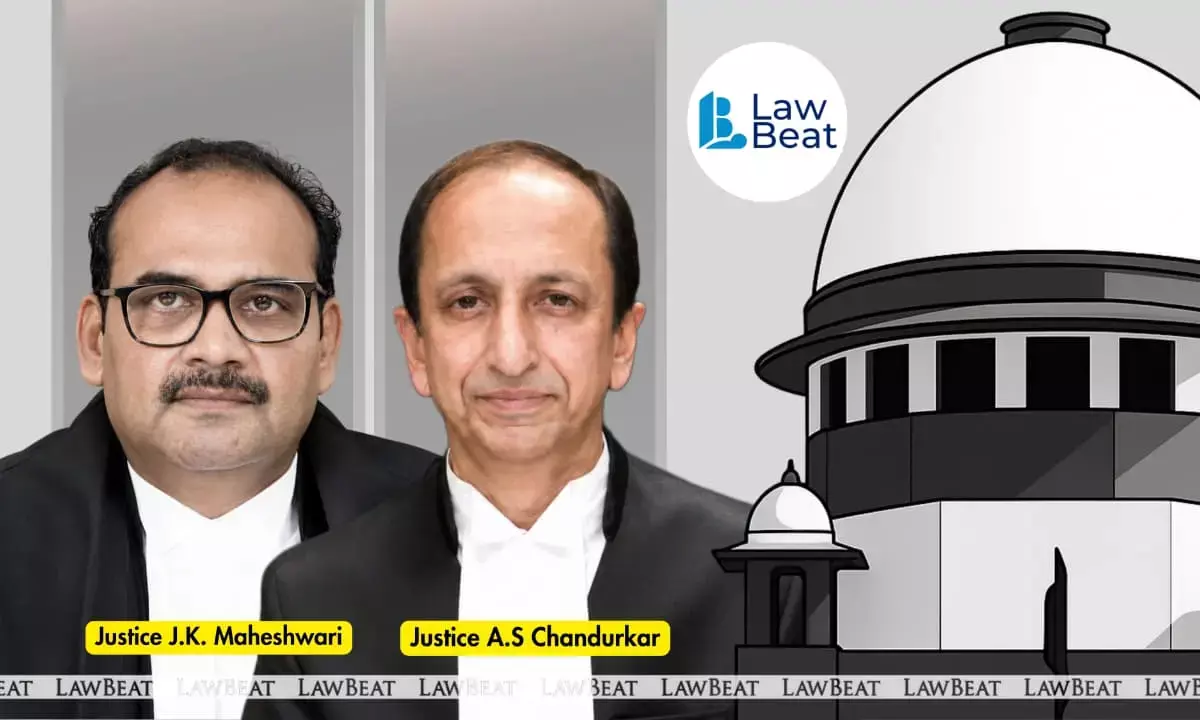
The Supreme Court of India directs regularisation of Income Tax Department workers, holding denial of similar benefits as discriminatory.
The Supreme Court recently directed the Income Tax department to regularise the services of casual workers engaged in the 1990s, noting that they were similarly placed as other daily-wage workers in the department whose services had already been regularised under various orders of the court.
A Bench of Justices J K Maheshwari and Atul S Chandurkar relied on Jaggo vs Union of India (2024), observing that long, continuous and unblemished service in roles that are regularly required can, over time, justify regularisation. Court also remarked that the principles laid down in the Secretary, State of Karnataka vs Umadevi (2006) are often misapplied to deny legitimate claims of long-serving employees.
The appellants, Pawan Kumar and others, had registered with the employment exchange and worked as casual workers in the Office of the Commissioner of Income Tax, Gwalior, for a considerable period. They initially made representations to the department seeking temporary status and eventual regularisation, but their requests were not accepted.
They then approached the Central Administrative Tribunal, Jabalpur bench, which rejected their plea on the ground that they had not completed ten years of continuous service as of April 10, 2006, as required under the Umadevi judgment. The Madhya Pradesh High Court also refused to interfere and dismissed their writ petition.
Meanwhile, through circulars issued in 2011 and 2012, the department decided to outsource the work previously performed by the appellants.
Before the Supreme Court, the appellants argued that similarly placed workers had already been granted regularisation following the court’s decision in Ravi Verma vs Union of India (2018). They contended that their appointments were at most “irregular” and not “illegal”, and that outsourcing the work showed it was of a permanent nature. They alleged that outsourcing was being used to deny them the benefit of regularisation.
The department, however, argued that the appellants did not meet the eligibility criteria under Umadevi, as they had not completed ten years of continuous service by April 10, 2006. It also submitted that there were no sanctioned posts available in Gwalior and that the appellants were only casual workers whose services were later taken through contractors.
After hearing both sides and examining the record, Court held that the appellants were entitled to regularisation, as they were similarly placed to other daily-wage workers in the department who had already been granted such relief. It found that denying them the same benefit would amount to discrimination.
The Bench further noted that its ruling in Jaggo supported the appellants’ case and held that the Tribunal had wrongly relied on Umadevi to deny relief. It also held that the high court erred in upholding the Tribunal’s decision.
Setting aside the high court’s judgment, the Supreme Court directed that the appellants’ services be regularised from July 1, 2006, on the same terms as applied in earlier decisions, including Ravi Verma and Raman Kumar. It also ordered that all consequential benefits be released within three months.
Also Read|SC Orders Regularisation of 'Water Woman' After 30 Years of Service in Gujarat
Case Title: Pawan Kumar & Ors Vs Union of India & Ors
Bench: Justices J K Maheshwari and Atul S Chandurkar
Date of Judgment: February 13, 2026