
Supreme Court Orders Uniform Format for Criminal Judgments; Trial Courts to Append Witness and Evidence Charts
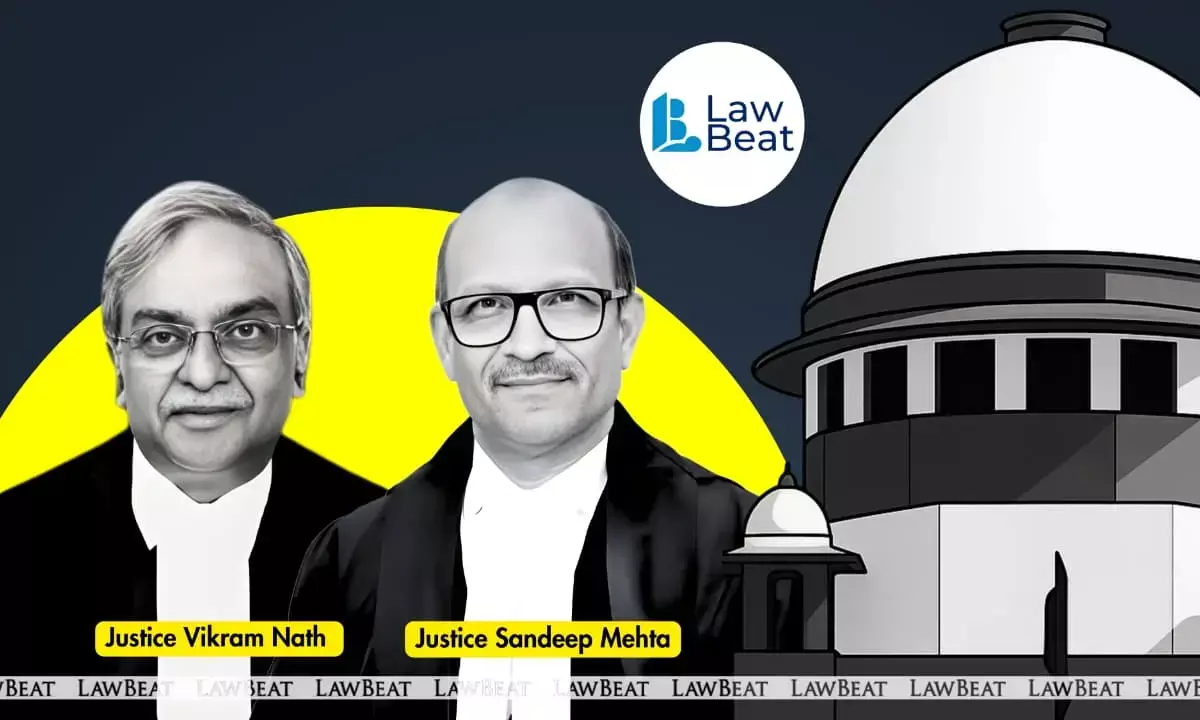
The Supreme Court mandates that trial courts include evidence tables in every criminal judgment
The Supreme Court has directed that all trial courts dealing with criminal cases must, at the end of their judgments, include tabulated charts summarising the witnesses examined, documents exhibited, and material objects produced during the trial.
A bench of Justices Vikram Nath and Sandeep Mehta said these charts should form an appendix or the concluding part of the judgment and must be prepared in a clear, structured, and easily understandable format.
“The high courts may consider incorporating these directions in their respective rules governing the procedure of trial courts,” the court said.
The directions were issued while dealing with a criminal appeal filed by Manojbhai Jethabhai Parmar (Rohit). Court noted that in the present case, both the trial court and the high court had appended charts of witnesses and documents to their judgments.
However, the bench said that a more structured and uniform practice was required to improve the readability of criminal judgments. “To ensure a systematic presentation of evidence that enables efficient appreciation of the record, we issue these directions to all trial courts across the country,” it said.
Court observed that the purpose of these directions was to institutionalise a standard format for listing witnesses, documentary evidence, and material objects. This, it said, would help all stakeholders, including appellate courts, to better understand the record and refer to it easily.
The bench noted that in complex cases such as conspiracy cases, economic offences, or trials involving extensive oral or documentary evidence, the number of witnesses and exhibits could be very large.
In such situations, court said that trial courts may prepare charts only for material, relevant, and relied-upon witnesses and documents, clearly mentioning that the chart is limited to those items. “This ensures that the charts remain functional reference tools rather than unwieldy compilations,” court added.
Court clarified that these directions would apply, mutatis mutandis, to all defence witnesses and defence evidence as well.
The bench also provided a specimen chart, stating that it would ordinarily serve as the standard format to be followed by trial courts across the country.
While these directions were mainly intended to streamline criminal trials, the bench said that high courts may also consider adopting similar tabulated formats in civil cases, particularly those involving large volumes of oral or documentary evidence, to promote clarity, uniformity, and ease of reference.
Turning to the facts of the case, the Supreme Court acquitted the appellant, who had been convicted in connection with the 2013 sexual assault of a four-year-old girl.
The bench observed that although the case involved a grave and distressing allegation of brutal sexual assault on a young child, it was marred by serious investigative lapses and procedural shortcomings.
Court pointed out that the FIR, despite the informant claiming complete knowledge of the incident, lacked even basic details. Neither the name of the accused nor the names of the alleged “last seen” witnesses were mentioned.
“What followed was a hopelessly botched investigation and a trial conducted with pedantic rigidity that obscured, rather than uncovered, the truth,” the bench said. It noted that the unnatural conduct of the witnesses, their insensitivity, contradictions, and apparent concoctions raised serious doubts about the prosecution case. Despite this, the accused had been convicted and had spent nearly 13 years in custody.
The accused was arrested based on a complaint and statements of “last seen” witnesses who claimed to have seen him pushing the child out of his house.
The trial court held that there was no reason for these witnesses to falsely implicate the accused in such a serious case. It concluded that the prosecution had proved a complete and unbroken chain of incriminating circumstances through unimpeachable evidence and sentenced the accused to life imprisonment. The high court later dismissed his appeal.
However, the Supreme Court found the testimony of these witnesses to be wholly unconvincing. It said the “last seen together” theory appeared to have been fabricated to somehow implicate the accused for ulterior motives.
“We feel that the entire story is dubitable and there exist grave doubts regarding the identity of these witnesses and the credibility of their evidence,” the bench said.
Court noted that the failure to mention the identity of the four boys who allegedly saw the accused pushing the child out of his house in the FIR cast a serious shadow over the prosecution case.
It further observed that the introduction of witnesses Arifkhan, Shahejadkhan, Bilal Ahemad, and Mohsin Gafurkhan to support the “last seen” theory was clearly an afterthought, as their names surfaced for the first time on June 14, 2013, a day after the incident.
The bench also found the conduct and testimony of the complainant, Nazir Mohammed, and journalist Vivekbhai to be highly suspicious.
“It seems highly probable that both connived together to protect and cover up for the four boys belonging to the community of Nazir Mohammed by shifting the blame onto the accused,” the court said.
The bench noted that if the complainant and the witnesses had any empathy, and if they were not themselves involved, then natural human conduct demanded that upon finding the child naked and injured, they would have first tried to clothe her and involve a woman to comfort her.
Court also referred to a candid admission made by Shahejadkhan (PW-4) during cross-examination, where he stated that he and his friends did not inform their parents because they feared their parents would suspect them on seeing the child bleeding.
Highlighting the absence of DNA profiling, court said the possibility that such inaction was intended, or at least had the effect, of shielding the real perpetrators could not be ruled out.
“When investigations are carried out in a manner that betrays their foundational purpose, and trials become mechanical exercises divorced from the quest for truth, the resulting miscarriage of justice reverberates far beyond the confines of the courtroom,” the bench said, adding that such failures erode public confidence and undermine the justice system.
Court also noted that although the child victim was examined, she did not give any evidence connecting the accused with the offence.
Rejecting the prosecution’s reliance on the FSL report due to serious infirmities, the bench said the claim that the accused was seen throwing the child out of his house after sexually assaulting her was not supported by any credible evidence.
“We find the conduct of the complainant, the journalist, the ‘last seen’ witnesses, and the investigating officers to be highly unnatural, suspicious, and riddled with improbabilities and contradictions,” court said.
Accordingly, the Supreme Court set aside the conviction and life sentence imposed by the trial court on November 3, 2015, as well as the high court’s judgment dated April 5, 2016. It directed that the appellant be released forthwith, if not required in any other case.
Case Title: Manojbhai Jethabhai Parmar (Rohit) Vs State of Gujarat
Judgment Date: December 15, 3036
Bench: Justices Vikram Nath and Sandeep Mehta