
Supreme Court Refuses To Restore Death Penalty, Upholds Acquittal In Murder Case
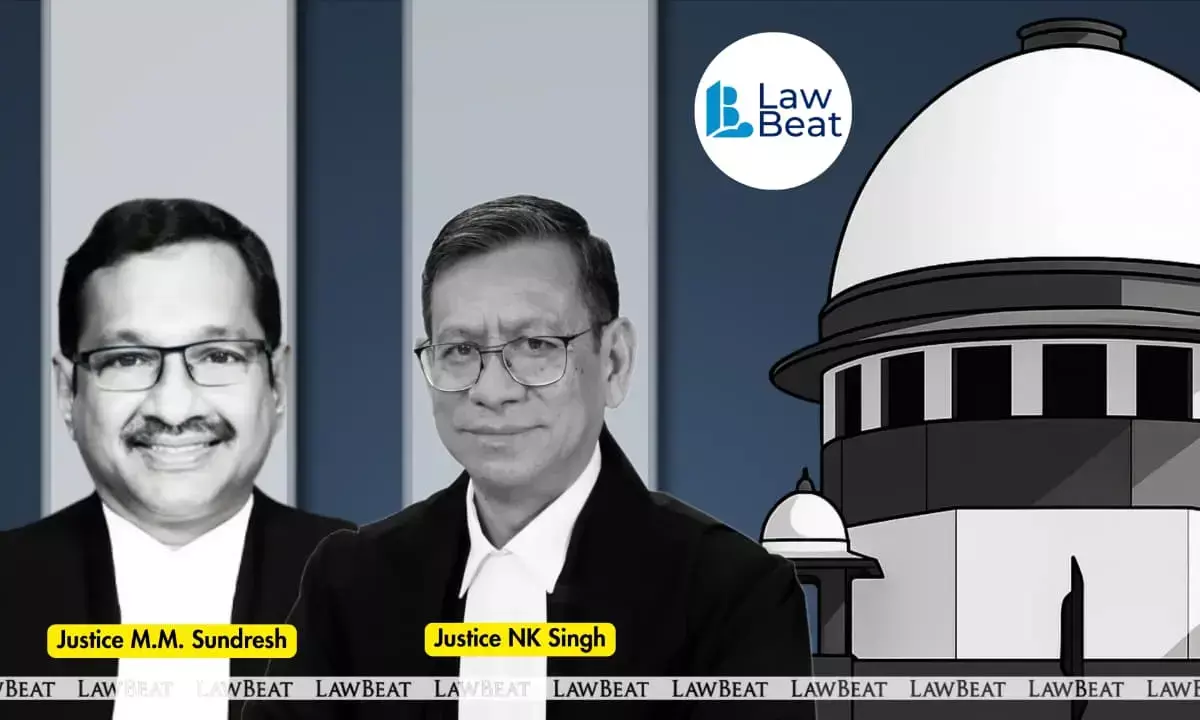
The Supreme Court declines to interfere with Allahabad High Court’s acquittal of two accused earlier sentenced to death in a murder case.
The Supreme Court has said that once an order of acquittal is passed, courts should not interfere with or overturn it unless there is a clear error or perversity on the face of the record.
A Bench of Justice M M Sundresh and Justice N Kotiswar Singh upheld the Allahabad High Court’s decision which had set aside the conviction of one Chaman and another accused in a murder case, along with the death penalty imposed on them by the trial court.
"The High Court did in fact take into consideration the material contradictions in the evidence presented by the prosecution, to arrive at a conclusion by way of a reasoned judgment", the Bench noted.
According to the case records, respondent no. 1 Chaman was convicted by a judgment dated October 23, 2010 for offences under Section 302 read with Section 34 of the Indian Penal Code, 1860 [corresponding to Section 103 and 3(5) of the Bhartiya Nyay Sanhita, respectively ], as well as under Sections 4 and 25 of the Arms Act, 1959. Respondent no. 2 Irshad was convicted under Section 302 read with Section 34 of the IPC. Both were awarded the death penalty by the trial court, subject to confirmation by the high court.
When the matter reached the high court through the accused persons’ appeals along with the death reference, the court re-examined the evidence and pointed out discrepancies in the testimonies of prosecution witnesses. By its judgment dated September 27, 2013, the high court allowed the appeals and acquitted both accused.
Challenging this acquittal, the State of Uttar Pradesh filed appeals before the Supreme Court. The state’s counsel relied on the evidence of eyewitnesses and the reasoning adopted by the trial court to support the conviction under Sections 302 and 34 of the IPC, and additionally under Sections 4 and 25 of the Arms Act for Chaman.
However, the Supreme Court found no reason to interfere. It observed that the view taken by the high court was a “plausible view” based on the material on record, and there was no apparent error or perversity in its reasoning.
The Bench noted that the high court had carefully considered contradictions in the prosecution’s evidence and delivered a reasoned judgment while acquitting the accused. In such circumstances, it said, interference was not warranted.
The Court accordingly dismissed the appeals.
Case Title: The State of UP Vs Chaman & Anr
Bench: Justices M M Sundresh and N Kotiswar Singh
Date of Judgment: February 4, 2026