
Supreme Court Sets Aside Order Holding Advocate Guilty of Professional Misconduct
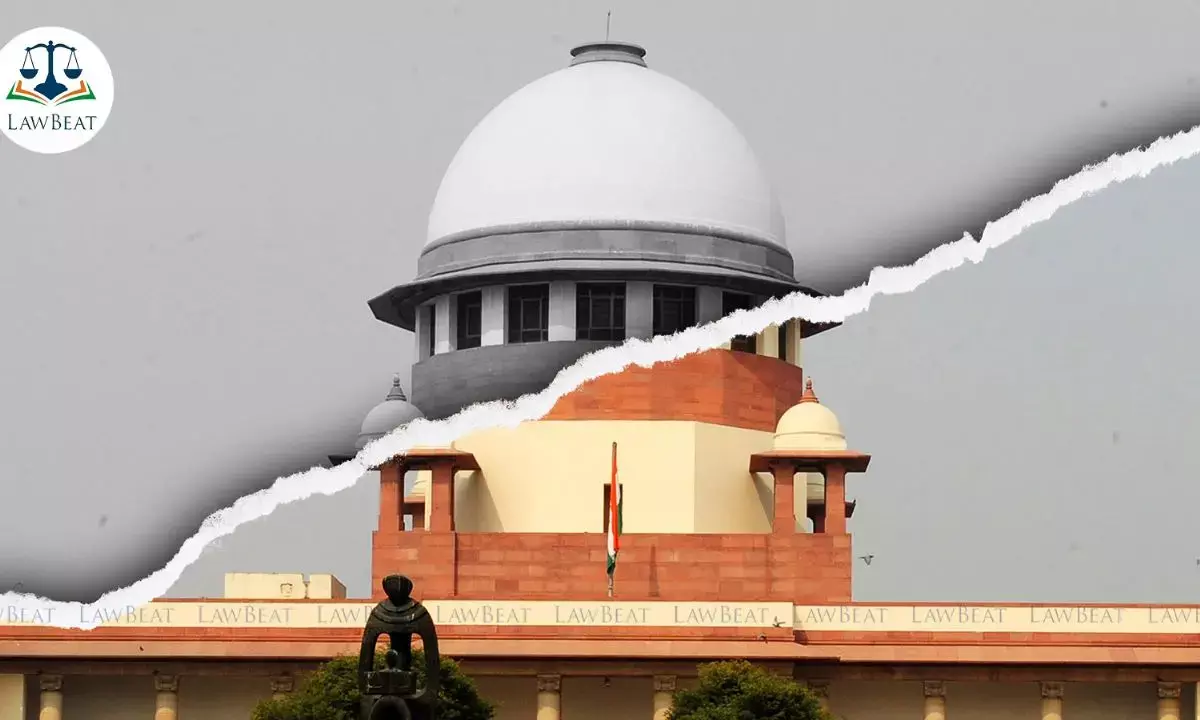
Supreme Court of India (Representative image)
The Supreme Court on January 29, 2026 set aside an order holding an advocate guilty of professional misconduct, observing that the very foundation of the disciplinary proceedings had ceased to exist after the complainant withdrew the allegations and expressed satisfaction with the advocate’s services.
A Bench of Justices Vikram Nath and Sandeep Mehta allowed a statutory appeal filed by advocate Monty Goyal under Section 38 of the Advocates Act, 1961, challenging the final judgment dated April 4, 2025 passed by the Disciplinary Committee of the Bar Council of India.
The Court held that the disciplinary committee failed to consider material facts, including a sworn affidavit filed by the complainant withdrawing the complaint and resolving the dispute amicably.
“The disciplinary committee of the Bar Council of India completely glossed over the material and vital aspect while holding the appellant advocate guilty of professional misconduct. The substratum of the complaint had ceased to exist once the dispute was amicably resolved and the complaint was sought to be withdrawn by the respondent complainant himself,” the Bench observed.
The appellant advocate had been held guilty of professional misconduct on the allegation that he failed to act with reasonable diligence and remained absent during court proceedings, which allegedly resulted in the dismissal of a quashing petition filed on behalf of the complainant, Navrang Singh.
The respondent complainant had been named as an accused in an FIR lodged in Ludhiana for offences under Sections 451, 323, 506, 427, 148 and 149 of the Indian Penal Code. Following a compromise between the parties to the FIR dated July 28, 2018, the appellant advocate was engaged to file a petition before the Punjab and Haryana High Court seeking quashing of the FIR.
On September 28, 2018, the High Court quashed the FIR subject to the respondent depositing costs of Rs 10,000 within two weeks. However, due to non-production of the receipt showing payment of costs, the High Court on November 16, 2018 recalled its earlier order and dismissed the quashing petition for want of prosecution, thereby reviving the criminal proceedings.
Subsequently, on an application, the High Court on January 14, 2020 recalled the dismissal order and restored the quashing petition, while enhancing the costs to Rs 50,000.
Aggrieved by the alleged negligence in depositing the initial costs, the respondent complainant filed a disciplinary complaint under Section 35 of the Advocates Act before the State Bar Council of Punjab and Haryana.
During the pendency of the disciplinary proceedings, the parties resolved the dispute amicably. The High Court on March 2, 2021 waived the enhanced costs of Rs 50,000. Upon compliance with the original direction regarding costs, the High Court on December 12, 2022 finally quashed the FIR and all consequential proceedings against the respondent complainant.
On December 15, 2022, the respondent complainant submitted a sworn affidavit before the State Bar Council stating that the complaint was filed due to a misunderstanding regarding the deposit of costs, that he was fully satisfied with the services rendered by the appellant advocate, and that he wished to withdraw the disciplinary complaint.
As the proceedings before the State Bar Council were not concluded within the statutory period of one year, the matter stood transferred to the Disciplinary Committee of the Bar Council of India. The committee nevertheless held the appellant guilty of professional misconduct, imposed a penalty of Rs 1 lakh, and directed that failure to comply would result in suspension of the appellant’s license to practice for one year.
The Supreme Court noted that the complainant had unequivocally clarified that no professional lapse was attributable to the appellant advocate and that he did not wish to pursue the complaint any further.
The Bench found that the impugned order neither adverted to the affidavit filed by the complainant nor dealt with the categorical withdrawal of allegations.
The Court further observed that no evidence was led by the complainant to substantiate the allegations and that the appellant advocate was held guilty merely on the basis of bald assertions in the complaint, without examination of the complainant on oath and without affording the appellant the right of cross-examination.
Such a finding, the Court held, rendered the conclusion of professional misconduct legally unsustainable.
Holding that the order of the Bar Council of India was unsustainable both on facts and in law, the Supreme Court allowed the appeal and set aside the finding of professional misconduct against the appellant advocate.
Case Title: Monty Goyal v. Navrang Singh
Bench: Justice Vikram Nath and Justice Sandeep Mehta
Date of Judgment: January 29, 2026