
Tax Laws Must Be Interpreted Strictly When Language Is Clear: Supreme Court
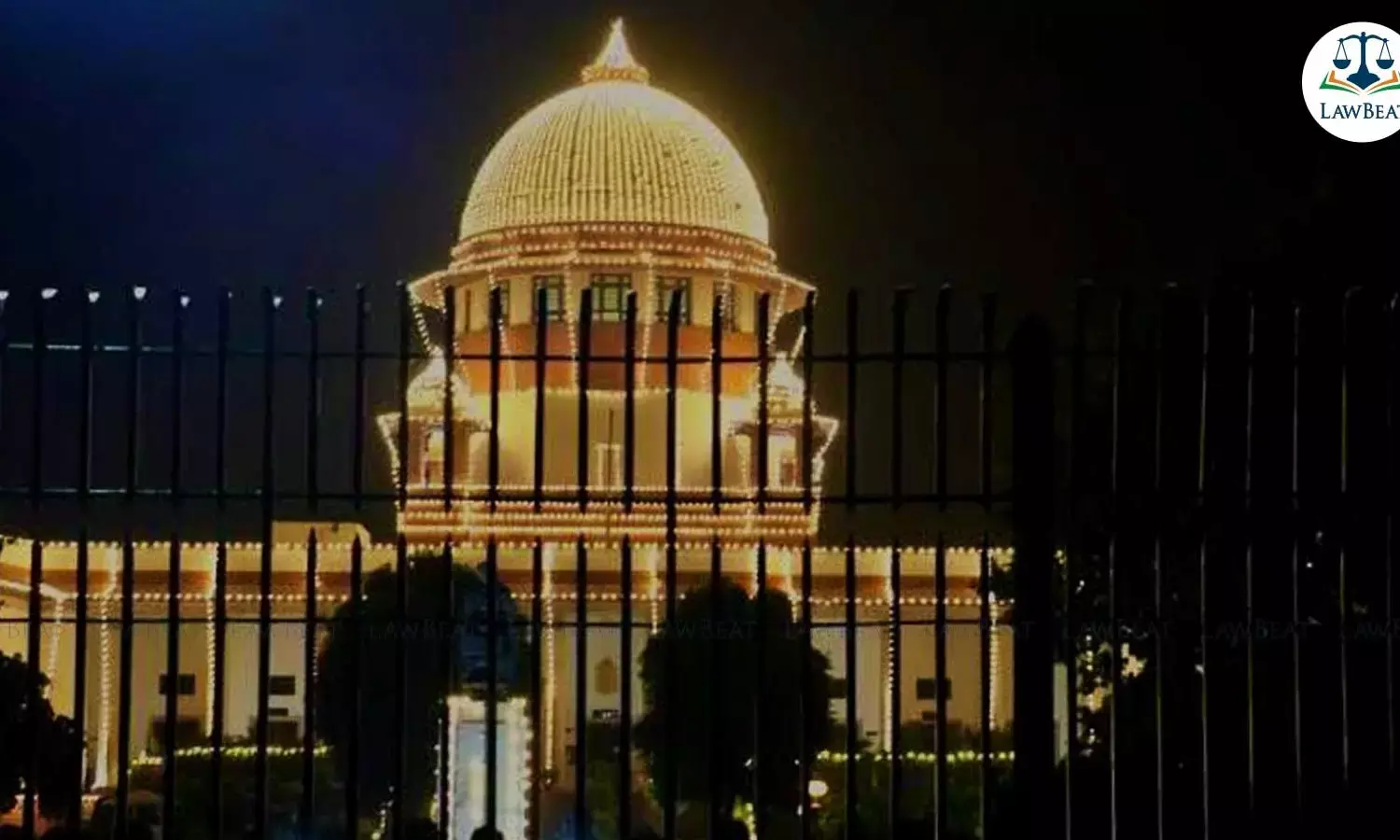
Supreme Court of India Building - Diwali Night
The Supreme Court has reiterated that taxation statutes must be interpreted strictly and that where the statutory language is plain and unambiguous, courts are bound to give effect to its plain meaning.
A Bench of Justices J B Pardiwala and K V Vishwanathan observed that it is impermissible for courts to add or read words into a statute on the assumption that such additions may better advance legislative intent, particularly when the language used by Parliament is clear.
The Court clarified that while determining whether statutory language is plain and unambiguous is not a mechanical exercise, words must be interpreted in their proper context and not in isolation. Legislative intent, the Bench said, is primarily to be gathered from the specific words employed by the legislature, and reference to the object and purpose of the statute becomes relevant only where the language is ambiguous or capable of more than one interpretation.
The ruling came while deciding civil appeals filed by the Director of Income Tax (IT)-I, Mumbai, concerning the interpretation of Section 44C of the Income Tax Act, 1961. The respondents in the appeals included M/s American Express Bank Ltd and M/s Oman International Bank.
The principal issue before the Court was whether Section 44C applies only to common expenditure incurred by a foreign head office and attributable to its Indian operations, or whether it also covers expenditure incurred exclusively for Indian branches.
After examining the statutory scheme, the Supreme Court held that Section 44C applies to all head office expenditure, irrespective of whether the expenditure is common or incurred exclusively for the Indian branches.
The Bench noted that Section 44C is a special provision that exclusively governs the quantum of deduction allowable in respect of head office expenditure incurred by a non resident assessee. For an expenditure to fall within its ambit, two conditions must be satisfied: the assessee claiming the deduction must be a non resident, and the expenditure must strictly qualify as head office expenditure as defined in the Explanation to Section 44C.
The Court explained that the Explanation to Section 44C lays down a tripartite test to determine whether an expense qualifies as head office expenditure. First, the expenditure must be incurred outside India. Second, it must be in the nature of executive and general administration expenses. Third, such expenditure must fall within one of the specific categories enumerated in clauses (a), (b), or (c) of the Explanation, or be of the kind prescribed under clause (d).
Once these conditions are met, the operative portion of Section 44C is triggered. The allowable deduction is then restricted to the lower of two amounts: five percent of the adjusted total income, or the amount of head office expenditure specifically attributable to the business or profession of the assessee in India.
The Bench held that the language of Section 44C, read in light of the mischief it sought to address, is unambiguous. It observed that the statutory definition of head office expenditure is broad and inclusive, and there is nothing in the provision to suggest that expenditure incurred exclusively for Indian branches is excluded from its scope.
The Court further clarified that the use of the expression attributable in clause (c) of the Explanation does not create a distinction between common expenditure and exclusive expenditure. On this basis, the Supreme Court answered the question of law in favour of the Revenue.
However, the Court noted that the authorities below had not properly examined whether the disputed expenses in the present cases actually satisfied the statutory definition of head office expenditure. It observed that the authorities appeared to have adopted an overly broad understanding of the term, without applying the specific criteria laid down in the Explanation to Section 44C.
As an appellate court, the Supreme Court declined to undertake a factual inquiry on this issue. Accordingly, it remanded the matters to the Income Tax Appellate Tribunal, Mumbai, for the limited purpose of verifying whether the disputed expenditures meet the tripartite test required to qualify as head office expenditure under Section 44C of the Income Tax Act, 1961.
Case Title: Director of Income Tax (IT)-I, Mumbai v. M/s American Express Bank Ltd
Bench: Justices J B Pardiwala and K V Vishwanathan
Date: February 6, 2026