
UAPA: Can Prosecution Sanction Delay Justify Extension To File Charge Sheet? Supreme Court Clarifies
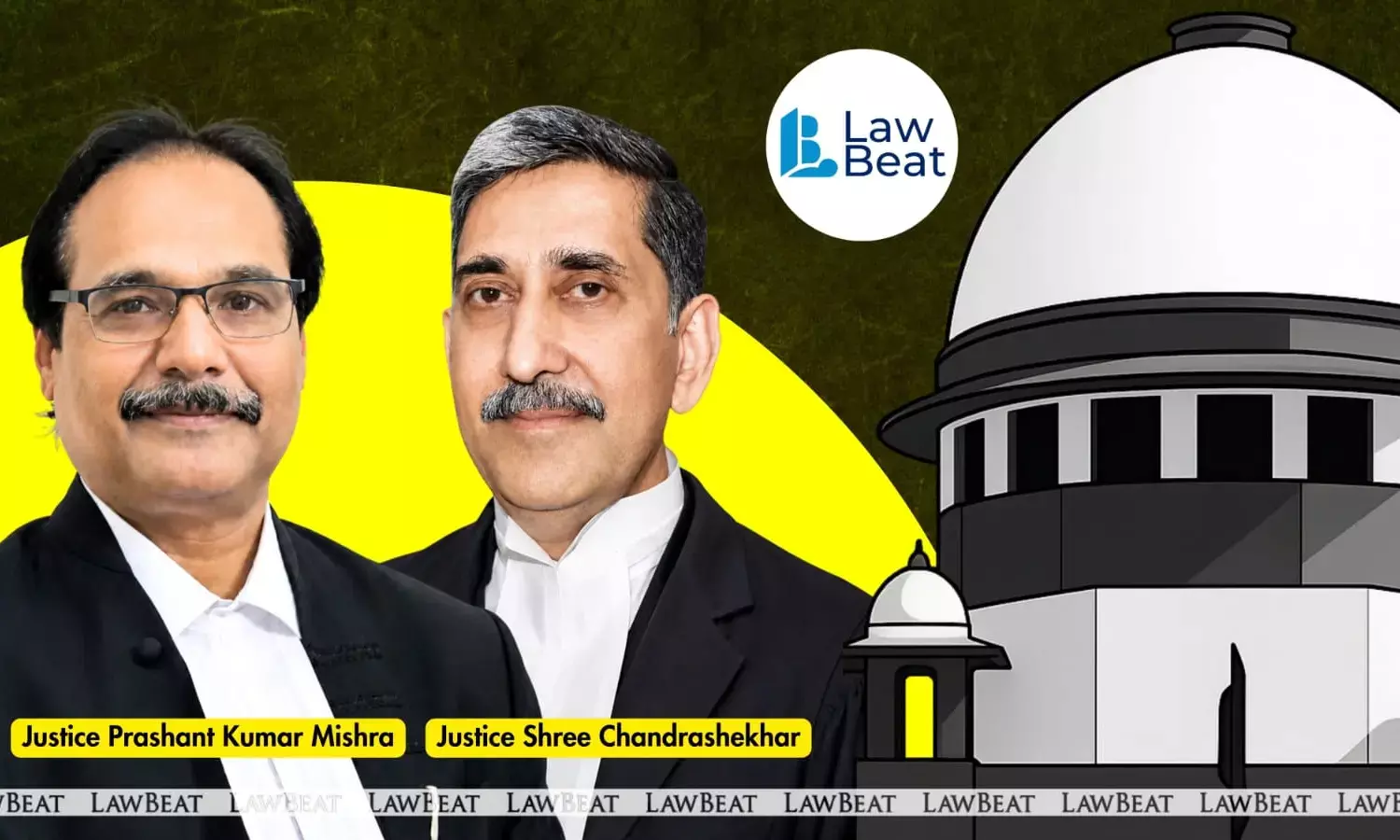
Supreme Court clarifies rules on UAPA investigation time extensions.
The Supreme Court has held that an application seeking extension of time to file a charge sheet under the Unlawful Activities (Prevention) Act (UAPA) cannot be rejected merely because the prosecution says that sufficient material is available to file the charge sheet, holding that such a statement does not mean that the investigation has been completed.
A Bench of Justices Prashant Kumar Mishra and Shree Chandrashekhar also held that the time required to obtain sanction for prosecution can be considered while deciding whether an extension of time should be granted for completing the investigation.
“Further, obtaining sanction for prosecution is a process distinct from investigation, and the duration required for such procedural formalities can be considered when evaluating the progress of investigation for the purpose of granting an extension,” the Bench said.
Court explained that while sanction for prosecution is required at the stage of taking cognizance, obtaining sanction is not a mechanical process. The sanctioning authority has to consider the material collected during the investigation before deciding whether sanction should be granted.
Court also noted that the prosecution must place the necessary documents and relevant facts before the sanctioning authority to persuade it to grant sanction.
What did the Supreme Court say about default bail?
Court reiterated that the right to default bail is a fundamental right forming part of the procedure established by law under Article 21 of the Constitution. It arises when the investigating agency fails to complete the investigation and file the final report within the prescribed statutory period.
“Once a charge sheet is filed, the right to default bail does not survive and cannot be claimed by the accused,” the Bench said.
Court added that default bail is an indefeasible right which must be exercised before the charge sheet is filed. Once the charge sheet is filed, the right ceases.
Why did the Supreme Court interfere with the Bombay High Court order?
The Supreme Court was hearing an appeal filed by the State of Maharashtra against a Bombay High Court judgment which had held that Momin Moiuddin Gulam Hasan alias Moin Mistri and Asif Aminul Hussain Khan Adhikari, alleged members of the banned Popular Front of India, were entitled to seek default bail in a UAPA case.
The accused were arrested on September 22, 2022. The special court had granted the Anti-Terrorist Squad a 15-day extension to file the charge sheet and rejected the accused's plea for default bail. The high court later set aside this order, noting that a 30-day extension had already been granted earlier.
The charge sheet was eventually filed on February 2, 2023. The accused were booked under Sections 120B, 121A, 153A, 201 and 116 of the Indian Penal Code (Sections 61, 148, 196, 238 and 54 of the Bharatiya Nyaya Sanhita, respectively) and Section 13(1)(b) of the UAPA.
The prosecution alleged that they had indulged in activities aimed at overthrowing the Government of India and disrupting India's sovereignty by taking foreign aid for establishing an Islamic State in India.
Can saying there is ‘sufficient material’ mean that the investigation is complete?
No, the Supreme Court held.
In the second application seeking extension, the prosecution had stated that there was enough evidence to file a charge sheet and sought another 15 days to do so.
The high court interpreted this statement to mean that the investigation was complete. It consequently held that an extension on the ground that sanction for prosecution was awaited was impermissible.
The Supreme Court disagreed.
“A statement made by the prosecution that there is sufficient material for filing the charge sheet cannot be interpreted by the court as if the investigation in the case was complete,” the Bench held.
It said the statement could not be used to curtail the power of the Anti-Terrorist Squad to complete the investigation or carry out further investigation.
The Bench held that the high court had committed a serious error by relying on this “solitary statement” to conclude that the investigation was complete.
What did Supreme Court say about police's power to investigate?
Court reiterated that investigation of a crime is the exclusive domain of the police and courts should not ordinarily interfere with the investigating agency's discretion.
“The investigation of a crime is the exclusive domain of the police. It is not the jurisdiction of the court to decide when the investigation in a case should stop,” the Bench said.
It added that courts should not interfere with the discretion of the police unless there is a clear statutory bar or exceptional circumstances indicating an abuse of power.
Court also noted that the requirement of filing a complete charge sheet is not a mere formality. The sanctioning authority may refuse sanction if it finds that the material collected during the investigation is insufficient to proceed against the accused.
Why can UAPA investigations get an extension beyond the ordinary period?
The Supreme Court noted that the concept of default bail was introduced by Indian lawmakers and that special statutes dealing with serious offences have subsequently provided investigating agencies with additional time to complete investigations.
Court pointed out that statutes such as MCOCA, TADA, POTA, GUJCTOC and the NDPS Act provide for extended periods for filing charge sheets in specified cases.
Under the UAPA, the legislature has provided an additional period of 90 days for filing the charge sheet.
“Besides the complex nature of investigation involved in the UAPA cases, the idea behind providing the extended period for filing the charge sheet seems to be influenced by grave consequences of unlawful activities on national interest,” the Bench said.
It held that the statutory provision permitting extension of time under Section 43D of the UAPA cannot be denied mechanically.
What did Supreme Court decide?
The Supreme Court set aside the Bombay High Court's order and upheld the special court's order granting the extension of time to the prosecution to file the charge sheet.
Court held that the high court's discussion regarding sanction for prosecution was not relevant to deciding the legality of the second extension.
It directed the accused to surrender within 30 days, while observing that they could seek regular bail if advised.
Court also observed that differences in the use of English language and judicial writing can sometimes lead to different interpretations of an order. It noted that the special judge had intended to treat retrieval of forensic data as a ground for extension, while sanction for prosecution was also a material ground.
Case Title: The State of Maharashtra & Anr Vs Momin Moiuddin Gulam Hasan @ Moin Mistri & Anr
Bench: Justices Prashant Kumar Mishra and Shree Chandrashekhar
Date of Judgment: September 21, 2026