
Unfounded Allegations Against Judges Can Erode Public Faith in Judiciary: Supreme Court
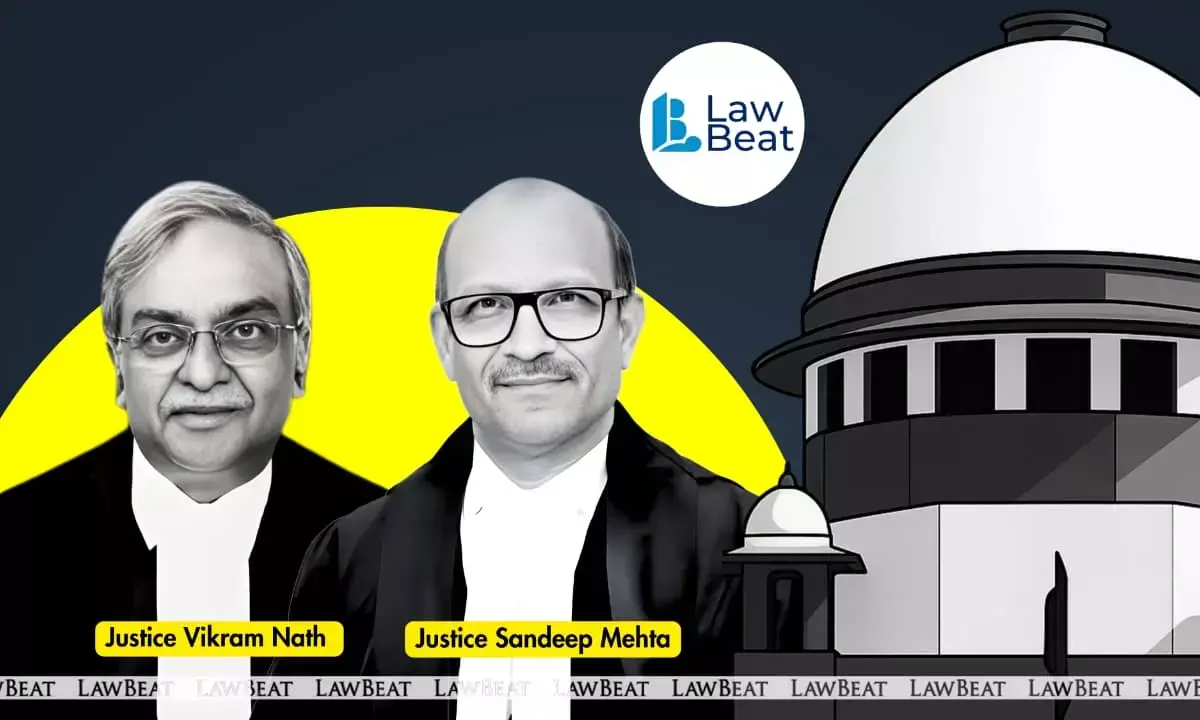
Supreme Court says personal allegations against judges undermine judicial credibility.
The Supreme Court recently observed that unfounded or intemperate allegations questioning the integrity, motives or impartiality of judges have the potential to erode public faith in the judiciary and diminish the credibility of the justice delivery system.
Saying that advocates bear a heightened duty to uphold the dignity of the institution, a Bench of Justices Vikram Nath and Sandeep Mehta dismissed a criminal appeal filed by advocate Nilesh C. Ojha against a Bombay High Court order refusing to recall contempt proceedings initiated over his remarks against a judge during a press conference on the Disha Salian death case.
Disha Salian was found dead on June 8, 2020, after falling from the 14th floor of a residential flat in Malad. The Mumbai Police had registered an Accidental Death Report in her case. Salian was the manager of late Bollywood actor Sushant Singh Rajput.
Ojha's appeal was filed under Section 19 of the Contempt of Courts Act, 1971, challenging a September 17, 2025 order of a Full Bench of the Bombay High Court. The high vourt had declined to withdraw contempt proceedings arising from statements made by Ojha, which were alleged to be scandalous and defamatory in nature.
Ojha had contended that the judge concerned was disqualified from hearing the matter because her sister was allegedly an accused in an FIR lodged at the instance of his client and was also associated with the Nationalist Congress Party (Sharadchandra Pawar).
Why did the Supreme Court refuse to interfere with the Bombay High Court's contempt proceedings?
The Supreme Court held that no case was made out for interference with the high court's order.
The Bench observed that members of the Bar occupy a position of privilege and responsibility in the administration of justice and are expected to maintain restraint, sobriety and fidelity to professional ethics both inside and outside courtrooms.
"An advocate, more than any other stakeholder in the justice delivery system, bears a heightened duty to uphold the dignity of the institution and to act with circumspection in matters touching upon the administration of justice," Court said.
Also Read| Sushant Singh Rajput Death Case: Bombay High Court Quashes LOC Against Rhea & Showik Chakraborty
The judgment stressed that public confidence in the judiciary is an indispensable component of the rule of law and that attempts to scandalise or sensationalise judicial proceedings strike at the foundation of that confidence.
Court clarified that criticism of judicial decisions is not impermissible. It noted that fair, reasoned and bona fide criticism remains a legitimate aspect of democratic discourse. However, it drew a distinction between questioning the correctness of a judicial decision and making personal allegations against the judge who delivered it.
A litigant dissatisfied with a judicial order is entitled to challenge it before a higher forum, the Bench said, but such challenges must be based on civilised and temperate criticism of the decision rather than insinuations directed at a judge's integrity or neutrality.
What did the Supreme Court say about public criticism of pending judicial proceedings?
Answering the issue, Court said carrying a pending judicial controversy into the public domain in a manner that sensationalises proceedings or scandalises judges is inconsistent with the discipline expected of advocates.
According to the Bench, professional ethics require grievances against judicial orders to be ventilated through established legal remedies before appropriate judicial forums rather than through public commentary that may influence perceptions about the fairness or integrity of the judicial process.
Court further observed that while accountability and scrutiny are integral features of a constitutional democracy, personal imputations against judges must be founded on unimpeachable material and pursued strictly in accordance with law. Otherwise, such allegations risk undermining the very edifice of judicial independence.
Dismissing the appeal, the Supreme Court requested the Bombay High Court to proceed with the contempt proceedings expeditiously and adjudicate all issues independently on their own merits.
The Bench also clarified that its observations were confined to a prima facie examination undertaken for deciding the present appeal and should not be treated as an expression on the merits of the underlying controversy or influence the High Court's independent adjudication of the matter.
Case Title: Nilesh C Ojha Vs High Court of Judicature at Bombay Through Secretary & Ors
Bench: Justices Vikram Nath and Sandeep Mehta
Date of Judgment: April 20, 2026