
Uninsured Vehicles: Supreme Court Suggests Fuel Ban to Enforce Motor Insurance Compliance
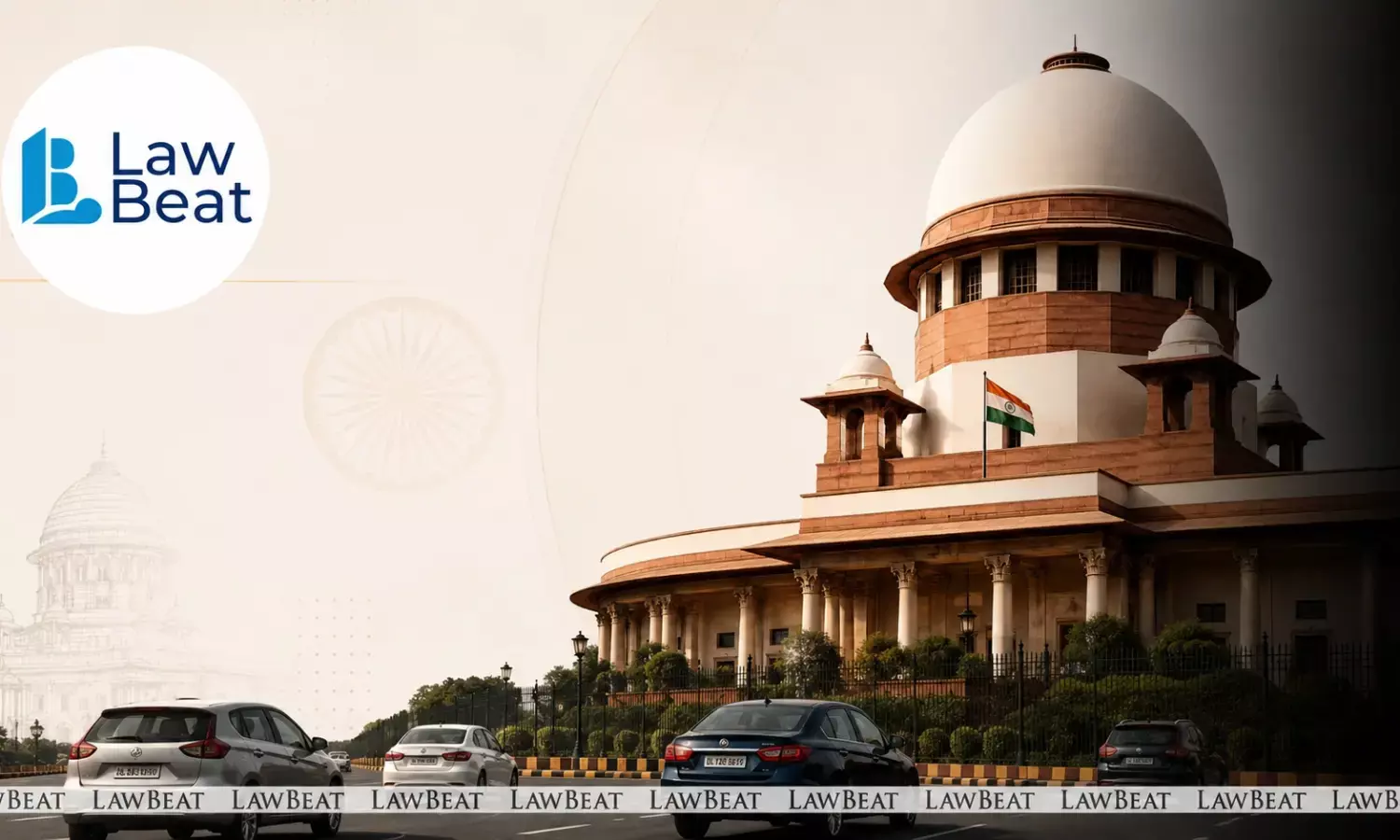
Supreme Court ordered stronger third-party insurance compliance to protect road accident victims.
The Supreme Court has suggested linking the purchase of fuel to the insurance status of vehicles as a measure to enforce mandatory motor insurance, saying vehicles without valid insurance could be refused fuel at petrol pumps until they obtain a valid policy.
A bench of Justices Sanjay Karol and Prashant Kumar Mishra directed the Insurance Regulatory and Development Authority of India (IRDAI), in consultation with the Ministry of Road Transport and Highways (MoRTH), to deliberate and evolve a pilot project for implementing such a system.
Court also directed that third-party insurance for new cars should be mandatory for four years and for new two-wheelers for six years, and asked IRDAI to immediately issue necessary directions in this regard. The directions were issued while the Court examined the widespread non-compliance with the mandatory insurance requirement under the Motor Vehicles Act, 1988.
Why did the Supreme Court push for stricter third-party insurance compliance?
Court was examining the lack of compliance with Section 146 of the Motor Vehicles Act, 1988, which requires every vehicle to have a valid insurance policy covering third-party risks.
It also considered whether there should be a uniform motor insurance policy structure covering all occupants of a vehicle, in addition to the mandatory third-party coverage.
The Bench noted that Section 146, under Chapter XI of the Motor Vehicles Act dealing with insurance of motor vehicles against third-party risks, prohibits the use of a vehicle without such an insurance policy.
Section 147 lays down the requirements of an insurance policy and limits of liability, while Section 149 places a duty on insurers to satisfy awards relating to third-party risks. Section 207 empowers police officers or other persons authorised by the government to seize and detain vehicles that do not have valid registration, permits and other required documents.
“Road safety is an often-discussed but still unaddressed issue. On average, there are more than four lakh road accidents in India every year. In India, more than half of the vehicles plying do not possess a valid insurance policy,” the Bench said.
It added that a large number of vehicles also do not have active or valid registration, resulting in a “stark gap between the statutory mandate and enforcement mechanism on the ground".
Third-party insurance: Why did the Court increase the mandatory period?
The Supreme Court had earlier addressed the issue in S Rajaseekaran v Union of India on July 12, 2018, when it noted the large number of vehicles being driven without third-party insurance.
Court had then directed that third-party insurance be purchased for three years for new cars and five years for new two-wheelers at the time of purchase or registration.
The Bench noted that eight years had passed since those directions, yet a large number of vehicles continued to remain uninsured.
“We notice that despite eight years having passed from the said direction, a large number of vehicles remain uninsured,” Court said.
Although IRDAI and the General Insurance Council had recommended that the existing period not be increased, the Bench said it considered a one-year increase necessary in the interest of road safety.
“Therefore, it is directed that henceforth, third-party insurance for four years for new cars and six years for new two wheelers be required to be purchased. IRDA to immediately issue necessary directions,” it ordered.
Court also noted that there is a lack of uniformity in the clauses contained in different insurance policies and that there is scope for improving customer awareness about the different types of insurance coverage available.
What will the insurance verification system do?
Court ordered that a pilot project be implemented to allow citizens to verify the insurance status of vehicles.
The system should specify the type of insurance held by a vehicle, including whether it has only the mandatory third-party insurance or a comprehensive policy.
According to the Court, the system would serve two purposes.
First, it would allow citizens to know whether a vehicle in which they are travelling, or which they are using to transport goods or employees, has valid insurance.
Second, it would enable prompt reporting of uninsured vehicles.
Fuel-insurance linkage: How will it help identify uninsured vehicles?
The Bench said linking fuel purchases with the insurance status of vehicles could help identify uninsured and unregistered vehicles and encourage owners to obtain valid insurance.
“This may be done through the use of ANPR (Automatic Number Plate Recognition cameras). The Ministry of Petroleum and Natural Gas, has in principle, no objection to the same,” Court said.
Court also directed IRDAI, in consultation with the Ministry of Road Transport and Highways, to deliberate and evolve a pilot project for such a system.
It said the integration of enforcement mechanisms with technology was the need of the hour and that existing offline systems for issuing challans and managing road safety should be integrated with electronic systems to ensure compliance with mandatory insurance.
Nearly 56% vehicles uninsured, Supreme Court notes
Court said it was “shocking” that nearly 56% of vehicles plying on Indian roads remain uninsured, citing the Report of the Standing Committee on Finance 2024-25.
According to the report, 16.54 crore out of 30.48 crore vehicles were uninsured.
Court said the consequence was that the statutory safeguard meant to ensure compensation to road accident victims was often delayed, if not defeated.
The objective of mandatory insurance under Section 146 of the Motor Vehicles Act, it said, was not merely to ensure that accident victims received compensation, but also to prevent them from being forced into prolonged litigation.
“The result of vehicles remaining uninsured is that the victims of the accident and their families have no recourse to adequate compensation, within a reasonable time period,” the Bench said.
It noted that victims and their families often have to engage in prolonged litigation over the amount of compensation as well as liability. The impact is particularly severe where the victim dies or suffers permanent disability, as the family's financial burden increases substantially.
The problem is further compounded when vehicles do not have valid or active registration, the Court said, as tracing the identity of the driver or owner involved in an accident can then become difficult and time-consuming.
ANPR cameras to be linked with insurance and VAHAN databases
Court directed that ANPR cameras be integrated with data from the Insurance Information Bureau, established under IRDAI, and the VAHAN portal.
The system would facilitate automatic e-challans against uninsured vehicles in furtherance of the Standard Operating Procedure for Electronic Monitoring and Enforcement of Road Safety.
The Bench also directed that State Police be provided with handheld devices or downloadable applications linked to the Insurance Information Bureau and VAHAN databases.
These would allow police personnel to check the real-time insurance status of vehicles and issue challans for violations.
Court noted that the number of road accidents in India stood at 4,87,705 in 2024, compared with 4,80,583 in 2023 and 4,61,312 in 2022.
Court also upholds compensation in 1996 accident case
The directions came while the Court dismissed an appeal filed by National Insurance Company Limited against a Telangana High Court judgment awarding ₹10,00,500 compensation to the claimants, along with 7.5% annual interest.
The Motor Accident Claims Tribunal (MACT) had, in its December 8, 2009 order, held that the claimants were not entitled to compensation. It relied on the testimony of an Assistant Manager of the insurance company and noted that no additional premium had been paid to cover the personal risk of the vehicle owner.
The Supreme Court, however, emphasised that courts should not adopt a hyper-technical approach in motor accident claims.
It agreed with the claimants' submission that, in accordance with an IRDAI circular dated November 16, 2009, insurance companies were liable to compensate occupants of a vehicle under a comprehensive/package policy.
The case arose from an accident on July 13, 1996. T Ramu was returning from Tirupathi to his village Venkanur in his Maruti 800 when, near Singarayakonda at around 5 am, an unknown lorry being driven rashly and negligently hit the car from behind.
Ramu suffered injuries in the accident and died during treatment.
Case Title: National Insurance Company Ltd v Smt Thungala Dhana Laxmi & Ors
Bench: Justices Sanjay Karol and Prashant Kumar Mishra
Date of Judgment: August 4, 2025