
‘Weed Out The Dead Wood’: Supreme Court Explains Purpose Of Compulsory Retirement
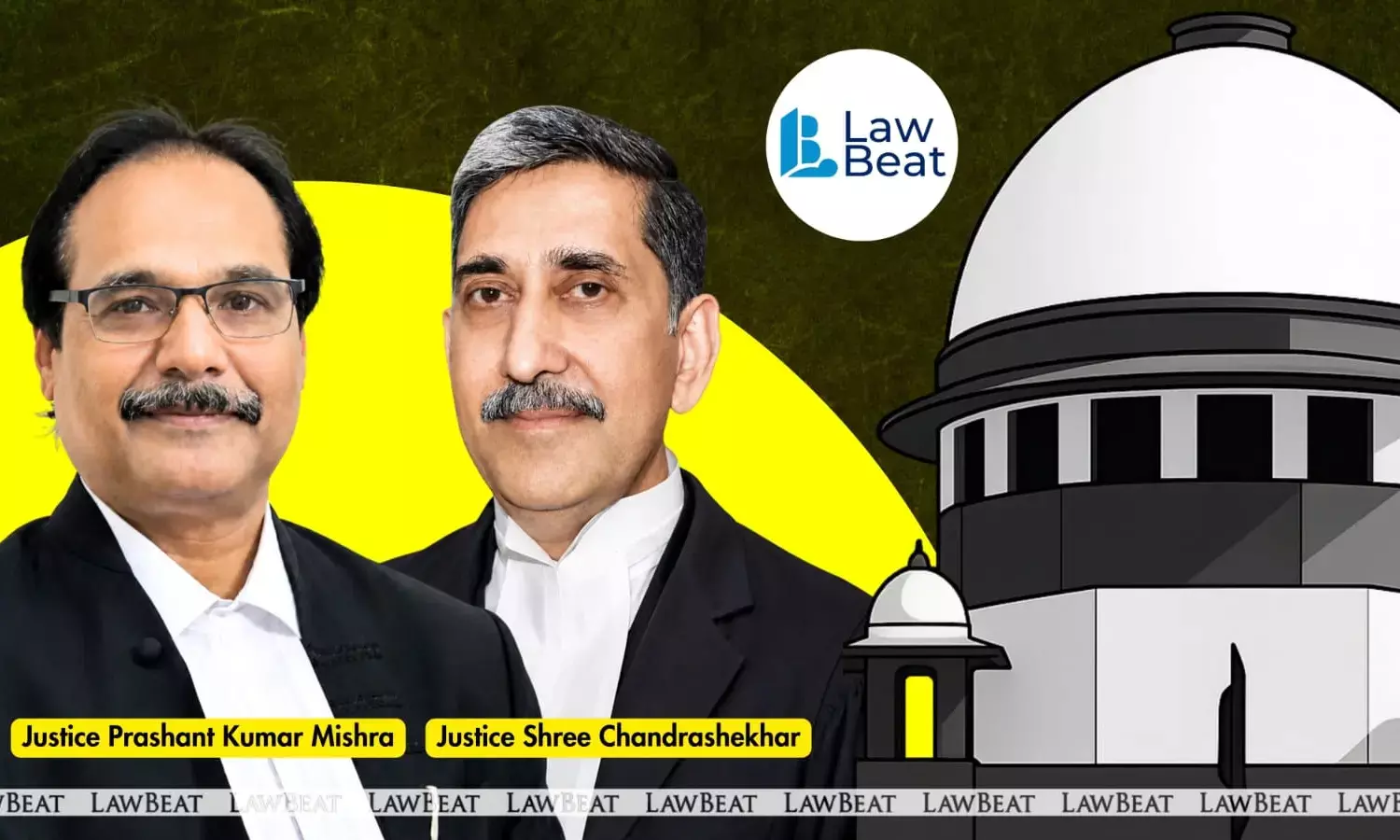
Supreme Court holds that uncommunicated adverse remarks alone cannot invalidate an order of compulsory retirement.
The Supreme Court has held that an order of compulsory retirement cannot be invalidated merely because uncommunicated adverse remarks formed part of the material considered by the competent authority. It said this, by itself, does not provide a ground for judicial interference.
A Bench of Justices Prashant Kumar Mishra and Shree Chandrashekhar said the government or review committee must consider the employee’s entire service record, while attaching greater importance to records and performance during the immediate preceding years. Both favourable and adverse remarks have to be weighed while assessing an employee’s suitability for continued service.
What is the purpose of compulsory retirement?
Court said compulsory retirement is intended to “weed out the dead wood” and maintain high standards of efficiency and integrity in public service. Such an order is not punitive in nature and does not carry any stigma, prejudice or suggestion of misbehaviour.
“The order of compulsory retirement is in public interest and is passed on the subjective satisfaction of the Government,” the Bench said.
Court further held that the principles of natural justice, including audi alteram partem, do not apply in the context of compulsory retirement.
However, this does not mean that such orders are beyond judicial scrutiny.
“Albeit, the high court or this Court would not examine the matter as an appellate court, but nevertheless, can interfere, if the order so passed is malafide, based on no evidence or is arbitrary and perverse,” the Bench said.
Court made the observations while dismissing an appeal filed by Sushil Sharma against a Delhi High Court judgment, which had upheld the order compulsorily retiring him from service.
Why was the appellant compulsorily retired?
Sharma had joined the Central Industrial Security Force (CISF) as an Assistant Sub-Inspector on June 28, 1982. He was promoted to Sub-Inspector in 1990 and Inspector in 2003.
After he attained the age of 50 years, his case was placed before the Internal Screening Committee for assessment under Rule 56(j) of the Fundamental Rules. The committee found him unfit for continued retention in service. The Review Committee affirmed the decision on June 6, 2010, following which he was compulsorily retired. His representation against the decision was also rejected.
The Delhi High Court, while considering his Annual Confidential Reports (ACRs), found that his efficiency in performing his duties had declined during the last two years of the period under review. It held that the decision to compulsorily retire him was neither arbitrary nor unreasonable.
The Supreme Court also examined Sharma’s service record. His gradings between 1983 and 1999 fluctuated between “Average”, “Good” and “Very Good”. He received his first promotion in 1990 during a period of improved performance and his second promotion in 2003 after receiving “Very Good” gradings from 2000 to 2003.
Court, however, said greater weight must necessarily be given to the service record of the immediate preceding years before an order of compulsory retirement.
What did the service record show?
Court noted that Sharma’s performance between 2004 and 2009 assumed particular significance.
He was graded “Average” in 2004, “Very Good” in 2005, “Good” in 2006 and 2007, and “Good” in the first quarter of 2008. His grading thereafter declined to “Average” for the remainder of 2008 and remained “Average” through 2009.
The Bench said this showed a discernible decline in his performance in the two years immediately preceding his compulsory retirement.
Court also noted that after his last promotion in 2003, Sharma was given a minor penalty of censure for furnishing a false reason to obtain leave. He was also warned four times for negligence in duties and cautioned twice for a lethargic attitude.
Can adverse material before a promotion be ignored?
Sharma had argued that the penalties and adverse material preceding his promotion as Inspector could not have been considered while assessing his suitability for continued service.
The Supreme Court rejected the argument.
It said the “washed-off theory”, which may apply in matters relating to promotion, has no application when the competent authority is assessing whether an employee should be retained in service.
“The Committee was, therefore, justified in considering the appellant's entire service record, including adverse material preceding the appellant's promotion,” the Bench said.
Court found no infirmity in the committee’s decision, noting that it had considered Sharma’s entire service record while giving due weight to his declining performance in the immediate preceding years.
The Bench accordingly concurred with the Delhi High Court and held that the decision of the competent authority did not warrant interference.
Case Title: Sushil Sharma Vs Union of India And Others
Bench: Justices Prashant Kumar Mishra and Shree Chandrashekhar
Date of Judgment: August 6, 2026