
Why Properly Questioning the Accused Is Crucial in Criminal Trials: Supreme Court Explains
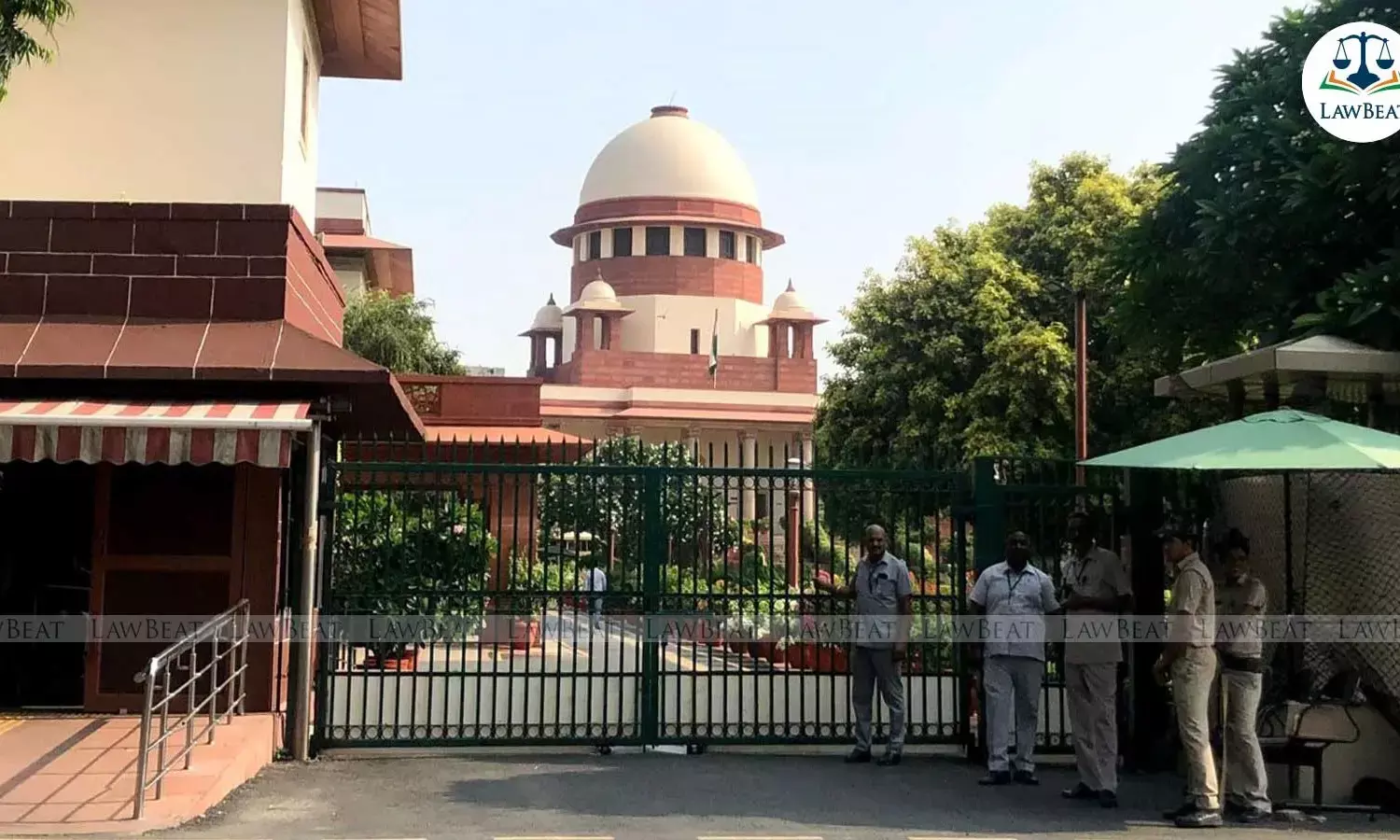
Supreme Court ruling on defective examination of accused under Section 313 CrPC
The Supreme Court has held that omission to put material incriminating circumstances to an accused during examination under Section 313 of the Code of Criminal Procedure, corresponding to Section 351 of the Bharatiya Nagarik Suraksha Sanhita, causes grave prejudice to the accused and may, in an appropriate case, prove fatal to the prosecution. The Court emphasised that the examination of an accused under Section 313 CrPC is a substantive safeguard to ensure a fair trial and cannot be reduced to a mechanical or perfunctory exercise.
The ruling was delivered by a Bench comprising Justice Vikram Nath and Justice Sandeep Mehta while allowing an appeal filed by Suresh Sahu and another challenging the Jharkhand High Court’s judgment dated February 10, 2023. The High Court had modified the trial court’s 1994 judgment and convicted the appellants under Sections 302 read with 34 of the Indian Penal Code instead of Sections 302 read with 149 IPC.
The Supreme Court reiterated that the purpose of recording a statement under Section 313 CrPC is to make the accused aware of each and every incriminating circumstance appearing against him in the prosecution case and to seek an explanation for the same. The Court observed that unless the accused is specifically confronted with the material evidence relied upon by the prosecution, the opportunity to defend himself becomes illusory and the fairness of the trial is compromised.
In the present case, the Bench found that only three questions were put to each of the accused during their examination under Section 313 CrPC. These questions were framed in an extremely generic and mechanical manner and did not articulate any specific incriminating circumstances emerging from the prosecution evidence. The statements recorded were found to be almost a reproduction of the language of the charges and failed to convey the evidentiary material relied upon by the prosecution to establish guilt. The Court held that this defect went to the root of the matter.
The Supreme Court noted that although an appellate court has the power to cure such a procedural lapse by directing a fresh examination of the accused under Section 313 CrPC, the High Court in the present case did not even consider or discuss the defective manner in which the statements of the accused were recorded. The Bench observed that this omission further weakened the foundation of the conviction.
The Court considered whether the matter should be remanded to the trial court for re-recording the statements of the accused under Section 313 CrPC. However, it declined to do so, noting that more than 35 years had elapsed since the incident occurred. The Bench held that directing a remand after such a prolonged lapse of time would amount to an exercise in futility and would not advance the cause of justice.
The case arose from the death of Gajendra, a sweet seller, who was allegedly assaulted on May 11, 1990 after a dispute over payment and succumbed to his injuries on May 12, 1990. An FIR was lodged on the same date. Subsequently, on May 13, 1990, the informant lodged another complaint alleging that the appellants, along with others, assaulted his son due to a dispute relating to employment in lieu of land acquisition. A second FIR was registered on the basis of this complaint.
Upon examining the record, the Supreme Court found that the prosecution had attempted to supersede the original first information report dated May 12, 1990 by relying on the subsequent report dated May 13, 1990, which introduced an improved and exaggerated version of events and specifically nominated the accused appellants as assailants. The Court rejected the view taken by the trial court and affirmed by the High Court that the first report was recorded without the knowledge of the informant, holding that such a conclusion was unacceptable.
The Bench further observed that even if the later version of the informant were to be accepted, it was highly improbable that he could not identify the accused appellants, who were his own nephews. The Court held that the failure of the informant to identify his close relatives as the assailants of his son rendered his testimony doubtful and unreliable.
The Supreme Court also found that the evidence of the informant suffered from inherent inconsistencies, contradictions, and suspicious circumstances. The Bench was convinced that the informant was not present at the scene of the crime and had been subsequently introduced as an eyewitness. The Court noted that neither the trial court nor the High Court had assigned any plausible reason for discarding the testimony of two defence witnesses, reiterating that the evidence of a defence witness carries the same evidentiary value as that of a prosecution witness.
After a comprehensive evaluation of the evidence on record, the Supreme Court held that the prosecution had miserably failed to establish the guilt of the accused beyond reasonable doubt. The conviction recorded by the trial court and affirmed by the High Court was found to be based on misreading and erroneous appreciation of evidence and was held to be unsustainable in law as well as on facts. The appeal was accordingly allowed and the conviction of the accused appellants was set aside.
Case Title: Suresh Sahu and Another v. The State of Bihar (now Jharkhand)
Bench: Justice Vikram Nath and Justice Sandeep Mehta