
Why the Supreme Court Says Dowry Persists Despite the Law, and What It Has Ordered Now
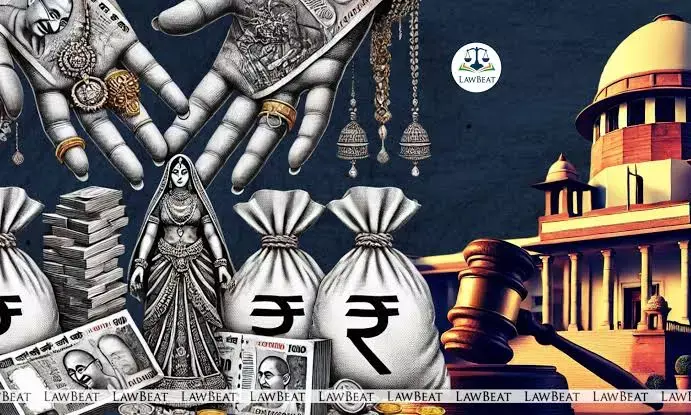
The Supreme Court on December 15, 2025 held that eliminating the practice of dowry is not merely a matter of enforcing the Dowry Prohibition Act, 1961, but a constitutional imperative rooted in the guarantees of equality, dignity, and liberty under the Constitution. The Court said the persistence of dowry undermines the Republic’s promise that women enter marriage as equal citizens and not as bearers of financial burden.
A Bench comprising Justice Sanjay Karol and Justice N. Kotiswar Singh made these observations while allowing an appeal filed by the Uttar Pradesh government against a judgment of the Allahabad High Court, which had acquitted a husband and his mother in a dowry death case.
The case related to the death of a woman within just over one year of her marriage in 2000. The Supreme Court restored the conviction and life sentence of the husband, Ajmal Beg, while sparing the mother-in-law from imprisonment considering her advanced age of 94 years.
The Court observed that dowry, at its core, is fundamentally incompatible with constitutional values, particularly Article 14, which guarantees equality before law and equal protection of laws. It noted that the practice treats women as a source of financial extraction and reinforces structural discrimination.
The Bench clarified that dowry is not confined to any one religion or community. It noted that although laws have sought to prohibit the practice, dowry continues to exist in society, often disguised as gifts or justified through social expectations. The Court said this reality has allowed the practice to escape effective legal control.
The Court flagged a dual problem in the enforcement of anti-dowry laws. On one hand, the Dowry Prohibition Act has suffered from ineffective implementation, allowing the practice to remain widespread. On the other hand, provisions under the Act and Section 498A of the Indian Penal Code have at times been misused to pursue ulterior motives. This oscillation between ineffectiveness and misuse, the Court said, has created a judicial tension that requires urgent resolution.
The Bench pointed out that many individuals who openly seek or give dowry continue to evade legal consequences. It reiterated that the Dowry Prohibition Act does not distinguish between demands made before or after marriage. Any property or valuable security given by either party to the marriage, or by any other person, before, at, or after the marriage, falls within the statutory definition of dowry.
Addressing religious aspects, the Court observed that in many Muslim marriages in India, while mehr is formally stipulated, it is often nominal. In practice, substantial financial transfers flow from the bride’s family to the groom, defeating the protective purpose of mehr. The Court clarified that under Islamic law, dowry in the conventional sense is prohibited, and mehr is a mandatory gift from the groom to the bride, intended to provide financial security and symbolize respect.
To address systemic failures in implementation, the Supreme Court issued a series of directions aimed at strengthening enforcement and social awareness.
The Court directed the Union Government and State Governments to consider incorporating changes in educational curricula at all levels to inform young people about the harms of dowry and to reinforce the constitutional principle that parties to a marriage are equals.
It also directed States to ensure that Dowry Prohibition Officers are duly appointed, properly trained, and provided with adequate resources to perform their statutory duties.
The Bench emphasized the need for regular training of police officers and judicial officers dealing with dowry-related cases, so they can better appreciate the social and psychological dimensions involved.
Noting that the present case took nearly 24 years to conclude, the Court requested High Courts to assess the pendency of cases under Sections 304B and 498A and take steps for their expeditious disposal.
The Court further requested district administrations and District Legal Services Authorities to conduct regular awareness programmes in collaboration with civil society groups and social activists to bring about change at the grassroots level.
The judgment has been directed to be circulated to the Registrars General of all High Courts for placement before their respective Chief Justices and to the Chief Secretaries of all States for follow-up action. The matter has been listed after four weeks to review compliance.
Case Title: State of Uttar Pradesh vs Ajmal Beg & Ors
Bench: Justice Sanjay Karol and Justice N. Kotiswar Singh
Date of Judgment: December 15, 2025