
Supreme Court Orders States To Ground-Truth, Demarcate All Water Bodies
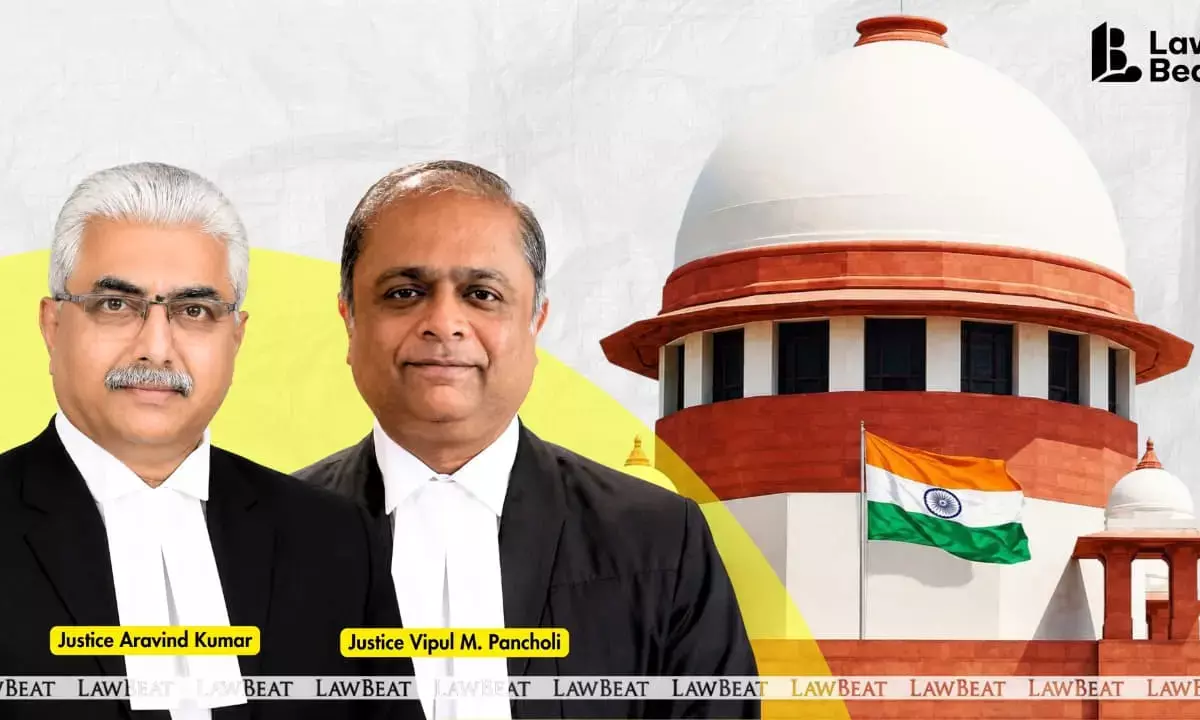
SC orders States to demarcate water bodies nationwide.
The Supreme Court has said water bodies are a precious source of drinking water and fall within the protective ambit of the right to life guaranteed under the Constitution, stressing that courts cannot remain “mere spectators” while such water bodies remain unprotected.
A Bench of Justices Aravind Kumar and Vipul M Pancholi directed all States and Wetland Authorities to undertake physical ground truthing and demarcation of wetlands and other water bodies, following the methodology adopted by Tamil Nadu.
Ground truthing of water bodies
Ground truthing of water bodies means physically visiting a water body to verify its actual location, boundaries, size and condition on the ground, and checking whether these match official records and satellite images.
Court said the exercise is necessary to ensure that water bodies are properly identified, protected and demarcated. It directed the States to complete the exercise within four months and file compliance affidavits within four weeks, detailing the manner and methodology adopted.
Referring to Rule 7(1)(a) of the Wetlands (Conservation and Management) Rules, 2017, the Bench said ground truthing and demarcation of wetland boundaries must be undertaken by State and Union Territory authorities in coordination with the concerned nodal departments.
Court said the process requires a scientific approach involving satellite image verification, reconciliation of revenue records and physical installation of pillars to ensure legal and cadastral accuracy.
Dealing with an appeal filed by one Anand Arya, Court clarified that the exercise is not confined to designated wetlands. It would cover all water bodies, including those smaller than 2.25 hectares, identified in the existing atlases.
“The water bodies being source of drinking water is precious and would encompass within the four corners of right to live, as guaranteed under the Constitution of India. This court cannot remain as a mere spectator or be unmindful of the consequences flowing from water bodies remaining unprotected,” the Bench said.
What did Court say about States' compliance?
Court took on record a compliance affidavit filed by Karnataka stating that the State has 14,936 wetlands, of which 14,355 water bodies have been ground-truthed and demarcated.
It directed Karnataka to place all relevant documents on record within four weeks, including details of the mode, manner and method adopted for ground truthing, the procedure followed and supporting documents showing how the demarcation was carried out.
The Bench noted the steps taken by Tamil Nadu in a systematic and scientific manner and directed all States to undertake the same or similar exercise, if not already done, in compliance with Rule 7(1) of the 2017 Rules.
Court observed that Rule 7(1)(a) requires the concerned State department or Union Territory Administration to prepare, within one year of publication of the Rules, a brief document for each wetland identified for notification. The document is required to contain details specified under clauses (a) to (g) of Rule 7(1).
However, Court noted that the exercise had still not been completed despite several earlier directions issued on December 11, 2024, August 19, 2025, October 7, 2025, October 28, 2025 and July 28, 2026.
“Even after nine years from the date of publication of Rules, this exercise is not completed or concluded,” the Bench said.
It therefore directed all States to file affidavits within four weeks indicating the status of ground truthing, including the exercise undertaken in respect of other water bodies.
Assessment of restoration cost of Vrindavan kunds
Court also rejected an application seeking appointment of a valuer to assess the cost of restoring the temple tanks of India.
It was submitted that Vrindavan has more than 100 kunds, or large water tanks, of which around 80% are in a dilapidated condition. The applicant sought directions for restoration of these tanks and appointment of a valuer to assess the restoration cost.
The Bench noted that it had earlier rejected a plea seeking a direction to the Union of India to pay ₹80 crore for restoring more than 100 kunds in Vrindavan.
Court had also observed that water bodies across the country identified through the SAC Atlas were under the control of the wetland authorities of the States or other State instrumentalities, and that appropriate directions would be issued after receiving the reports sought from the States.
“In view of the same, question of appointing a valuer, at this stage, that too for ascertaining the condition of the tanks, does not arise,” the Bench said.
The matter has been listed for further consideration on November 16, 2026.
Case Title: Anand Arya Vs Union of India & Ors
Bench: Justices Aravind Kumar and Vipul M Pancholi
Date of Order: October 12, 2026