
‘12 Years At The Helm’: SC Plea Challenges BCI Chairman Manan Kumar Mishra's Tenure, Seeks Term Limits & Fresh Polls
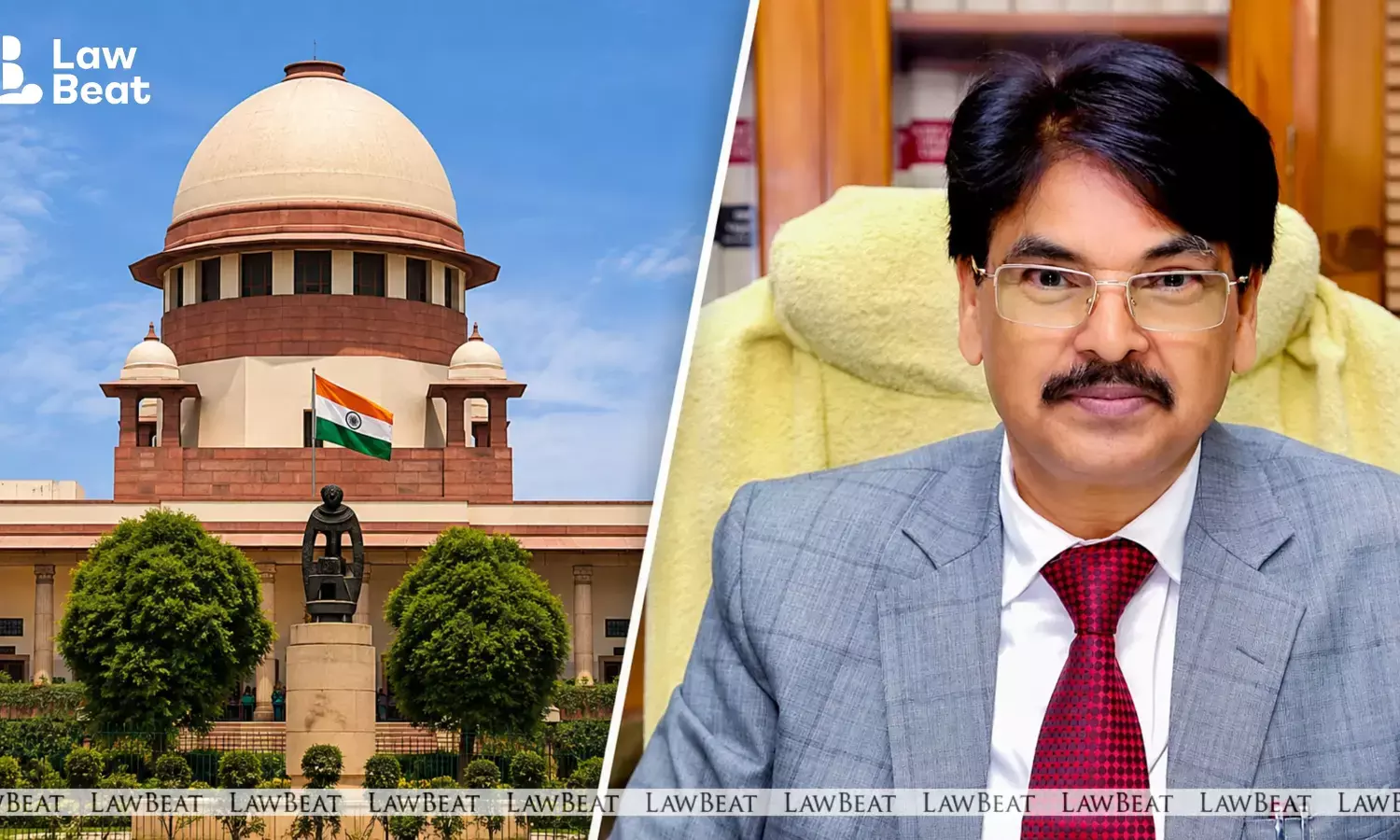
Supreme Court plea challenged the prolonged tenure and governance of Bar Council of India office-bearers
A petition filed before the Supreme Court has challenged the continued occupation of the office of Chairman of the Bar Council of India (BCI) by the same office-bearer for over a decade, alleging that the present five-year tenure notified by the BCI is contrary to the two-year tenure prescribed under the Bar Council of India Rules.
The Article 32 writ petition, filed through AoR Deepak Prakash on August 21, 2026, raises questions concerning the functioning, democratic accountability, transparency and institutional governance of the BCI, the statutory regulator of the legal profession constituted under the Advocates Act, 1961.
The petitioner has alleged that the Respondent No. 3 has occupied the office of BCI Chairman almost continuously since November 9, 2014 and was again elected Chairman on March 2, 2025, reportedly for a seventh consecutive term.
The petition challenges a Gazette notification dated April 21, 2025, which records the tenure of the Chairman and Vice-Chairman from April 17, 2025 to April 16, 2030.
According to the petitioner, Rule 12(2), Chapter I, Part II of the Bar Council of India Rules provides that the Chairman shall hold office for two years or until cessation of membership, whichever is earlier.
The petition contends that the five-year tenure notified through the Gazette is therefore prima facie inconsistent with the statutory rules and cannot be enlarged through an administrative notification unless Rule 12(2) itself has been validly amended.
Petition challenges prolonged concentration of BCI leadership
The petitioner has argued that the challenge is not directed merely against an individual office-bearer but concerns what it describes as the “structural illegality” and prolonged concentration of institutional power within the apex statutory regulator of the legal profession.
The petition states that the BCI exercises extensive statutory functions relating to legal education, enrolment standards, professional conduct, disciplinary control, recognition of law universities, the All India Bar Examination and statutory funds.
It therefore argues that the issues raised concern the constitutional rights of advocates and the democratic and accountable functioning of a statutory regulator.
The petitioner has also alleged that the absence of meaningful restrictions on repeated re-election has allowed the office of Chairman to remain concentrated in the same hands for nearly 12 years.
It further claims that only a limited number of States have occupied the office of BCI Chairman over the past three decades, while several States and Union Territories have never had the opportunity to provide leadership to the apex body.
According to the petition, the absence of a rotational mechanism has diluted the representative and federal character contemplated under the Advocates Act.
Challenge to five-year tenure notification
Among the principal prayers is a declaration that the tenure of the BCI Chairman and Vice-Chairman is limited to two years under Rule 12(2).
The petitioner has also sought quashing of the April 21, 2025 Gazette notification insofar as it provides for a five-year tenure from April 17, 2025 to April 16, 2030.
A direction has also been sought requiring the BCI to withdraw or rescind the notification and conduct fresh elections to the offices of Chairman and Vice-Chairman.
The petition further challenges the interpretation of the proviso to Section 4(3) of the Advocates Act, contending that it is only a transitional provision and cannot authorise indefinite continuation of an elected BCI member.
Plea seeks term limits and regional rotation
The petitioner has asked the Supreme Court to direct the framing of rules providing for a cumulative limit on the number of terms for which a person can occupy the offices of Chairman or Vice-Chairman.
It has also sought a transparent and equitable rotational mechanism to give representatives from different States and regions an opportunity to hold the top offices of the BCI.
The petition proposes that term limits should not be circumvented through acting, ad hoc, officiating or interim arrangements.
Independent committee, audit of BCI-linked entities sought
In a significant prayer, the petitioner has sought constitution of an Independent Committee headed by a former Supreme Court Judge or former Chief Justice of a High Court, assisted by an auditor nominated by the Comptroller and Auditor General of India and other experts.
The proposed committee has been asked to examine, among other things, the legality and functioning of BCI Trust PEARL-FIRST, its relationship with the BCI and IIULER, Goa, and the administration of institutional assets and funds.
The petitioner has also sought a time-bound audit of statutory funds, All India Bar Examination receipts, institutional receipts, trust finances, vendor contracts and related-party transactions.
The proposed inquiry would also examine appointments, recruitment, promotions and administrative actions from April 2012 wherever prima facie material exists.
Transparency in BCI functioning sought
The petition further seeks directions requiring the BCI to adopt greater transparency in its functioning, including advance notice and agendas for meetings, recorded resolutions, publication of confirmed minutes, annual independently audited accounts and disclosure of material contracts involving the BCI and entities controlled, promoted or substantially financed by it.
It also seeks preservation and production of original records, electronic records, metadata, financial documents, contracts, recruitment records and communications relating to the BCI and the entities referred to in the petition.
The petitioner has urged the Supreme Court to intervene on the ground that the issues involve the interpretation of the Advocates Act, 1961, BCI Rules and constitutional principles of democratic accountability, and has asserted that there is no equally efficacious alternative remedy for challenging the alleged institutional irregularities.