
1984 Riots Case: Sajjan Kumar Moves Supreme Court for Early Hearing; Bench Lists In July
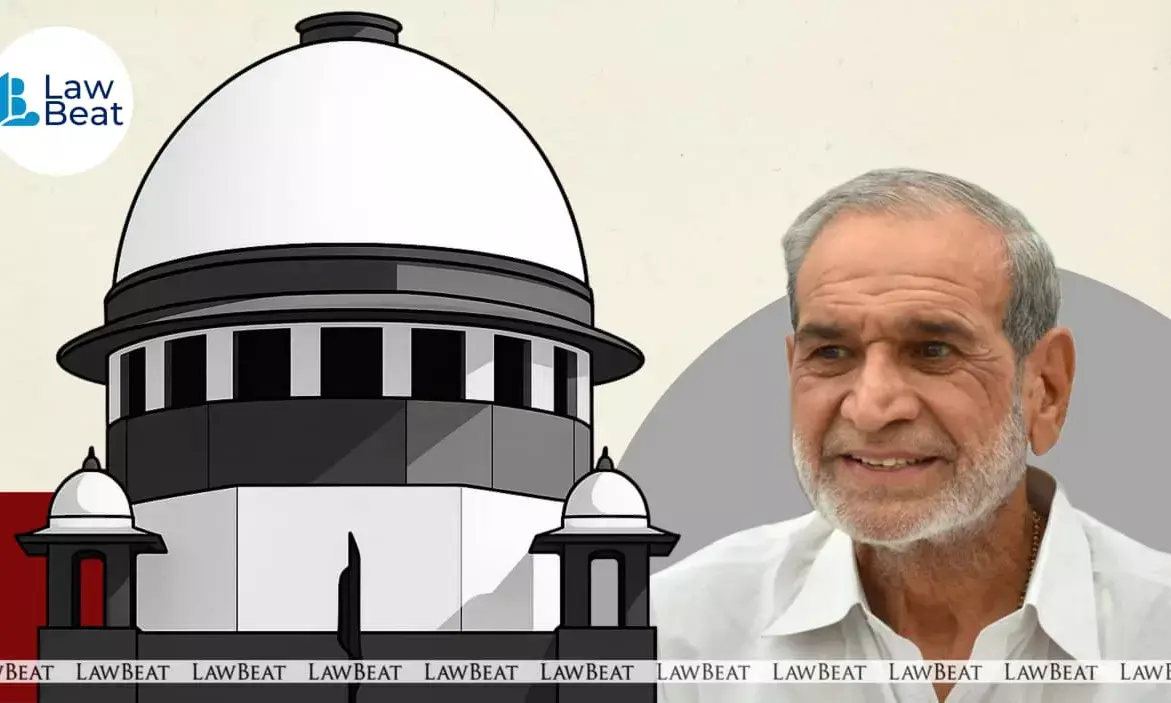
Supreme Court to hear Sajjan Kumar’s appeal against conviction in 1984 anti-Sikh riots case
The Supreme Court on Friday agreed to list for hearing an appeal filed by Sajjan Kumar, challenging his conviction in a 1984 anti-Sikh riots case by the Delhi High Court, which had overturned his acquittal by a trial court.
The bench of Justices J.K. Maheshwari and Atul S. Chandurkar took note of submissions seeking an early hearing and indicated that the matter would be listed in the last week of July.
Senior Advocate Gopal Sankaranarayanan, appearing for Kumar, urged the Court to take up the appeal expeditiously, highlighting that the appellant has already undergone more than seven years of incarceration following his conviction by the High Court. “The gentleman has been inside for seven years and four months,” the senior counsel submitted, stressing that the conviction came only at the appellate stage, after Kumar had earlier been acquitted by the trial court.
During the hearing, the Bench initially indicated that a date in August could be fixed. However, upon further mention by the defence, the Court agreed to list the matter earlier, in July.
Sankaranarayanan also drew the Court’s attention to the personal circumstances of the appellant, particularly the medical condition of Kumar’s wife. He submitted that she is unable to move around due to her health condition and that Kumar has not been able to meet her even once during his incarceration.
“He has never sought parole, he has never sought any kind of remedy,” the counsel added, seeking the Court’s indulgence.
In response, the Bench observed that adequate medical care would be provided where necessary. The counsel clarified that the concern pertained not to Kumar’s own health, but to that of his wife. He further informed the Court that Kumar had earlier been taken to Safdarjung Hospital for medical attention.
Taking note of the submissions, the Court directed that the appeal be listed for hearing in July.
Kumar’s appeal challenges the 2013 judgment of the Delhi High Court, which had reversed his acquittal and convicted him in one of the cases arising out of the 1984 anti-Sikh riots, one of the most significant and long-pending chapters in India’s criminal justice history.
Notably, in September 2025, the court had called for a compilation on what led to reversal of acquittal of the former Congress MP.
The present appeals arise from the case relating to the killing of five Sikhs in the Raj Nagar Part I area in Palam Colony in South West Delhi on 1st and 2nd November 1984 and the burning down of a Gurudwara in Raj Nagar Part II. Six accused, including Sajjan Kumar a Congress leader who was a Member of Parliament at that time, were sent up for trial some time in 2010. Three years later, the trial court convicted five of the accused: three of them for the offences of armed rioting and murder and two of them for the offence of armed rioting. Sajjan Kumar stood acquitted by the trial Court of all offences.
Kumar's acquittal by the trial Court was set aside and he was convicted ofthe offence of criminal conspiracy punishable under Section 120B read with Sections 302, 436, 295, and 153A (1) (a) and (b) IPC; for the offence punishable under Section 109 IPC of abetting the commission of the aforementioned offences; and for the offence of delivering provocative speeches instigating violence against Sikhs punishable under Section 153A (1) (a) and (b) IPC. The High Court convicted Kumar for the offences of criminal conspiracy and abetment in the commission of the crimes of murder, promoting enmity between different groups on grounds of religion and doing acts prejudicial to maintenance of communal harmony, defiling and destruction of the Gurudwara by burning.
Case Title: Sajjan Kumar v. State through Central Bureau of Investigation
Bench: Justices J.K. Maheshwari and Atul S. Chandurkar
Hearing Date: April 24, 2026