
Account Frozen Without Notice? Plea in Supreme Court Seeks Nationwide SOP on Cyber Cell Bank Freezes
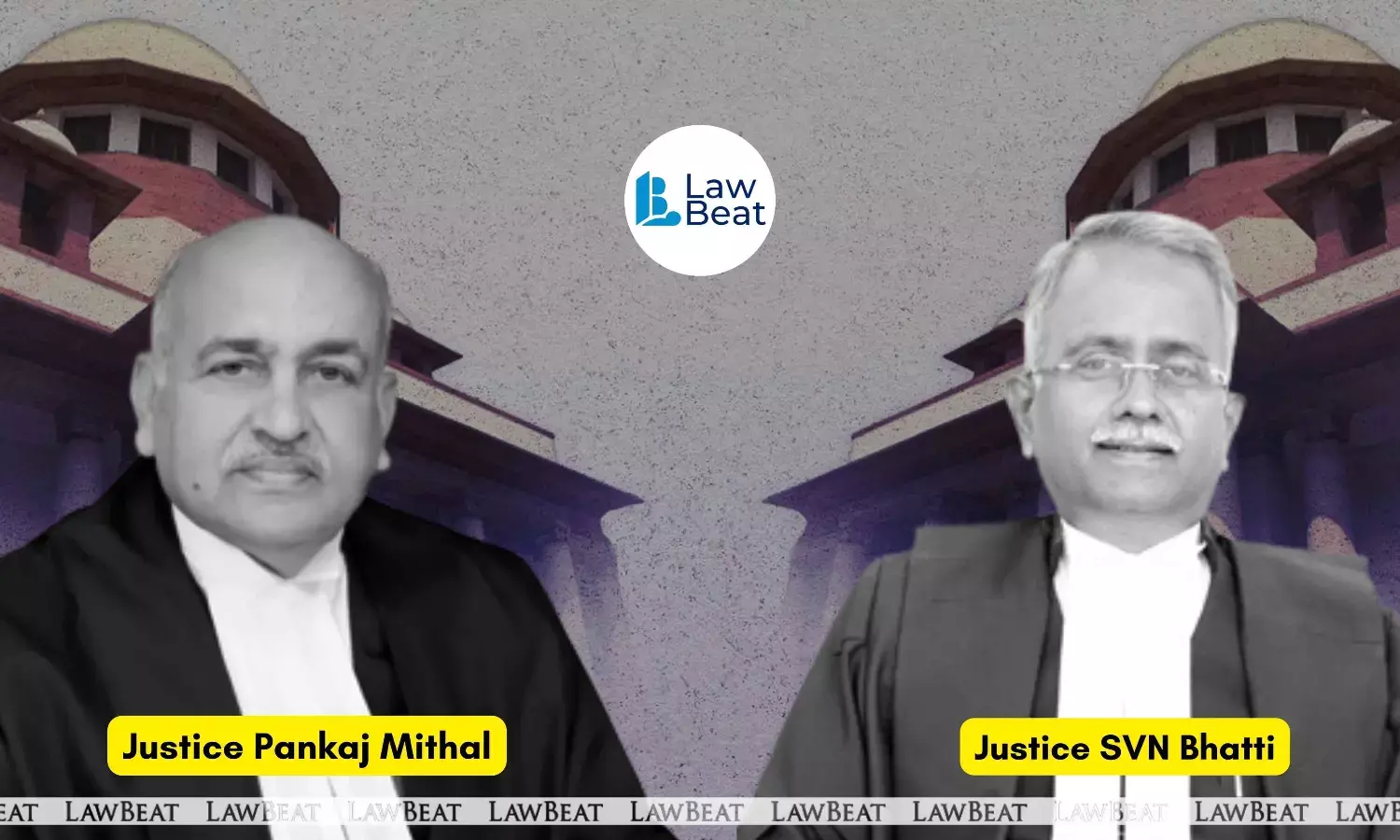
Supreme Court directs plea on bank account freezing norms during cybercrime probes to be placed before Chief Justice of India
The Supreme Court on Tuesday issued notice in a writ petition has been filed under Article 32 of the Constitution challenging the arbitrary freezing of bank accounts by Cyber Cells across States without prior notice, judicial oversight, or procedural safeguards, and seeking uniform nationwide guidelines to govern such actions.
The Bench of Justices Pankaj Mithal and SVN Bhatti after using notice to the Union of India, listed the matter for hearing next week.
The petitioner filed by Vivek Varshney and Sudhir Kumar through AoR Tushar M Khairnar has alleged that the petitioner's bank account(s) were frozen by the Cyber Cell of the respondent State police without any intimation, communication, or approval from a judicial authority, resulting in what he describes as complete financial paralysis.
According to the plea, the freezing of accounts has prevented him from meeting essential personal and professional obligations, including payment of daily expenses, statutory taxes, and other financial liabilities, thereby violating his fundamental rights under Articles 19(1)(g) and 21 of the Constitution.
The petition argues that the impugned action is ex facie illegal and unconstitutional as it violates the mandatory statutory safeguards under criminal procedure law. It specifically relies on Section 106(3) of the Bharatiya Nagarik Suraksha Sanhita (BNSS), corresponding to Section 102(3) of the Code of Criminal Procedure, which requires that any seizure or freezing of property must be reported forthwith to the jurisdictional Magistrate. The petitioner contends that no such reporting was done in his case, rendering the freezing order without jurisdiction and arbitrary.
Highlighting a broader systemic issue, the plea points out that there is currently no uniform Standard Operating Procedure (SOP) governing the freezing and de-freezing of bank accounts during cybercrime or financial investigations. As a result, citizens across different States are subjected to inconsistent practices, prolonged freezes without time limits, and deprivation of access to their own funds without due process of law.
The petition submits that mere tracing of a “suspicious transaction” to an account cannot justify freezing the entire bank account or amounts far exceeding the alleged proceeds of crime, unless the account holder is shown to be complicit in the offence. It urges the Court to formulate a binding rule that balances investigative needs with individual rights, ensuring proportionality and accountability in such coercive actions.
The petitioner has sought multiple reliefs from the Supreme Court, including immediate de-freezing of his bank account(s), formulation of uniform guidelines to regulate freezing and unfreezing during cybercrime investigations, and directions to the Ministry of Home Affairs and the Reserve Bank of India to frame a comprehensive nationwide SOP. The plea stresses that the absence of time limits and oversight mechanisms has led to rampant misuse of freezing powers, causing undue harassment to ordinary citizens.
To underline the constitutional significance of access to banking facilities, the petition relies on the Supreme Court’s judgment in Internet and Mobile Association of India v. Reserve Bank of India [2020] 2 SCR. Quoting the judgment, the petitioner notes that banking channels form the “lifeline” of any trade, business, or profession, especially in an era of restricted cash transactions and increasing digitisation. The judgment had recognised that depriving a person of the ability to operate a bank account effectively shuts down their livelihood, imposing a burden on the State to justify such restrictions in public interest.
The plea asserts that arbitrary account freezing, without notice or judicial scrutiny, strikes at the core of personal liberty and economic freedom. It urges the Supreme Court to exercise its constitutional mandate to protect citizens from executive excesses and ensure procedural fairness in cybercrime enforcement nationwide.
Case Title: Vivek Varshney & Anr. v. Union of India & Ors.
Bench: Justices Pankaj Mithal and SVN Bhatti
Hearing Date: January 6, 2026