
AI Detectors Can’t Brand Students Cheats, Says CJI Surya Kant; Backs Compulsory Legal Aid Work To Graduate
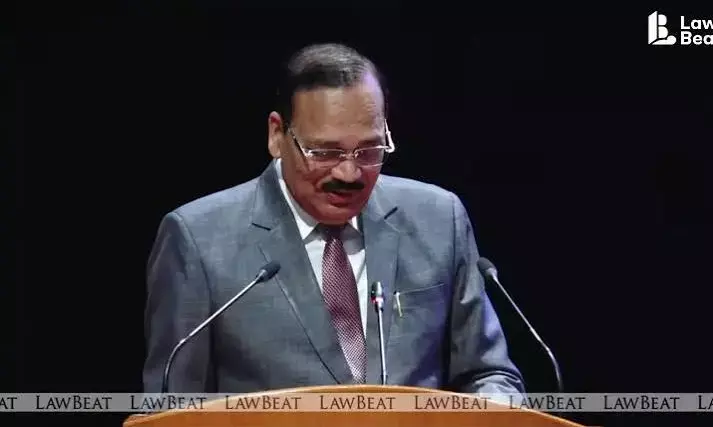
CJI Surya Kant tells law schools that AI detectors cannot brand students cheats and backs compulsory legal aid work to graduate
Software that claims to detect machine-written essays is "far from reliable" and cannot by itself justify a finding of academic misconduct, Chief Justice of India Surya Kant said on Saturday, warning that in a Commonwealth where many students write in English as a second or third language, "an honest student could thus be branded a cheat on the strength of a number that no one can explain."
The Chief Justice was delivering the inaugural address at the first Annual International Conference on Legal Education organised by the Commonwealth Legal Education Association (CLEA) at Novotel, Hyderabad. The conference theme is "Globalising Legal Education: Reimagining Law Schools, Legal Learning and the Future of the Legal Profession for a Commonwealth in Transition".
The address responded in turn to the five questions set by CLEA for the conference's sessions, namely technology and academic integrity, citation, clinical learning, research in the age of artificial intelligence, and legal aid clinics. Running through all five, the CJI said, was the responsibility "of standing behind what one has learnt."
He opened with the example of a young advocate appearing for a small manufacturer whose buyer had cancelled an order midway. The Bench, he said, readily accepts the textbook rule on damages, "but then asks the questions on which the case will turn: what profit was actually lost and how it has been proved, whether the buyer could have foreseen that loss, and what her client did to find another buyer." He added, "At that moment, a rule learnt for an examination must be proved in Court. The law student learns the proposition, but the lawyer must be prepared to stand behind it."
Banning Generative AI in Law Schools "Neither Practicable not wise"
On the first question, technological overreach and academic integrity, the CJI said generative AI had unsettled the long-held assumption that an examination sheet or research paper is evidence of what a student knows. "The question, therefore, is no longer whether students will use these tools, but whether the work they submit still reflects their own reasoning, understanding, and appreciation for the law," he said.
He rejected an outright prohibition. "The simplest response would be to ban such tools altogether, but I am convinced that this would be neither practicable nor wise," he said, noting that students would enter a profession that already uses these tools and that courts across the Commonwealth "have largely chosen to regulate their use rather than forbid it."
He cited the Supreme Court of Singapore, which, he said, "permits Court users to employ such tools, but holds them fully responsible for everything they file." The speech text refers in a footnote to that Court's Registrar's Circular No. 1 of 2024, the Guide on the Use of Generative Artificial Intelligence Tools by Court Users.
"A ban would only drive this use out of sight, where it can be neither guided nor examined," the CJI said.
AI detection software not proof of Misconduct
The CJI cautioned institutions against relying on detection software to decide whether an essay was written by a student or a machine. "It is tempting to treat its verdict as proof of misconduct. Such software is, however, far from reliable," he said.
He referred to a 2023 study which, in his words, "found that seven widely used detectors, though almost flawless with essays written by schoolchildren in the United States, wrongly flagged more than three in every five essays by non-native speakers of English as machine-generated." The speech text identifies the study as "GPT Detectors Are Biased Against Non-Native English Writers" by Weixin Liang, Mert Yuksekgonul and others, published in Patterns (Cell Press, 2023), which tested seven detectors on 91 TOEFL essays and 88 essays by students in the United States.
"In a Commonwealth where so many students write in English as a second or third language, an honest student could thus be branded a cheat on the strength of a number that no one can explain, and that student cannot meaningfully challenge. No student should therefore be held guilty of misconduct on the word of a machine alone," he said.
The safeguard, he said, lies in clarity "offered before an assessment begins rather than after it ends." Students must know "which uses are permitted, which must be disclosed, and which would amount to handing over the very thinking that the assessment is meant to test."
He suggested that assessment evolve so that written work is supported by "an oral explanation, a defence of the authorities relied upon, or an exercise in spotting the errors in a machine-generated answer," adding, "In the end, a law school must be able to certify, with confidence, what its graduates themselves know and can do."
CJI proposes citation core across the Commonwealth
Turning to citation, the CJI acknowledged that the Supreme Court of India was "not entirely blameless" on inconsistent practice, observing that "even a landmark judgment such as Kesavananda Bharati is cited in some of our judgments in the SCC format and in others in the AIR format." He remarked, "A reader unfamiliar with our law reports might well wonder whether the basic structure doctrine was thought important enough to be laid down twice!"
The matter, he said, "ceases to be amusing when a reference generated by an automated tool looks entirely correct, and yet leads to no judgment at all."
Describing every citation as "an indication to the reader that the source exists, that it can be found, and that it supports the point being made," the CJI said he would favour "beginning with a common core, rather than replacing every existing guide with a single compulsory code."
"Where a Court has assigned a neutral citation, as our Supreme Court has done since 2023, that citation should serve as its principal identifier. A shared minimum format, giving the year, the Court, the decision number and the paragraph, would then allow any judgment to be traced and verified across borders," he said.
Such a framework, he added, "should not depend on expensive commercial databases, and it must make room for translated judgments and for customary sources that rarely find their way into law reports." In his words, "to teach students to cite accurately, and to verify what they cite, is itself to teach them to practise law responsibly."
Clinical legal education
On clinical legal education, the CJI used the rule against leading questions to illustrate the gap between knowing a rule and using it. Most students can state the rule "without a moment's hesitation," he said, but when asked in a supervised mock trial "to draw out the account of a frightened witness without putting words into his mouth, she soon discovers how hard it is to let a witness tell his story in his own words. It is in that moment, rather than in the examination hall, that a student truly learns what the law is for."
Noting that Indian regulations already require clinical courses and a legal aid clinic in every law school, he said the question was whether practical learning "should remain confined to a separate corner of the curriculum," or should also shape the teaching of core subjects such as Evidence, Criminal Procedure, Family Law and Constitutional Law. He said the latter "deserves serious consideration, and it need not be elaborate," giving the examples of a Contract Law student drafting and negotiating a simple agreement, a Constitutional Law student tracing "a denied entitlement to its remedy," and a Family Law student taking part in a mediation exercise.
The CJI said such reform must be introduced with care, since clinical teaching "demands trained supervisors, meaningful assessment and clear ethical safeguards, and clients must never bear the cost of inadequate supervision."
"These courses must also be real, and not merely recorded on paper, because an internship certificate issued to a student who never attended chambers, or a clinical grade awarded for work that was never done, fails not only that student but every client he or she will one day represent. Practical learning can strengthen doctrinal teaching only if it is genuine," he said.
On AI in legal research, which he described as a setting "where the stakes are higher still," the CJI said that "a fluent answer is not necessarily an accurate one." He listed the risks: "A fabricated authority may look entirely plausible, a summary may omit the very qualification that changes the legal position, and a comparative survey may overlook much of the Commonwealth's own jurisprudence, because it remains thinly represented in digital databases."
"Researchers must check every authority against its primary source, disclose any material assistance, and remain answerable for what they publish. An AI system cannot be credited as an author, precisely because it cannot be held responsible for the work," he said.
He also cautioned that "unpublished manuscripts, research data, and client information should never be fed into external systems without due regard to consent, privacy and security."
The CJI urged CLEA "to take the lead by developing model guidelines on the disclosure of AI assistance in legal research, which law schools and journals across the Commonwealth could adapt to their own needs," and said such guidelines "could well find a place in the blueprint on legal education that is to follow this conference."
On the final session, the CJI said, "Legal rights mean little to a person who does not know how to assert them." For "a labourer whose wages have gone unpaid, a widow whose pension has stopped over an error in her papers, or a woman facing violence in her own home," he said, "the first obstacle is often not the absence of a remedy, but of someone who can explain it and help them reach it."
He recalled the work of Prof. N. R. Madhava Menon, "whose memory we honour today," who, "long before any regulation required it," was "leading his students out of the classroom to run legal clinics for the poor," and who in 1973 served on the Expert Committee on Legal Aid. That vision, the CJI said, "now has the force of law, for the Legal Services Authorities Act charges the National Legal Services Authority with supervising clinics in universities and law colleges, and the Bar Council of India requires every law school to run one."
He cautioned, however, that "a clinic may have a room, a coordinator, and a calendar of awareness camps, and still offer little real help, which is why a clinic's existence must never be mistaken for its effectiveness."
Pointing to NALSA's scheme, which envisages panel lawyers and para-legal volunteers working alongside students and clinics reaching out to villages and settlements, the CJI said a clinic's work "should also not pause with the semester, and students who serve in it during their breaks should receive certificates for the work they actually do."
"I would further suggest that a minimum period of legal aid work be made compulsory for every student to graduate, with additional credits for those who go beyond it," he said.
He added that, since "the duty to learn does not end at enrolment," legal aid clinics could become "centres of continuing learning, where panel advocates, legal services officers and students meet in regular case discussions, and where the problems a clinic keeps encountering shape the training offered to young lawyers and students alike."
Legal Education as a "Common Weal"
Concluding, the CJI recalled that the word "Commonwealth" "once meant nothing grander than the 'common weal', i.e. the well-being that belongs to all, and that no one can secure alone."
"Legal education is a commonwealth of precisely that kind, for a method of teaching refined in Nairobi may enrich a classroom in Kingston or in Kolkata, and the institution that first devised it loses nothing in the giving," he said, expressing the hope that the deliberations would proceed "faithful to our traditions of thought yet open to transformation in how we teach and learn."