
AI-Made Judgments: Supreme Court Asks BCI To Constitute Committee, Examine Issues
The Supreme Court directed the Bar Council of India to establish a National Legal Academy for advocates and ruled that banks cannot publicly blacklist lawyers through IBA caution lists
The Supreme Court of India has proposed to frame guidelines for the bar and bench to regulate the use of artificial intelligence (AI) in drafting of judgments and filing petitions.
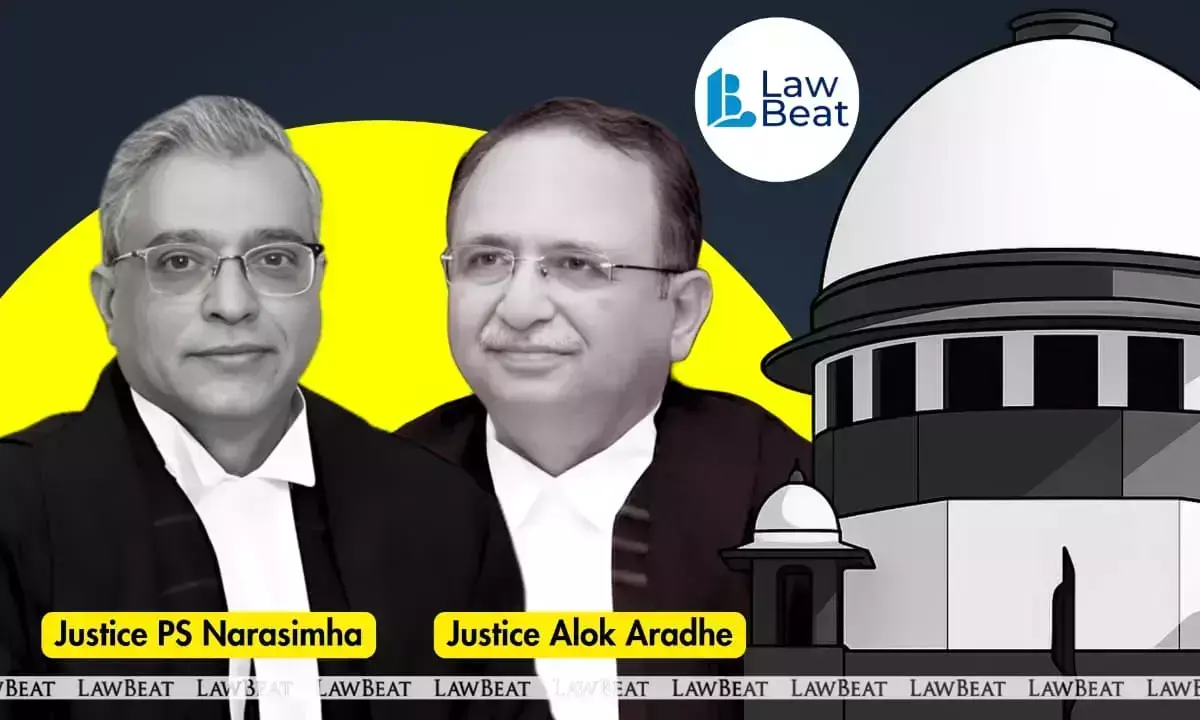
A bench of justice PS Narasimha and justice Alok Aradhe who took up the issue of use of AI generated judgments by a Trial Court said yesterday, “We are not suggesting people not to use AI. But we should have control over the information. Ultimately it is data that is filed before the court that will be used in the judgments. We want some responsibility to be fixed in this regard.”
The bench noted that the issue impacts the integrity of the proceedings in the judicial institution on which people repose trust.
Accordingly, court has asked Bar Council of India (BCI) to assist it and constitute a committee of independent experts associated with this field and file a report before the court.
The matter will now be taken up on May 26, 2026.
Recently, court had flagged serious concerns over the use of AI generated judgments by a Trial Court saying that it has a direct bearing on integrity of adjudicatory process. A bench of Justices PS Narasimha and Alok Aradhe had said that the trial court's decision based on non-existent and fake alleged judgments could not be said to be an error in the decision making. "This case assumes considerable institutional concern, not because of the decision that was taken on the merits of the case, but about the process of adjudication and determination," the bench noted while issuing notice to the Attorney General, Solicitor General and the Bar Council of India.
Notably, in the case before Court, the petitioners were the defendants in a suit filed by the respondents for injunction. Pending disposal of the suit, the Trial Court had appointed an Advocate Commissioner to note the physical features of the property. The petitioners challenged the report of the Advocate Commissioner by raising certain objections. The Trial Court, dismissed the objection and in the process, relied on certain decisions being: i) Subramani v. M. Natarajan (2013) 14 SCC 95, ii) Ramasamy (1071) 2 SCC 68, iii) Chidambaram Pillai v. SAL Lakshmi Devi v. K. Prabha (2006) 5 SCC 551 and iv) Gajanan v. Ramdas (2015) 6 SCC 223.
The petitioners had challenged the orders passed by the Trial Court, inter alia, contending that the judgments referred to and relied on are non-existent and fake orders. The High Court considered the objection and realized that the judgments are Artificial Intelligence (AI) generated and after recording a word of caution proceeded to decide the case on merits and dismissed the civil revision petition affirming the decision of the Trial Court. Thus, the petitioners approached the Supreme Court.
While issuing notice in the Special Leave Petition, Supreme Court had directed that the Trial Court shall not proceed on the basis of the Advocate Commissioner’s Report.
"We take cognizance of the Trial Court deploying AI generated non-existing, fake or synthetic alleged judgments and seek to examine its consequences and accountability as it has a direct bearing on integrity of adjudicatory process. At the outset, we must declare that a decision based on such non-existent and fake alleged judgments is not an error in the decision making. It would be a misconduct and legal consequence shall follow. It is compelling that we examine this issue in more detail. Issue notice to the Ld. Attorney General, Ld. Solicitor General and the Bar Council of India. We appoint Mr. Shyam Divan, learned senior counsel, to assist the Court. He may nominate an Advocate on Record for his assistance," the bench went on to order.
Case Title: GUMMADI USHA RANI & ANR. vs. SURE MALLIKARJUNA RAO & ANR.
Bench: Justices Narasimha and Aradhe
Hearing Date: May 5, 2026