
AI To Decide Bench Allocation? CJI Surya Kant To Introduce Tech System To Handle Case Listing In Supreme Court
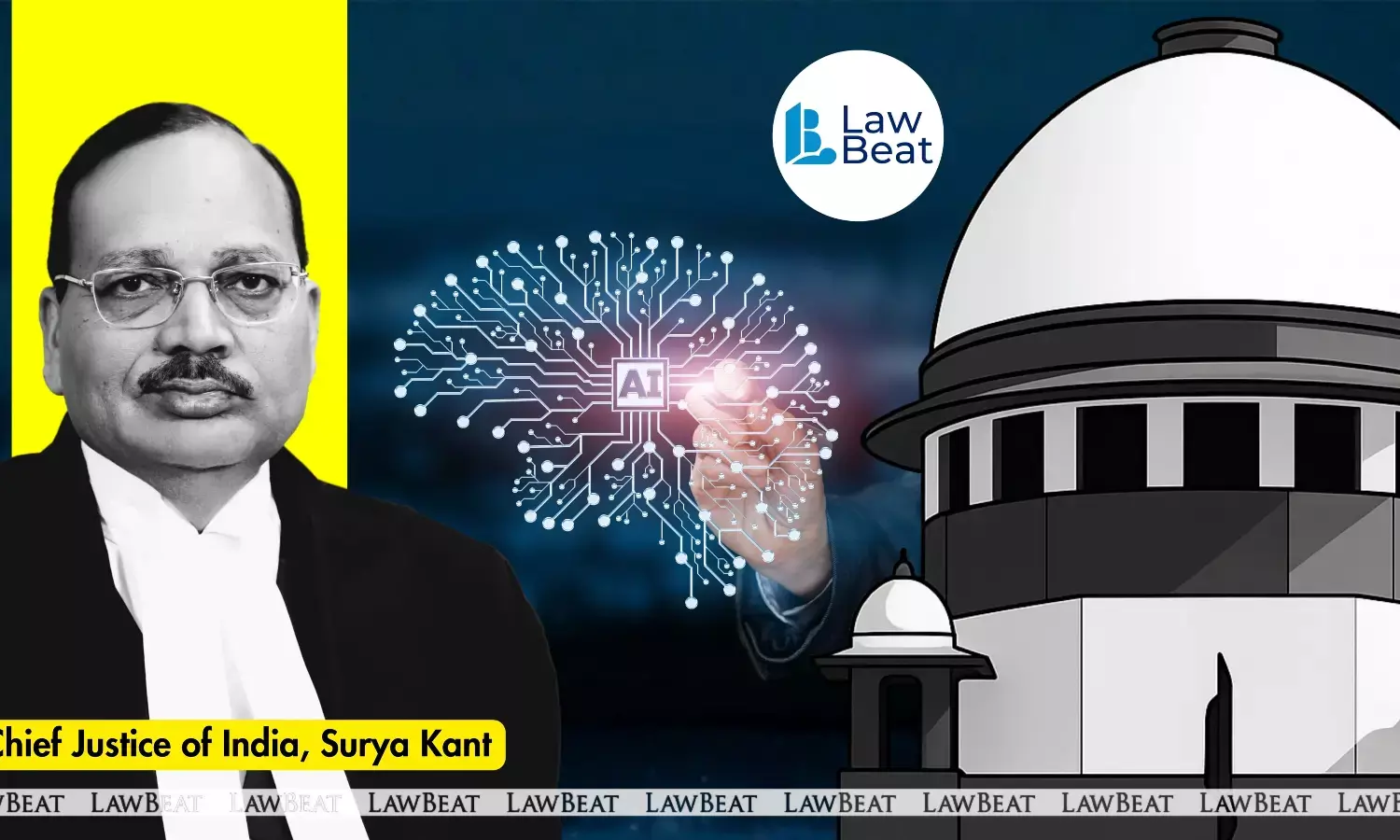
Chief Justice Surya Kant introduces AI-powered system for case listing and bench allocation in the Supreme Court of India.
In a move that could significantly reshape the administrative functioning of the Supreme Court, software powered by Artificial Intelligence is set to take over the process of case listing and bench allocation, a task traditionally handled by the Chief Justice of India as the “master of the roster”.
According to reports, the decision has been taken by Chief Justice of India Surya Kant with the aim of reducing human intervention in the allocation of cases and addressing long-standing concerns about administrative transparency within the apex court.
At present, the CJI exercises exclusive authority over the constitution of benches and the assignment of cases. This power, known as the master of the roster, has often placed the office of the CJI under intense scrutiny.
Under the proposed reform, an AI-driven software system will manage the listing of matters and the allocation of cases to different benches. The initiative is expected to streamline the process and minimize the scope for administrative irregularities.
The development comes weeks after Delhi hosted an international summit focusing on the impact of artificial intelligence in governance and public systems, reflecting a broader push toward technological integration in institutional functioning.
The reform follows an internal administrative probe that reportedly uncovered two major systemic issues within the Supreme Court registry.
First, several officials had remained posted in the same positions for extended periods, leading to entrenched administrative practices. Second, outdated technological infrastructure had enabled procedural lapses, including instances of irregular or improper case allocation.
Following these findings, the registry has witnessed an unprecedented round of interdepartmental transfers of officials aimed at dismantling entrenched incumbency and improving efficiency. A second round of transfers is expected before the end of the month.
The move toward an AI-based allocation system was triggered by a lapse that surfaced during proceedings before a Bench led by CJI Surya Kant along with Justices Joymalya Bagchi and Vipul Pancholi.
The Bench was hearing a petition filed by Irfan Solanki challenging the Uttar Pradesh Gangsters and Anti-Social Activities (Prevention) Act, 1986 on the ground that it conflicted with Section 111 of the Bharatiya Nyaya Sanhita, 2023.
During the hearing, the State of Uttar Pradesh informed the Court that a similar challenge had already been dismissed earlier.
The earlier case, Md. Anas Chaudhary v. State of Uttar Pradesh, had been decided on December 12, 2022 by a three-judge bench comprising former CJI D Y Chandrachud and Justices P S Narasimha and Dipankar Datta.
Despite the dismissal of that petition, a near-identical challenge had nevertheless been listed before a different bench of the Supreme Court.
Chief Justice Surya Kant reportedly took strong exception to the lapse.
Senior Advocate Shoeb Alam, appearing in the matter, sought permission to withdraw the plea. However, the Court directed that the case would remain pending and be taken to its logical conclusion.
The incident prompted the Chief Justice to order a deeper administrative probe into the functioning of the registry, eventually leading to the broader reform initiative.
The introduction of an AI-based system for case listing and bench allocation is expected to mark one of the most significant technological interventions in the Supreme Court’s internal administration. If implemented as proposed, the system could reduce discretion in case allocation and introduce a more structured and transparent mechanism for listing matters before benches.