
Ankita Bhandari Case: Letter-Petition Urges Supreme Court to take Suo Moto Action, Probe ‘VIP Corridor’
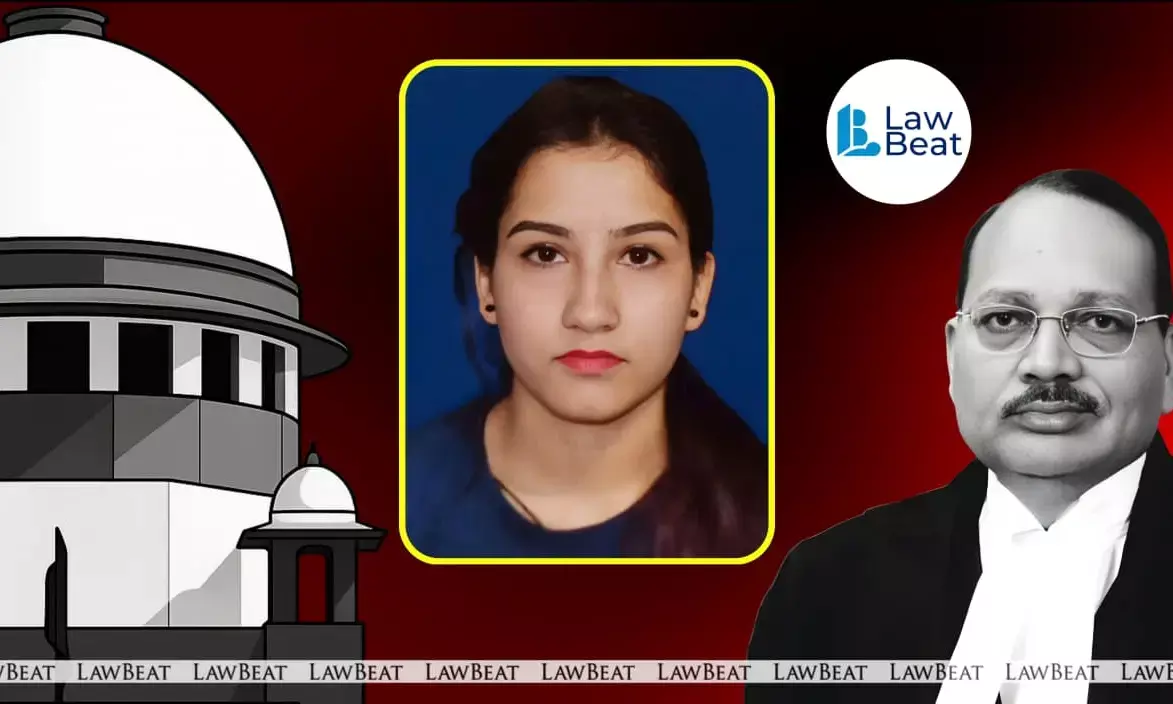
A letter-petition was moved before the Supreme Court seeking a court-monitored probe into the alleged “VIP angle” and evidence destruction in the Ankita Bhandari case
A letter-petition has been submitted to the Supreme Court seeking its intervention through epistolary jurisdiction under Article 32 read with Article 142, urging a court-monitored further investigation into unresolved constitutional issues arising from the Ankita Bhandari murder case, even after the trial concluded in conviction.
Filed by Advocate Hitendra D. Gandhi, the representation does not seek a retrial or re-appreciation of evidence. Instead, it raises concerns about what it describes as a persistent and unexamined “VIP / extra-service corridor”, alleged compromise of digital evidence, demolition of the crime scene, and the absence of accountability beyond the convicted accused.
Ankita Bhandari, a young woman employed at a private resort in Uttarakhand, went missing in September 2022 and was later found dead. While three accused were convicted in May 2025 and sentenced to life imprisonment, the petition argues that conviction alone cannot operate as constitutional closure where the trial record itself reflects references to pressure on the victim to provide “extra service” to a “VIP”.
The plea underscores that the case has always involved more than a homicide allegation. From its earliest stages, it carried assertions of coercion, exploitation, and abuse of power within the workplace. According to the petitioner, while the criminal trial punished the visible perpetrators, it failed to lawfully identify or conclusively exclude the alleged “VIP” referenced in communications forming part of the record.
Terming this gap a violation of Articles 14 and 21, the petition contends that equality before law is compromised when accountability stops at a convenient boundary of influence. It argues that silence on the “VIP” aspect breeds rumour, erodes public trust, and creates a perception that criminal liability can be negotiated.
A significant focus of the plea is on evidence integrity. It highlights that electronic material seized during investigation could not be extracted due to technical issues, without transparent answers on chain of custody, forensic handling, or recovery attempts. The petition also draws attention to the demolition of resort structures soon after the incident, alleging that a potential crime scene was altered without clear documentation of forensic preservation.
The petitioner seeks a dedicated audit into who ordered the demolition, whether evidence was secured before it, and whether offences relating to destruction or disappearance of evidence were investigated against any officials or facilitators. The plea notes that Section 201 IPC convictions in the trial itself establish that evidence concealment was a judicially recognised aspect of the case.
Crucially, the petition relies on recent developments to argue that the issue remains constitutionally live. In January 2026, Uttarakhand reportedly constituted a fresh Special Investigation Team to examine a resurfaced audio clip linked to “VIP” allegations, approved a CBI probe, and registered a fresh FIR in Dehradun related to the alleged VIP. According to the petitioner, these steps show that even the executive has moved beyond treating the matter as closed.
The representation also seeks immediate witness and whistleblower protection, citing apprehensions expressed by individuals who have spoken about the revived VIP angle, including Ms. Urmila Sonawar, and the victim’s parents. It argues that protection is a safeguard of process, not a comment on credibility.
Among the reliefs sought are a court-monitored further investigation, either by the CBI or an independent SIT drawn from outside local influence; strict evidence preservation directions; a forensic audit of digital material; a separate probe into demolition and evidence destruction; and milestone-based reporting to the Supreme Court.
Emphasising that the prayer is narrowly tailored, the petition states that the objective is not to undo conviction but to prevent “punishment without truth”. It urges the Court to ensure that crimes against women do not result in partial accountability, where visible offenders are punished but shadowed beneficiaries remain untouched.
The petitioner has requested that the letter be placed before the Chief Justice of India for appropriate orders, invoking the Court’s constitutional role as guardian of institutional credibility and public faith in the rule of law.
Representation Date: January 13, 2026