
Aravalli Hills Case: Supreme Court to Form Court-Monitored Expert Committee
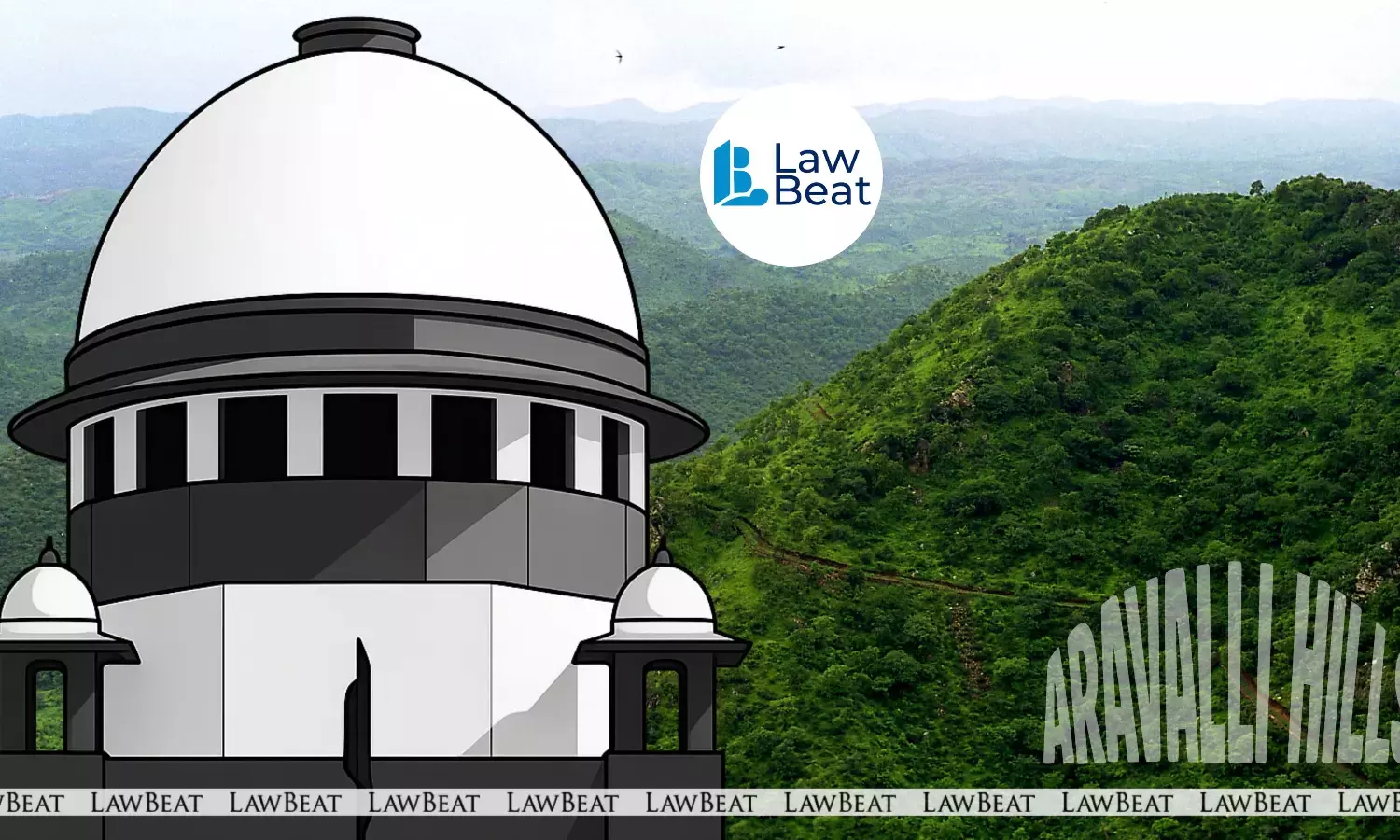
CJI Surya Kant-led Bench hears suo motu Aravalli definition case and directs constitution of expert committee while continuing mining status quo
The Supreme Court on Wednesday continued its interim order on the revised definition of the Aravalli Hills and indicated that it would constitute a court-supervised expert body to examine all aspects of the issue, amid concerns that changes in the definition were being misused to permit illegal mining.
The Bench led by Chief Justice of India Surya Kant recorded the appearances of Additional Solicitor General Aishwarya Bhati for the Union, Senior Advocate K.M. Nataraj for the State of Rajasthan, and amicus curiae, Senior Advocate Parameshwar, who appeared along with the Member Secretary of the Central Empowered Committee (CEC).
The CJI said the Court had “impressed upon” the amicus and all assisting counsel that a comprehensive note must be placed on record, clearly setting out the issues and questions that arise from the revised definition of the Aravalli Hills. The Court has also sought suggestions of names of eminent environmentalists, forest experts, scientists and other domain specialists so that an expert body can be constituted. “Such a committee shall work under the direct control and supervision of this Court,” the CJI said.
The bench noted submissions that illegal mining was continuing at scattered locations, reiterating its concern that such activities could lead to irreversible environmental damage. K.M. Nataraj, appearing for Rajasthan, assured the Court that the State would ensure that no illegal mining takes place.
The Court clarified that its interim directions issued on December 29, 2025, would continue to operate. Earlier, the bench had warned against filing fresh writ petitions on the issue, observing that it was aware of the reasons behind such filings, and had stressed the need for a scientific and expert-driven assessment of the Aravalli range.
Senior Advocate Kapil Sibal, appearing for an intervenor underlined the geological history of the Aravallis and argued that natural formations such as the Aravallis and the Himalayas cannot be narrowly defined, pointing to tectonic movements and long-term ecological significance. He had urged the Court to hold a preliminary hearing on the issue.
The Court directed that the matter be listed after four weeks, by which time the comprehensive note and suggested names for the expert body are to be placed on record.
In December 2025, the Court had said that the expert committee report accepted earlier by the Court, along with certain judicial observations flowing from it, may have led to “misunderstood notions” that require clarification before any implementation.The Court had earlier declined to impose a blanket ban on mining in the Aravalli region, observing that total prohibitions often end up encouraging illegal mining rather than curbing environmental damage.
Notably, in November, the Supreme Court had directed the Ministry of Environment, Forest and Climate Change (MoEF&CC) to prepare a Management Plan for Sustainable Mining (MPSM) through Indian Council of Forestry Research and Education (ICFRE) for the entire Aravalis, i.e., understood as the continuous geological ridge extending from Gujarat to Delhi.
Advocate Hitendra Gandhi had also written to the CJI urging the Supreme Court to reconsider or clarify the definitional framework adopted for identifying the “Aravalli Hills and Ranges” in its recent order dated November 20, 2025, warning that a narrow, height-based criterion could unintentionally weaken environmental protection across North-West India. Gandhi raised concern over the operational definition adopted in the order, under which landforms with a “local relief” of 100 metres or more above their immediate surroundings are treated as the primary criterion for identifying Aravalli hills and ranges.
Case Title: In Re: Definition of Aravalli Hills and Ranges and Ancillary Issues
Bench: Chief Justice of India Surya Kant, Justice JK Maheshwari and Justice Vipul Pancholi
Hearing Date: January 21, 2026