
Article 19 Cannot Be Read in Isolation From Fundamental Duties, Says ASG Chetan Sharma
Article 19 Should Not Be Frozen in Its Absolute Sense, Says ASG Chetan Sharma
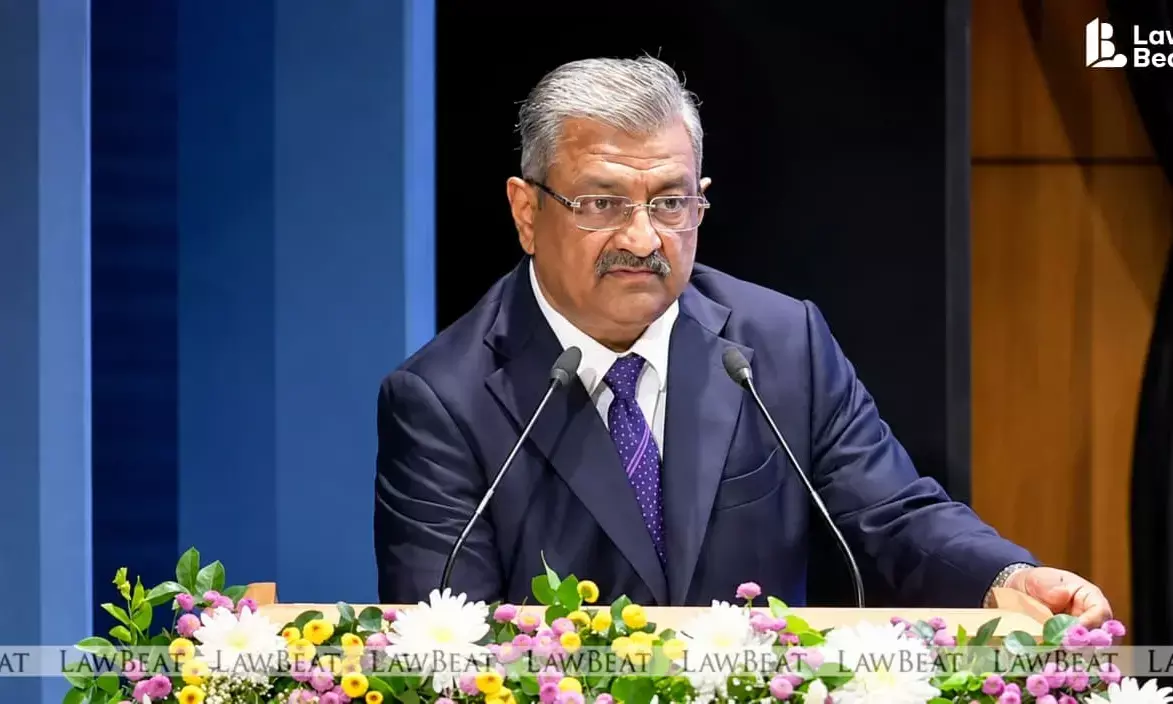
Additional Solicitor General Chetan Sharma has said that Article 19 of the Constitution cannot be read in a frozen or absolute manner, and that it must be interpreted alongside the Directive Principles and fundamental duties as Indian democracy evolves.
Sharma, the law officer of the Delhi High Court, was speaking at the launch of “Freedom on Trial: Twelve Cases That Shaped India’s Struggle for Freedom”, authored by Akash Vajpayee.
Turning to the author, Sharma suggested what a second book could explore. “We have frozen Article 19 in its absolute essence, in its absolute sense, but there’s a reasonability to Article 19. Please dwell on that reasonability,” he said.
He urged the author to weigh fundamental duties alongside fundamental rights in the evolving march of Indian democracy.
“We can’t be left to be frozen on a myopic and selective reading of Article 19. It has to be dynamic. It has to be read with the Directive Principles, and it must also emphasize on the fundamental duties,” Sharma said, adding, “That will be your second book, if it has to be.”
Law as a Second Theatre of the Freedom Struggle
Describing the book, Sharma said it is not merely about statutes and procedure but about men who walked into colonial courtrooms knowing the verdict had very likely been settled in advance, yet resolved that “history would hear their side”.
He said the British Raj took pride in being a government of laws and prosecuted its opponents in court because it needed to appear legitimate. “The need for legitimacy was the empire’s vulnerability,” he said, noting that Indian patriots and lawyers exploited it with courage and skill. Each prosecution handed them a platform, turning the courtroom into a public forum and the charge into an occasion for a manifesto.
The book covers twelve trials, including the INA trial of 1945-46, Mahatma Gandhi’s trial of 1922, the Alipore Conspiracy Case, and the trials of Bal Gangadhar Tilak, Bhagat Singh, Savarkar, Madan Lal Dhingra, Udham Singh and Mangal Pandey. Sharma noted that the author arranged them unusually, opening at the Red Fort in 1945 and closing at Barrackpore in 1857 with a single sepoy before a court martial, so that the reader sees one thread running through nearly 90 years of resistance.
Recalling Tilak’s 1897 sedition trial, he said Justice Strachey directed that dissatisfaction meant simply the absence of affection, making a mere want of love for the government an offence. After his sentence of 18 months, Tilak said it might be the will of Providence that his cause “should prosper more by his suffering”. Those words, Sharma said, are inscribed on a plaque in the Bombay High Court, in the very room where he was convicted. “I can think of no clearer instance of history reversing a verdict,” he said.
On Bhagat Singh’s trial, he said no counsel represented the accused for long stretches, and the Congress later expressed regret for not extending legal assistance. Bhagat Singh, Sukhdev and Rajguru were executed in Lahore on March 23, 1931.
Sharma identified three takeaways: law used as an instrument of power, the accused’s refusal to accept the role assigned to them, and the conscience of the bar. In colonial times, he said, the forms of law were observed while the substance of justice was often absent, and the decision-making process was a facade with a foregone result. Drawing an analogy with the present, he noted that today the decision-making process is open to judicial review.
Event Name: Book Launch of Freedom on Trial
Event Date: November 20, 2026