
Article 22 Clock Starts At Detention, Not Formal Arrest: Supreme Court Lays Down Duties For Magistrates On Remand
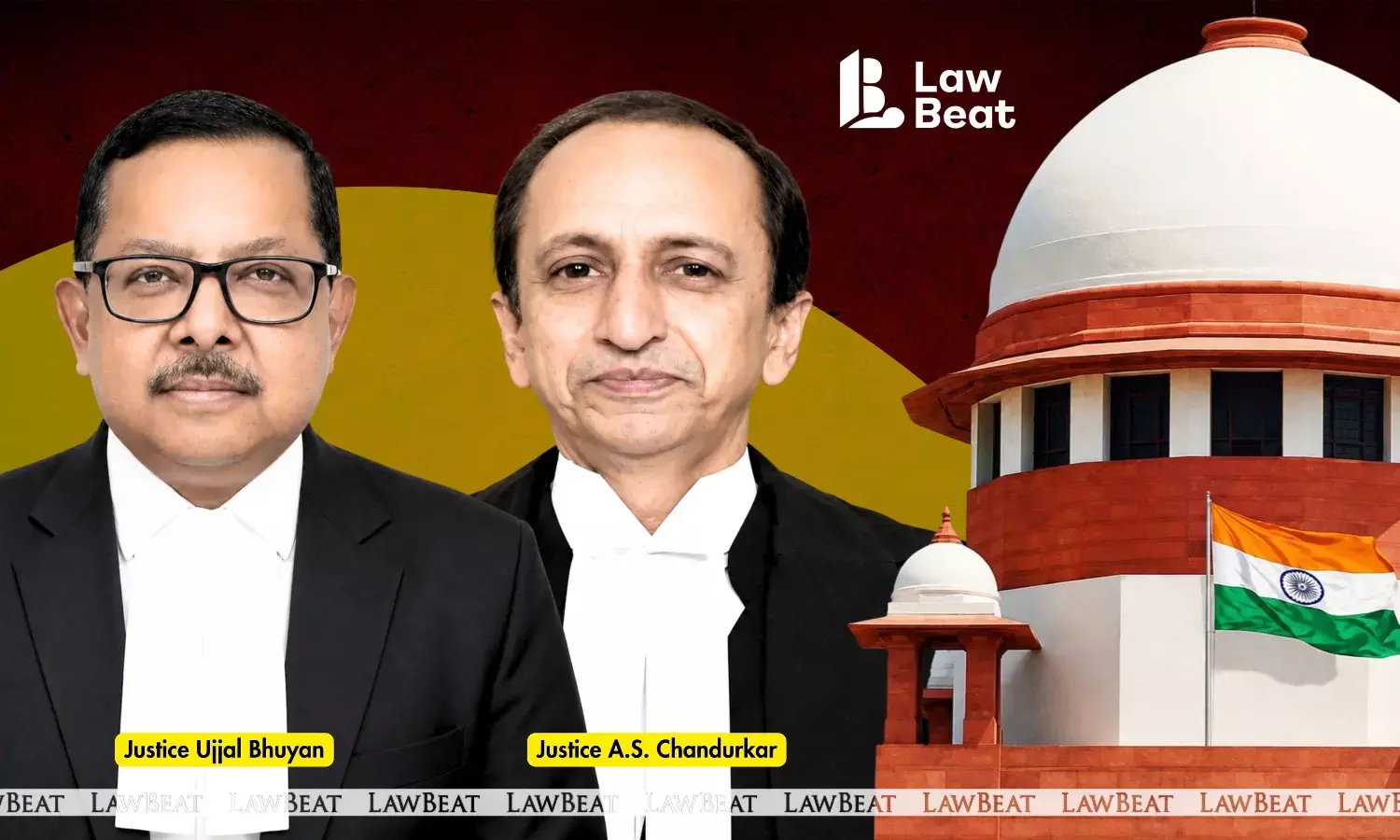
The Supreme Court held that the constitutional 24-hour deadline under Article 22(2) begins the moment a person's liberty is curtailed, and ordered the release on bail of NDPS accused who were kept in custody for 18 hours before their arrest was formally recorded
The Supreme Court on Thursday held that Police and investigating agencies cannot hold a person for questioning and postpone the constitutional 24-hour deadline by recording the arrest later. The Court ruled that the time limit in Article 22(2) of the Constitution for producing an arrested person before a Magistrate begins the moment the person's liberty is effectively curtailed.
The Bench of Justices Ujjal Bhuyan and Atul S Chandurkar delivered the judgment in an appeal against the Tripura High Court's refusal to grant bail to persons accused under the Narcotic Drugs and Psychotropic Substances Act, 1985 (NDPS Act).
The High Court had declined bail even though it recorded a prima facie violation of Section 36 of the Bharatiya Nagarik Suraksha Sanhita, 2023 (BNSS).
The Bench also held that where Article 21 is violated, the restrictions on bail under Section 37 of the NDPS Act cannot stand in the way of relief. It set aside the High Court's judgment and directed that the appellants be produced before the jurisdictional Special Court within a maximum of seven days, after which they are to be released on bail on appropriate terms and conditions.
Background
The appellants were detained on September 29, 2025, but were formally shown as arrested only the following day. During the hearing, the Bench had sought an explanation for their alleged illegal detention in the intervening period.
Before the Supreme Court, the question was whether a breach of the mandatory safeguards attending arrest could prevail over the stringent conditions on bail in Section 37 of the NDPS Act.
The Bench rejected the High Court's attempt to treat detention and arrest as separate events. It said, "The endeavour of the High Court to create an artificial distinction between detention and arrest is totally unwarranted and highly problematic."
Pointing to the uncertainty that such a distinction would invite, the Court added: "If we venture into such semantics, question will naturally arise as to who will determine as to what is a short investigative period or when a detention extends beyond the short investigative period."
On the text of Article 22(2), the Bench held that the words "arrested and detained" must be read together: "The expression is conjunctive and not disjunctive. Had it been disjunctive, two separate meanings would have been assigned to the two words. But the expression being joint and conjunctive, the two words appearing therein would mean one and the same thing. The Constitution does not recognize any detention divorced from arrest. Thus the prescription of 24 hours time period would commence the moment a person is detained by the arresting authority suspecting him to have committed an offence, when his liberty is effectively curtailed."
The Court held that Article 22(2) leaves no room for a period in which a person is held for investigation without being shown as arrested: "Article 22(2) does not sanction exclusion of the time taken for inquiry and investigation before the arresting authority could effect arrest of the detainee. Clause (2) of Article 22 does not sanction creation of any buffer zone where the liberty of an individual is curtailed for investigating purposes but not formally shown as arrested. Creation or contemplation of such buffer zone is unconstitutional."
The Bench held that the view that "the 24-hour period commences only upon formal arrest and not during antecedent detention necessitated by statutory procedure of seizure and inventory" is contrary to the mandate of Article 22(2). It observed that compliance with the procedural formalities under the NDPS Act does not prevent the arresting authority from producing the detainee before the Magistrate within 24 hours of detention.
The Bench drew on Justice VR Krishna Iyer's observations in Niranjan Singh, where he said: "Explanations and submissions to the effect that police have taken a man into informal custody but not arrested him, have detained him for interrogation and not taken him into formal custody are terminological dubieties and are unfair evasions of the straightforwardness of the law."
Justice Krishna Iyer had described such explanations as "equivocatory quibblings" and a "hide-and-seek nicety". Reiterating that view, the Bench held that any attempt to draw an artificial distinction between arrest and detention would dilute or negate the fundamental protection the Constitution guarantees.
The judgment links the 24-hour safeguard directly to the prevention of custodial violence. The Court said, "The endeavour of this Court has always been to eliminate custodial violence which unfortunately takes place during the time when a person is under detention and not shown as formally arrested, in the process delaying production before the Magistrate. Custodial violence is an unfortunate reality of our country and is judicially acknowledged."
Referring to D.K. Basu, the Bench recalled the Court's earlier observations on police resorting to third-degree methods to extract information or confessions through "screening arrest", either by not recording the arrest at all or by describing the deprivation of liberty as merely prolonged interrogation.
"The endeavour of this Court has always been to ensure that no custodial violence takes place during interrogation, which is one of the worst forms of human rights violation," it said.
On the interplay between the special statute and fundamental rights, the Bench expressed reservations about the observations in Supinder Singh alias Bora and held that the rights under Article 21 cannot be tinkered with so lightly, not even under special statutes. It said, "When there is a violation of Article 21 of the Constitution, the rigor of Section 37 of the NDPS Act or similar such provisions under the special statutes would have to give way."
Among other decisions, the Bench referred to Union of India v. K.A. Najeeb, Satender Kumar Antil, Mohammad Muslim, Amarmur Chhatta and Vijay Singh v. Union of India.
Applying these principles, the Court held that for the purposes of Article 22(2), the appellants must be treated as having been arrested at 2 PM on September 29, 2025, when they were under the control and custody of the Narcotics Control Bureau (NCB) search team. They ought therefore to have been produced before the Magistrate by 2 PM on September 30. They were produced only at 4:45 PM. "There is thus a clear breach of Clause (2) of Article 22 of the Constitution vitiating the arrest of the appellants and rendering their continued detention beyond 2 PM on 30-9-2025 illegal and unconstitutional," the Court held.
The Bench noted that the search and seizure proceedings ended at 5 PM on September 29, 2025, but the appellants were formally shown as arrested only at 11 AM and 11:15 AM the next day. "No explanation has been given for this delay of 18 hours. 18 hours in custody without judicial oversight is a long period with misuse and abuse of authority a clear possibility," the bench observed. It held that such detention cannot be regarded as a reasonable period under Section 58 of the BNSS.
Conclusively, the Court set aside the Tripura High Court's judgment and directed that the appellants be produced before the jurisdictional Special Court within a maximum period of seven days, whereafter they shall be released on bail on appropriate terms and conditions.
Case Title: Sujit Das and Union of India
Bench: Justices Ujjal Bhuyan and AS Chandurkar
Judgment Date: November 5, 2026