
“Be Ready To Pay”: Supreme Court’s Sharp Warning To Congress Leader Jairam Ramesh
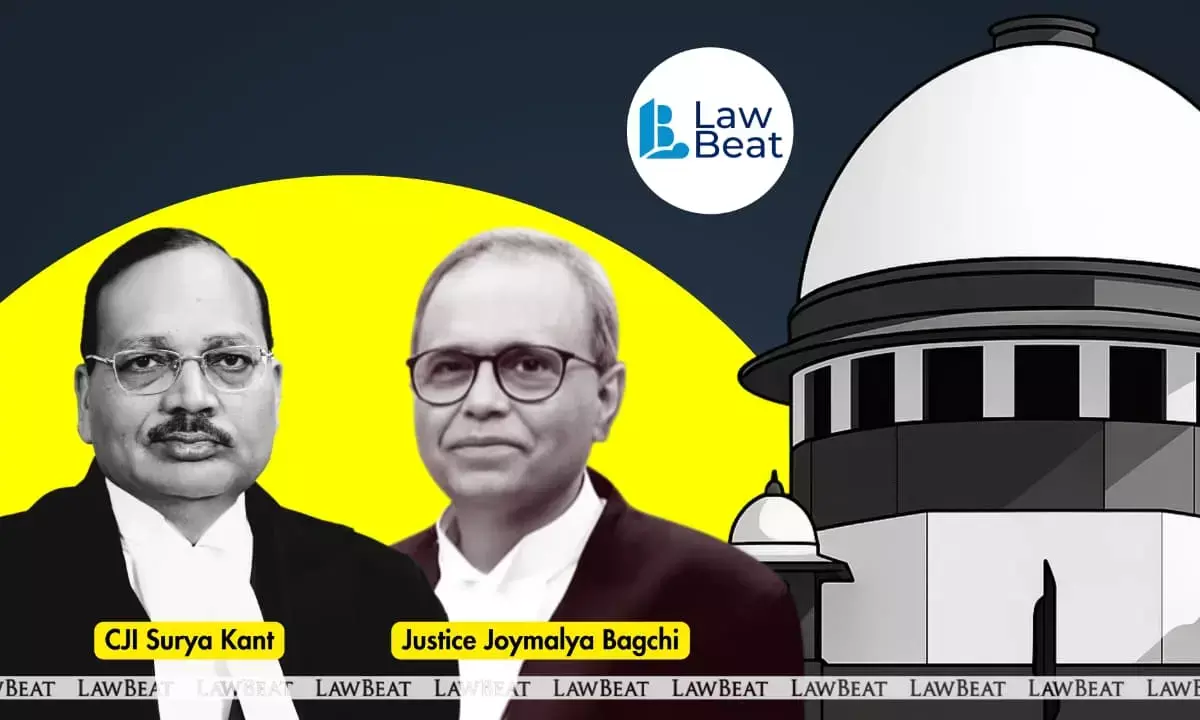
The Supreme Court today came down heavily on Congress leader Jairam Ramesh over his plea against the Centre's office memorandum to implement the court's recent verdict on retrospective environmental clearances.
"Why did you not file a review? You are just raising all these grounds in a writ. Be ready to face exemplary costs! All this is just for media publicity", the Chief Justice of India told Ramesh.
Ramesh challenged the Court's November 2025 verdict recalling its landmark Vanashakti judgment from May 2025, which barred the Central government from granting retrospective environmental clearances (ECs) for being bad in law and detrimental to public health.
Former Chief Justice of India BR Gavai and Justice K Vinod Chandran, writing separate but concurring opinions, allowed a batch of review petitions and declared the verdict, delivered by a two-judge bench of Justices Abhay S Oka (retired) and Ujjal Bhuyan, could not stand in the face of earlier Supreme Court rulings that had recognised limited situations where post-facto EC may be permissible.
CJI Gavai had noted that the May verdict “did not fully consider the relevant paragraphs of earlier judgments” on the issue which had taken a “balanced view” by holding that while ex-post-facto EC should not ordinarily be granted, certain stipulations and exceptions were underlined in specific circumstances.
In October 2025 the bench of former Chief Justice B.R. Gavai along with Justices K. Vinod Chandran and Ujjal Bhuyan had examined petitions filed by several stakeholders, including industrial entities and public interest litigants, seeking reconsideration of the Court’s directions.
Court was told that the Office Memorandums issued by the Central Government were issued in pursuance of National Green Tribunal (NGT) directions and relied on powers under Sections 3 and 5 of the Environment Protection Act, 1986. He contended that projects deemed permissible under prior clearances, such as certain airports, were affected unfairly by the Vanashakti judgment and that enforcement needed to follow proportionality principles.
Solicitor General Tushar Mehta, representing government companies including SAIL and OMDC, had highlighted specific cases like the construction of a 960-bed AIIMS hospital and medical college. Mehta contended that the retrospective ECs were sought based on the 2006 and 2017 notifications, which provided deemed clearance in certain situations, and that the original judgment did not account for this. He argued that proportionality had to be considered and that demolition of completed projects would impose significant environmental and public costs. Photographs of the AIIMS Kalyan Nagar site were shown to the bench to illustrate ongoing compliance efforts.
Case Title: JAIRAM RAMESH Vs UNION OF INDIA
Bench: CJI Surya Kant and Justice Bagchi
Hearing Date: February 12, 2026