
BREAKING| 2020 Delhi Riots: Supreme Court Denies Bail to Umar Khalid and Sharjeel Imam
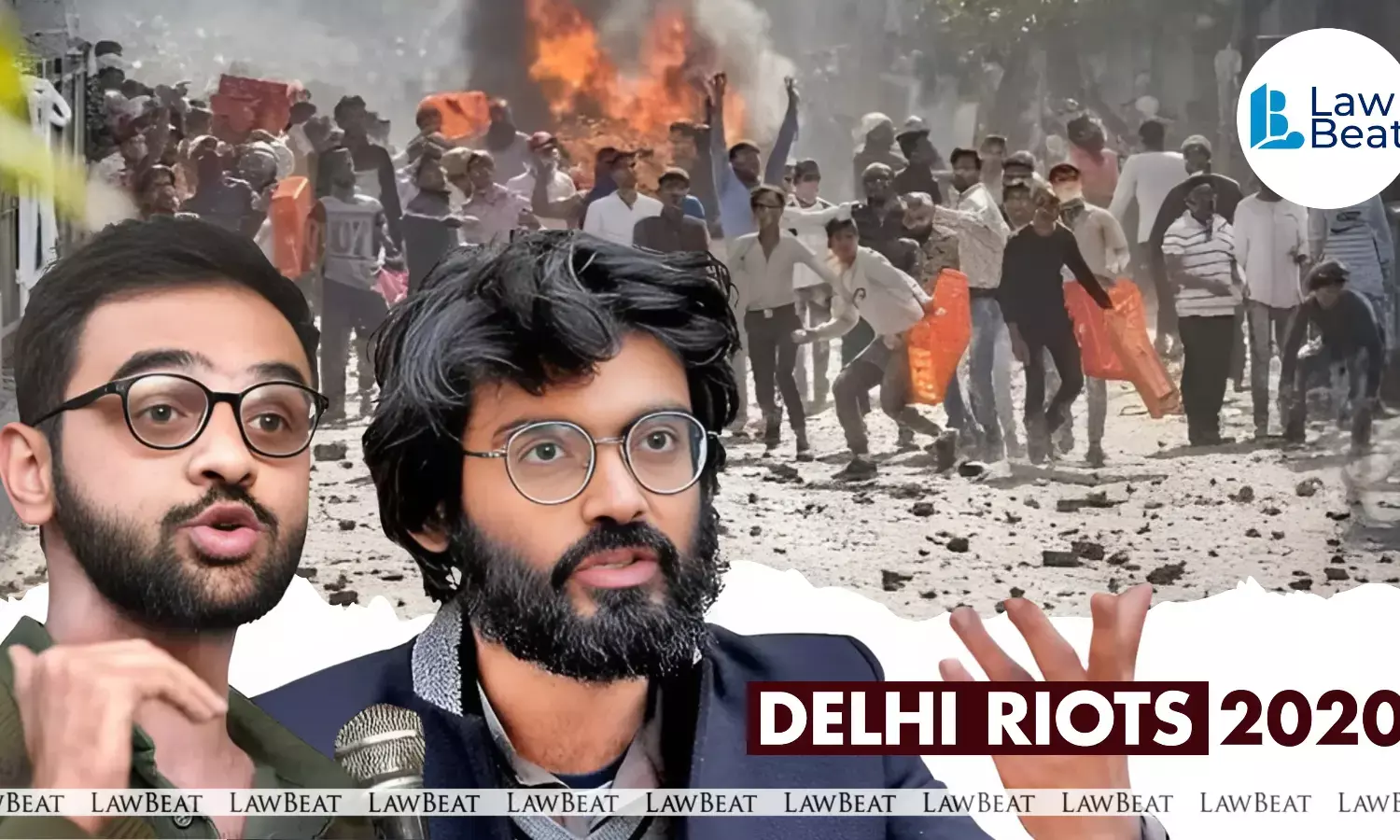
Umar Khalid and Sharjeel Imam appeared before the Karkardooma Court seeking bail in the 2020 Delhi riots conspiracy case registered under the UAPA
The Supreme Court on Monday denied bail to Umar Khalid and Sharjeel Imam in the Delhi riots larger conspiracy case, holding that a prima facie case under the Unlawful Activities (Prevention) Act (UAPA) was made out against them.
The Bench of Justices Aravind Kumar and N.V. Anjaria held that the statutory bar on grant of bail under Section 43D(5) of the UAPA was attracted in the case of Khalid and Imam, and therefore their continued incarceration could not be interfered with at this stage.
While considering their bail pleas, the Court examined whether the prosecution material, on its face, disclosed the commission of offences under the UAPA. The Bench observed that at the stage of bail under a special statute, the inquiry is not a detailed evaluation of evidence but a limited assessment of whether a prima facie case exists and whether the role attributed to the accused bears a real nexus with the alleged conspiracy.
The Court reiterated that Section 43D(5) represents a conscious legislative departure from the ordinary principles governing bail. Once the prosecution material prima facie discloses the commission of a terrorist offence, the statutory restriction must prevail, notwithstanding concerns relating to prolonged incarceration. The Bench clarified that although constitutional courts retain the power of judicial scrutiny, such scrutiny is confined within the limits prescribed by the UAPA.
Explaining the scope of offences under the Act, the Supreme Court noted that the definition of “terrorist act” under Section 15 of the UAPA is not restricted to the use of bombs or conventional weapons. Parliament has extended the definition to include acts committed by “any other means” with the intent to threaten the security of the State or to strike terror, including acts that disrupt civic life or paralyse normal economic activity. At the bail stage, the Court said, the task is limited to assessing whether the allegations disclose a prima facie nexus to such statutory ingredients.
Applying these principles, the Bench held that Umar Khalid and Sharjeel Imam stood on a “separate footing” from other accused in the case. The Court found that the material placed on record, at this stage, was sufficient to attract the statutory embargo under Section 43D(5) of the UAPA in their case. As a result, the plea for bail could not be granted.
The Court also emphasised that parity cannot be mechanically applied in cases arising under special statutes. Bail adjudication, the Bench observed, requires an individualised assessment of the role attributed to each accused. Treating all accused alike, without examining the specific allegations against them, would risk converting bail proceedings into an exercise divorced from the statutory framework.
At the same time, the Court acknowledged that the right to personal liberty under Article 21 of the Constitution is of seminal importance and that prolonged pre-trial incarceration is a serious concern. However, it held that where the prosecution material prima facie discloses the commission of an offence under the UAPA, constitutional courts cannot ignore the legislative mandate embodied in Section 43D(5).
Accordingly, the Court rejected the bail pleas of Umar Khalid and Sharjeel Imam, holding that a prima facie case under the UAPA was made out against them in the Delhi riots larger conspiracy case.
On December 10, the Apex Court had reserved its verdict on the bail pleas. ASG Raju had strongly opposed the bail requests, asserting that the violence that rocked Northeast Delhi was not a peaceful protest against the Citizenship Amendment Act but part of a “well-planned conspiracy” to spark unrest and destabilise the government.
Opposing the bail pleas, Solicitor General Mehta had launched a sharp attack on what he described as “myths” surrounding the riots. “This was not a spontaneous riot.
Senior Advocate Kapil Sibal on behalf of Umar Khalid, argued that at the current pace, Khalid would remain in prison for “eight years without trial”, noting that the prosecution alternates between predicting six months and two years for the trial’s completion. Senior Advocate Dr. Abhishek Manu Singhvi for Gulfisha Fatima questioned the Delhi Police’s assertion that the riots were part of a coordinated “regime change operation,” pointing out that “not a word of it appears in the chargesheet.”
All the five UAPA Accused have filed a Special Leave petition (SLP) before the Apex Court challenging the Delhi High Court's September 2, order denying bail to them.The High Court had held “violence in the name of protest is not free speech” as it dismissed the bail pleas of Umar Khalid, Sharjeel Imam, and seven others.
The case stems from the violence that erupted in Northeast Delhi in 2020 during protests against the Citizenship Amendment Act (CAA). The clashes between supporters and opponents of the Act led to large-scale incidents of stone-pelting, arson, and violence, leaving 53 people dead and injuring thousands.
Case Title: Gulfisha Fatima v. State of NCT of Delhi and connected matters
Bench: Justices Aravind Kumar and NV Anjaria
Pronouncement Date: January 5, 2026