
Can Police Enter Homes For Breath Tests Under Bihar Prohibition Law? Supreme Court To Examine Constitutional Validity
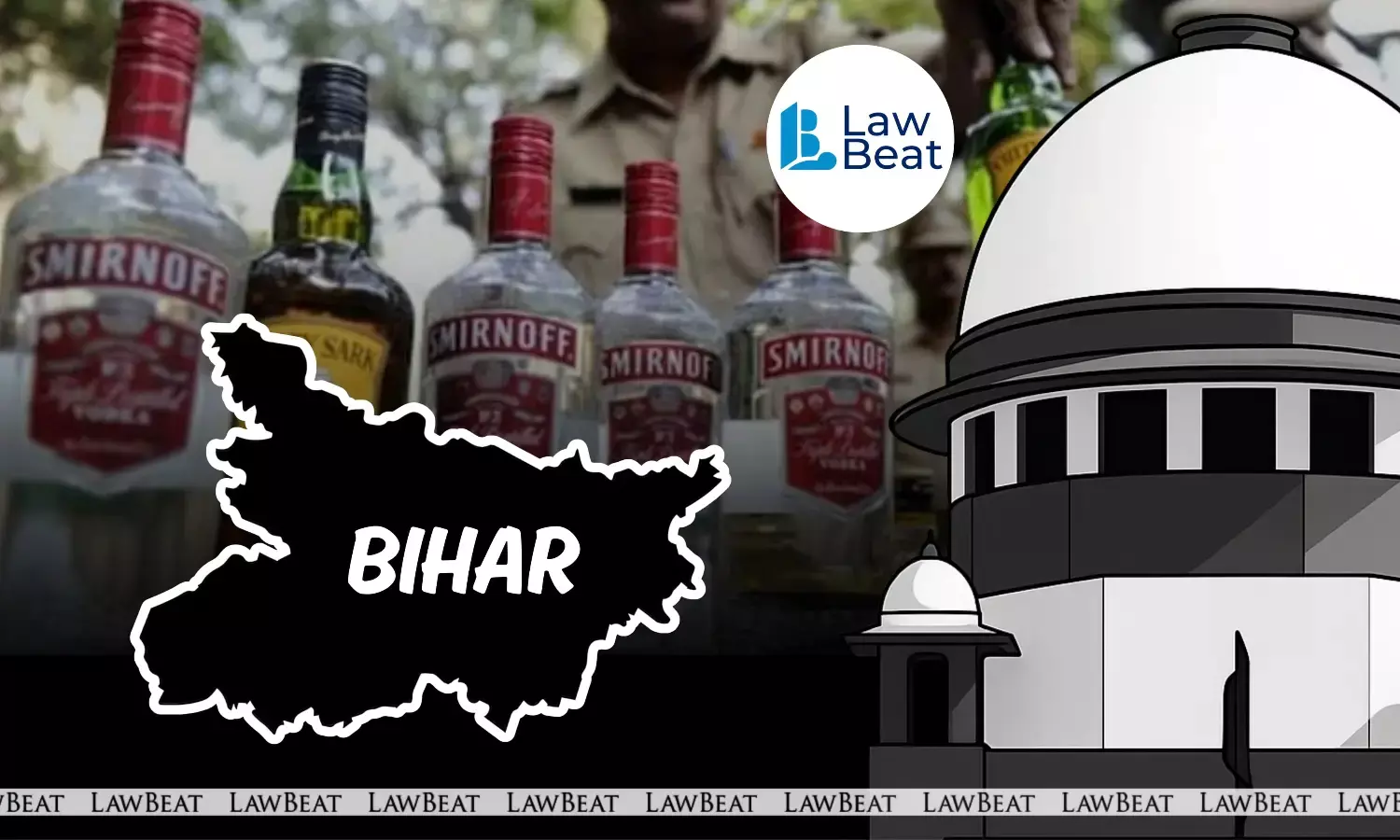
Supreme Court examines legality of police entering homes for breath analyser tests under Bihar’s prohibition law
The Supreme Court on Tuesday said it will examine whether the police can enter a person’s home and subject them to a breath analyser test under the Bihar prohibition regime, while expanding the scope of an ongoing appeal to test the constitutional validity of key provisions of the law.
The bench of Justice Sanjay Karol and Justice N Kotiswar Singh was hearing a plea filed by the State of Bihar challenging a judgment of the Patna High Court, which held that a breath analyser test alone cannot be treated as conclusive proof of alcohol consumption.
During the hearing, the Court went beyond the issues raised in the appeal and decided to examine the constitutional validity of Sections 37 and 75 of the Bihar Prohibition and Excise Act, 2016. The Bench indicated that it would assess whether these provisions permit intrusive testing practices, including entry into private residences for alcohol detection.
Notably, the Court undertook this exercise suo motu, even though neither the State nor the respondent had challenged the validity of these provisions.
The case stems from a ruling of the Patna High Court, which had quashed an FIR registered against an individual accused of consuming alcohol in violation of the State’s prohibition law. According to the case record, the individual was found at his residence in Kishanganj and subjected to a breath analyser test, which indicated an alcohol concentration of 41 mg per 100 ml. Based solely on this result, he was arrested and an FIR was registered under Section 37 of the 2016 Act.
Challenging the FIR, the accused argued that no confirmatory medical tests such as blood or urine analysis were conducted and that reliance solely on a breath analyser reading was insufficient.
Accepting this contention, the High Court had held that a breath analyser report, by itself, cannot conclusively establish alcohol consumption.
Before the Supreme Court, the State argued that the High Court failed to appreciate the statutory framework of the 2016 Act. It contended that Section 75 expressly permits the use of breath analysis and medical examination, and that such reports are admissible as evidence. The State further submitted that the breath analyser result indicating the presence of alcohol was sufficient to justify registration of the FIR.
The Supreme Court has now listed the matter for further hearing on April 24.
Case Title: The State of Bihar v. Narendra Kumar Ram
Bench: Justices Sanjay Karol and N Kotiswar Singh
Hearing Date: March 17, 2026